• 文献检索
  • 文档翻译
  • 深度研究
  • 学术资讯
  • Suppr Zotero 插件Zotero 插件
  • 邀请有礼
  • 套餐&价格
  • 历史记录
应用&插件
Suppr Zotero 插件Zotero 插件浏览器插件Mac 客户端Windows 客户端微信小程序
定价
高级版会员购买积分包购买API积分包
服务
文献检索文档翻译深度研究API 文档MCP 服务
关于我们
关于 Suppr公司介绍联系我们用户协议隐私条款
关注我们

Suppr 超能文献

核心技术专利:CN118964589B侵权必究
粤ICP备2023148730 号-1Suppr @ 2026

文献检索

告别复杂PubMed语法,用中文像聊天一样搜索,搜遍4000万医学文献。AI智能推荐,让科研检索更轻松。

立即免费搜索

文件翻译

保留排版,准确专业,支持PDF/Word/PPT等文件格式,支持 12+语言互译。

免费翻译文档

深度研究

AI帮你快速写综述,25分钟生成高质量综述,智能提取关键信息,辅助科研写作。

立即免费体验

针对俄罗斯和巴西新冠疫情的高效人工智能预测模型。

Efficient artificial intelligence forecasting models for COVID-19 outbreak in Russia and Brazil.

作者信息

Al-Qaness Mohammed A A, Saba Amal I, Elsheikh Ammar H, Elaziz Mohamed Abd, Ibrahim Rehab Ali, Lu Songfeng, Hemedan Ahmed Abdelmonem, Shanmugan S, Ewees Ahmed A

机构信息

State Key Laboratory for Information Engineering in Surveying, Mapping and Remote Sensing, Wuhan University, Wuhan 430079, China.

Department of Histology, Faculty of Medicine, Tanta University, Tanta 31527, Egypt.

出版信息

Process Saf Environ Prot. 2021 May;149:399-409. doi: 10.1016/j.psep.2020.11.007. Epub 2020 Nov 13.

DOI:10.1016/j.psep.2020.11.007
PMID:33204052
原文链接:https://pmc.ncbi.nlm.nih.gov/articles/PMC7662076/
Abstract

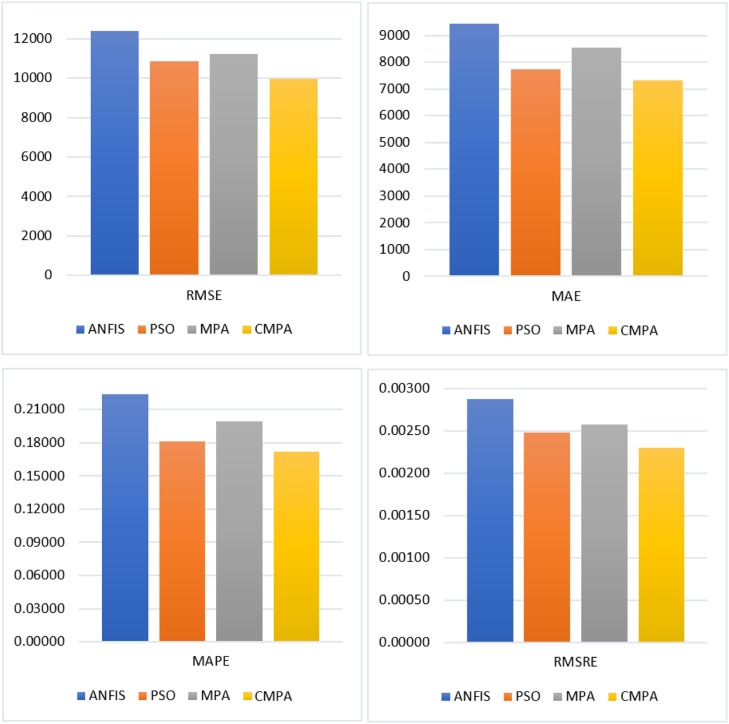
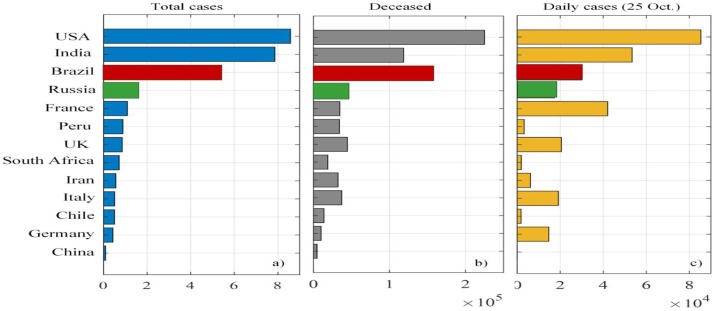
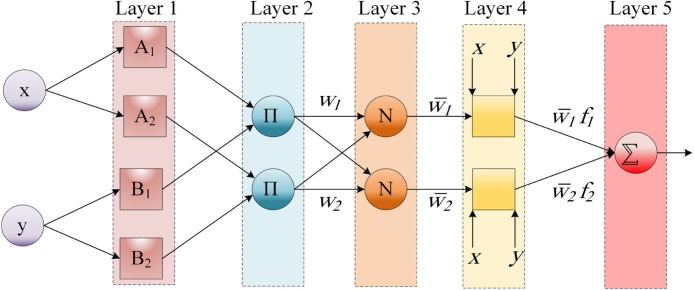
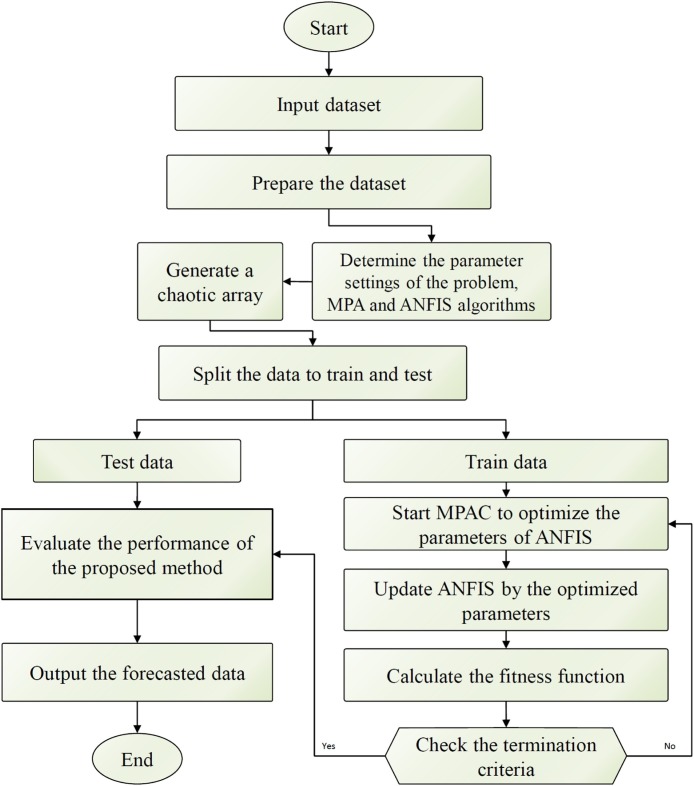
COVID-19 is a new member of the Coronaviridae family that has serious effects on respiratory, gastrointestinal, and neurological systems. COVID-19 spreads quickly worldwide and affects more than 41.5 million persons (till 23 October 2020). It has a high hazard to the safety and health of people all over the world. COVID-19 has been declared as a global pandemic by the World Health Organization (WHO). Therefore, strict special policies and plans should be made to face this pandemic. Forecasting COVID-19 cases in hotspot regions is a critical issue, as it helps the policymakers to develop their future plans. In this paper, we propose a new short term forecasting model using an enhanced version of the adaptive neuro-fuzzy inference system (ANFIS). An improved marine predators algorithm (MPA), called chaotic MPA (CMPA), is applied to enhance the ANFIS and to avoid its shortcomings. More so, we compared the proposed CMPA with three artificial intelligence-based models include the original ANFIS, and two modified versions of ANFIS model using both of the original marine predators algorithm (MPA) and particle swarm optimization (PSO). The forecasting accuracy of the models was compared using different statistical assessment criteria. CMPA significantly outperformed all other investigated models.

摘要

新型冠状病毒肺炎(COVID-19)是冠状病毒科的一个新成员,对呼吸系统、胃肠道和神经系统有严重影响。COVID-19在全球迅速传播,截至2020年10月23日,感染人数超过4150万。它对全世界人民的安全和健康构成了高度威胁。世界卫生组织(WHO)已宣布COVID-19为全球大流行病。因此,应制定严格的特殊政策和计划来应对这一流行病。预测热点地区的COVID-19病例是一个关键问题,因为它有助于政策制定者制定未来计划。在本文中我们提出了一种新的短期预测模型,该模型使用了自适应神经模糊推理系统(ANFIS)的增强版本。一种改进的海洋捕食者算法(MPA),称为混沌海洋捕食者算法(CMPA),用于增强ANFIS并避免其缺点。此外,我们将提出的CMPA与三种基于人工智能的模型进行了比较,包括原始的ANFIS,以及使用原始海洋捕食者算法(MPA)和粒子群优化(PSO)的ANFIS模型的两个修改版本。使用不同的统计评估标准比较了模型的预测准确性。CMPA明显优于所有其他研究模型。
https://cdn.ncbi.nlm.nih.gov/pmc/blobs/4540/7662076/32345d9edb73/gr11_lrg.jpg
https://cdn.ncbi.nlm.nih.gov/pmc/blobs/4540/7662076/8e603960fb4e/gr1_lrg.jpg
https://cdn.ncbi.nlm.nih.gov/pmc/blobs/4540/7662076/0fc71fd22fe5/gr2_lrg.jpg
https://cdn.ncbi.nlm.nih.gov/pmc/blobs/4540/7662076/21875ef5bb33/gr3_lrg.jpg
https://cdn.ncbi.nlm.nih.gov/pmc/blobs/4540/7662076/46d94cd38d6a/gr4_lrg.jpg
https://cdn.ncbi.nlm.nih.gov/pmc/blobs/4540/7662076/799ec40998fc/gr5_lrg.jpg
https://cdn.ncbi.nlm.nih.gov/pmc/blobs/4540/7662076/a87764ff25df/gr6_lrg.jpg
https://cdn.ncbi.nlm.nih.gov/pmc/blobs/4540/7662076/122f12a6a99d/gr7_lrg.jpg
https://cdn.ncbi.nlm.nih.gov/pmc/blobs/4540/7662076/2c456ac0d2e5/gr8_lrg.jpg
https://cdn.ncbi.nlm.nih.gov/pmc/blobs/4540/7662076/a1135309f457/gr9_lrg.jpg
https://cdn.ncbi.nlm.nih.gov/pmc/blobs/4540/7662076/9846d1f6653a/gr10_lrg.jpg
https://cdn.ncbi.nlm.nih.gov/pmc/blobs/4540/7662076/32345d9edb73/gr11_lrg.jpg
https://cdn.ncbi.nlm.nih.gov/pmc/blobs/4540/7662076/8e603960fb4e/gr1_lrg.jpg
https://cdn.ncbi.nlm.nih.gov/pmc/blobs/4540/7662076/0fc71fd22fe5/gr2_lrg.jpg
https://cdn.ncbi.nlm.nih.gov/pmc/blobs/4540/7662076/21875ef5bb33/gr3_lrg.jpg
https://cdn.ncbi.nlm.nih.gov/pmc/blobs/4540/7662076/46d94cd38d6a/gr4_lrg.jpg
https://cdn.ncbi.nlm.nih.gov/pmc/blobs/4540/7662076/799ec40998fc/gr5_lrg.jpg
https://cdn.ncbi.nlm.nih.gov/pmc/blobs/4540/7662076/a87764ff25df/gr6_lrg.jpg
https://cdn.ncbi.nlm.nih.gov/pmc/blobs/4540/7662076/122f12a6a99d/gr7_lrg.jpg
https://cdn.ncbi.nlm.nih.gov/pmc/blobs/4540/7662076/2c456ac0d2e5/gr8_lrg.jpg
https://cdn.ncbi.nlm.nih.gov/pmc/blobs/4540/7662076/a1135309f457/gr9_lrg.jpg
https://cdn.ncbi.nlm.nih.gov/pmc/blobs/4540/7662076/9846d1f6653a/gr10_lrg.jpg
https://cdn.ncbi.nlm.nih.gov/pmc/blobs/4540/7662076/32345d9edb73/gr11_lrg.jpg

相似文献

1
Efficient artificial intelligence forecasting models for COVID-19 outbreak in Russia and Brazil.针对俄罗斯和巴西新冠疫情的高效人工智能预测模型。
Process Saf Environ Prot. 2021 May;149:399-409. doi: 10.1016/j.psep.2020.11.007. Epub 2020 Nov 13.
2
Marine Predators Algorithm for Forecasting Confirmed Cases of COVID-19 in Italy, USA, Iran and Korea.海洋捕食者算法预测意大利、美国、伊朗和韩国的 COVID-19 确诊病例。
Int J Environ Res Public Health. 2020 May 18;17(10):3520. doi: 10.3390/ijerph17103520.
3
Optimization Method for Forecasting Confirmed Cases of COVID-19 in China.中国新冠肺炎确诊病例预测的优化方法
J Clin Med. 2020 Mar 2;9(3):674. doi: 10.3390/jcm9030674.
4
Leveraging ANFIS with Adam and PSO optimizers for Parkinson's disease.利用带有Adam和粒子群优化算法优化器的自适应神经模糊推理系统来研究帕金森病。
Heliyon. 2024 Apr 26;10(9):e30241. doi: 10.1016/j.heliyon.2024.e30241. eCollection 2024 May 15.
5
Improved adaptive neuro-fuzzy inference system based on modified glowworm swarm and differential evolution optimization algorithm for medical diagnosis.基于改进萤火虫群和差分进化优化算法的改进自适应神经模糊推理系统用于医学诊断
Neural Comput Appl. 2021;33(13):7649-7660. doi: 10.1007/s00521-020-05507-0. Epub 2020 Nov 24.
6
Optimized Forecasting Method for Weekly Influenza Confirmed Cases.优化的每周流感确诊病例预测方法。
Int J Environ Res Public Health. 2020 May 18;17(10):3510. doi: 10.3390/ijerph17103510.
7
Advance artificial time series forecasting model for oil production using neuro fuzzy-based slime mould algorithm.基于神经模糊黏菌算法的石油产量先进人工时间序列预测模型
J Pet Explor Prod Technol. 2022;12(2):383-395. doi: 10.1007/s13202-021-01405-w. Epub 2021 Dec 11.
8
Improved ANFIS model for forecasting Wuhan City Air Quality and analysis COVID-19 lockdown impacts on air quality.改进的 ANFIS 模型用于预测武汉市空气质量,并分析 COVID-19 封锁对空气质量的影响。
Environ Res. 2021 Mar;194:110607. doi: 10.1016/j.envres.2020.110607. Epub 2020 Dec 17.
9
Fuzzy-based prediction of solar PV and wind power generation for microgrid modeling using particle swarm optimization.基于模糊理论的太阳能光伏和风力发电预测,用于采用粒子群优化算法的微电网建模
Heliyon. 2023 Jan 5;9(1):e12802. doi: 10.1016/j.heliyon.2023.e12802. eCollection 2023 Jan.
10
A Hybridized Machine Learning Approach for Predicting COVID-19 Using Adaptive Neuro-Fuzzy Inference System and Reptile Search Algorithm.一种使用自适应神经模糊推理系统和爬行动物搜索算法预测新冠肺炎的混合机器学习方法。
Diagnostics (Basel). 2023 May 6;13(9):1641. doi: 10.3390/diagnostics13091641.

引用本文的文献

1
Spatio-temporal analysis of COVID-19 lockdown effect to survive in the US counties using ANN.使用 ANN 对美国各县新冠疫情封锁效果进行时空分析以提高生存率。
Sci Rep. 2024 Aug 23;14(1):19608. doi: 10.1038/s41598-024-70415-5.
2
Forecasting the spread of COVID-19 based on policy, vaccination, and Omicron data.基于政策、疫苗接种和奥密克戎数据预测 COVID-19 的传播。
Sci Rep. 2024 Apr 30;14(1):9962. doi: 10.1038/s41598-024-58835-9.
3
Innovative applications of artificial intelligence during the COVID-19 pandemic.人工智能在新冠疫情期间的创新应用。

本文引用的文献

1
Time series modelling to forecast the confirmed and recovered cases of COVID-19.基于时间序列模型预测 COVID-19 的确诊病例和治愈病例数。
Travel Med Infect Dis. 2020 Sep-Oct;37:101742. doi: 10.1016/j.tmaid.2020.101742. Epub 2020 May 13.
2
Forecasting the prevalence of COVID-19 outbreak in Egypt using nonlinear autoregressive artificial neural networks.使用非线性自回归人工神经网络预测埃及新冠疫情的流行情况。
Process Saf Environ Prot. 2020 Sep;141:1-8. doi: 10.1016/j.psep.2020.05.029. Epub 2020 May 20.
3
Marine Predators Algorithm for Forecasting Confirmed Cases of COVID-19 in Italy, USA, Iran and Korea.
Infect Med (Beijing). 2024 Feb 21;3(1):100095. doi: 10.1016/j.imj.2024.100095. eCollection 2024 Mar.
4
Time series forecasting of COVID-19 infections and deaths in Alpha and Delta variants using LSTM networks.使用 LSTM 网络对 Alpha 和 Delta 变体的 COVID-19 感染和死亡进行时间序列预测。
PLoS One. 2023 Oct 20;18(10):e0282624. doi: 10.1371/journal.pone.0282624. eCollection 2023.
5
Knowledge, Awareness, and Perception of COVID-19 and Artificial Intelligence: A Cross-Sectional Study Among the Population in Saudi Arabia.对新冠病毒和人工智能的认知、了解与看法:沙特阿拉伯人群的横断面研究
Cureus. 2023 Jun 25;15(6):e40921. doi: 10.7759/cureus.40921. eCollection 2023 Jun.
6
A Hybridized Machine Learning Approach for Predicting COVID-19 Using Adaptive Neuro-Fuzzy Inference System and Reptile Search Algorithm.一种使用自适应神经模糊推理系统和爬行动物搜索算法预测新冠肺炎的混合机器学习方法。
Diagnostics (Basel). 2023 May 6;13(9):1641. doi: 10.3390/diagnostics13091641.
7
Transfer-recursive-ensemble learning for multi-day COVID-19 prediction in India using recurrent neural networks.基于循环神经网络的印度多日 COVID-19 预测的转移递归集成学习。
Sci Rep. 2023 Apr 26;13(1):6795. doi: 10.1038/s41598-023-31737-y.
8
Data driven contagion risk management in low-income countries using machine learning applications with COVID-19 in South Asia.利用机器学习应用程序对南亚的 COVID-19 进行数据驱动的传染病风险管理,以服务低收入国家。
Sci Rep. 2023 Mar 6;13(1):3732. doi: 10.1038/s41598-023-30348-x.
9
Green fluorometric strategy for simultaneous determination of the antihypertensive drug telmisartan (A tentative therapeutic for COVID-19) with Nebivolol in human plasma.用于同时测定人血浆中替米沙坦(COVID-19 的一种试用治疗药物)和奈必洛尔的绿色荧光策略。
Sci Rep. 2023 Mar 2;13(1):3576. doi: 10.1038/s41598-023-30400-w.
10
Enhanced feature selection technique using slime mould algorithm: a case study on chemical data.基于黏菌算法的增强特征选择技术:化学数据案例研究
Neural Comput Appl. 2023;35(4):3307-3324. doi: 10.1007/s00521-022-07852-8. Epub 2022 Oct 9.
海洋捕食者算法预测意大利、美国、伊朗和韩国的 COVID-19 确诊病例。
Int J Environ Res Public Health. 2020 May 18;17(10):3520. doi: 10.3390/ijerph17103520.
4
Possible environmental effects on the spread of COVID-19 in China.可能对中国 COVID-19 传播的环境影响。
Sci Total Environ. 2020 Aug 20;731:139211. doi: 10.1016/j.scitotenv.2020.139211. Epub 2020 May 7.
5
Development of new hybrid model of discrete wavelet decomposition and autoregressive integrated moving average (ARIMA) models in application to one month forecast the casualties cases of COVID-19.离散小波分解与自回归积分移动平均(ARIMA)模型的新型混合模型在预测新冠肺炎一个月伤亡病例中的应用开发。
Chaos Solitons Fractals. 2020 Jun;135:109866. doi: 10.1016/j.chaos.2020.109866. Epub 2020 May 11.
6
ONLINE FORECASTING OF COVID-19 CASES IN NIGERIA USING LIMITED DATA.利用有限数据对尼日利亚新冠肺炎病例进行在线预测
Data Brief. 2020 May 8;30:105683. doi: 10.1016/j.dib.2020.105683. eCollection 2020 Jun.
7
Time series forecasting of COVID-19 transmission in Canada using LSTM networks.使用长短期记忆网络对加拿大新冠病毒传播进行时间序列预测。
Chaos Solitons Fractals. 2020 Jun;135:109864. doi: 10.1016/j.chaos.2020.109864. Epub 2020 May 8.
8
Prediction of the COVID-19 spread in African countries and implications for prevention and control: A case study in South Africa, Egypt, Algeria, Nigeria, Senegal and Kenya.预测非洲国家的 COVID-19 传播情况及其对预防和控制的影响:以南非、埃及、阿尔及利亚、尼日利亚、塞内加尔和肯尼亚为例。
Sci Total Environ. 2020 Aug 10;729:138959. doi: 10.1016/j.scitotenv.2020.138959. Epub 2020 Apr 25.
9
Effects of temperature and humidity on the daily new cases and new deaths of COVID-19 in 166 countries.温度和湿度对 166 个国家 COVID-19 每日新增病例和死亡人数的影响。
Sci Total Environ. 2020 Aug 10;729:139051. doi: 10.1016/j.scitotenv.2020.139051. Epub 2020 Apr 28.
10
SutteARIMA: Short-term forecasting method, a case: Covid-19 and stock market in Spain.SutteARIMA:短期预测方法,案例:新冠疫情与西班牙股市。
Sci Total Environ. 2020 Aug 10;729:138883. doi: 10.1016/j.scitotenv.2020.138883. Epub 2020 Apr 22.