State Key Laboratory for Information Engineering in Surveying, Mapping and Remote Sensing, Wuhan University, Wuhan 430079, China.
Department of e-Systems, University of Bisha, Bisha 61922, Saudi Arabia.
Int J Environ Res Public Health. 2020 May 18;17(10):3520. doi: 10.3390/ijerph17103520.
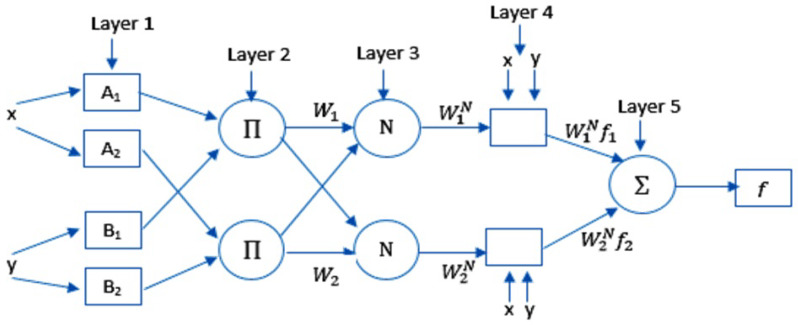
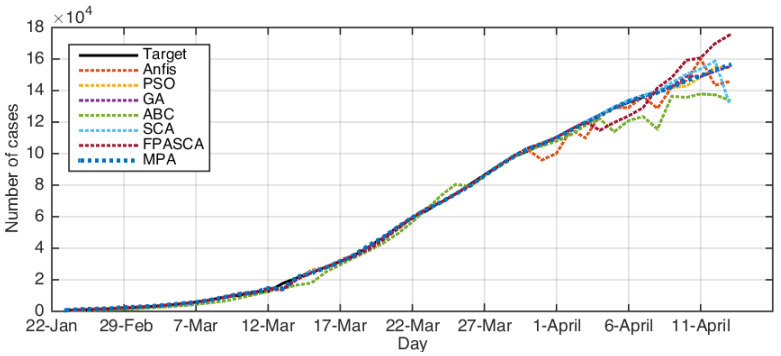
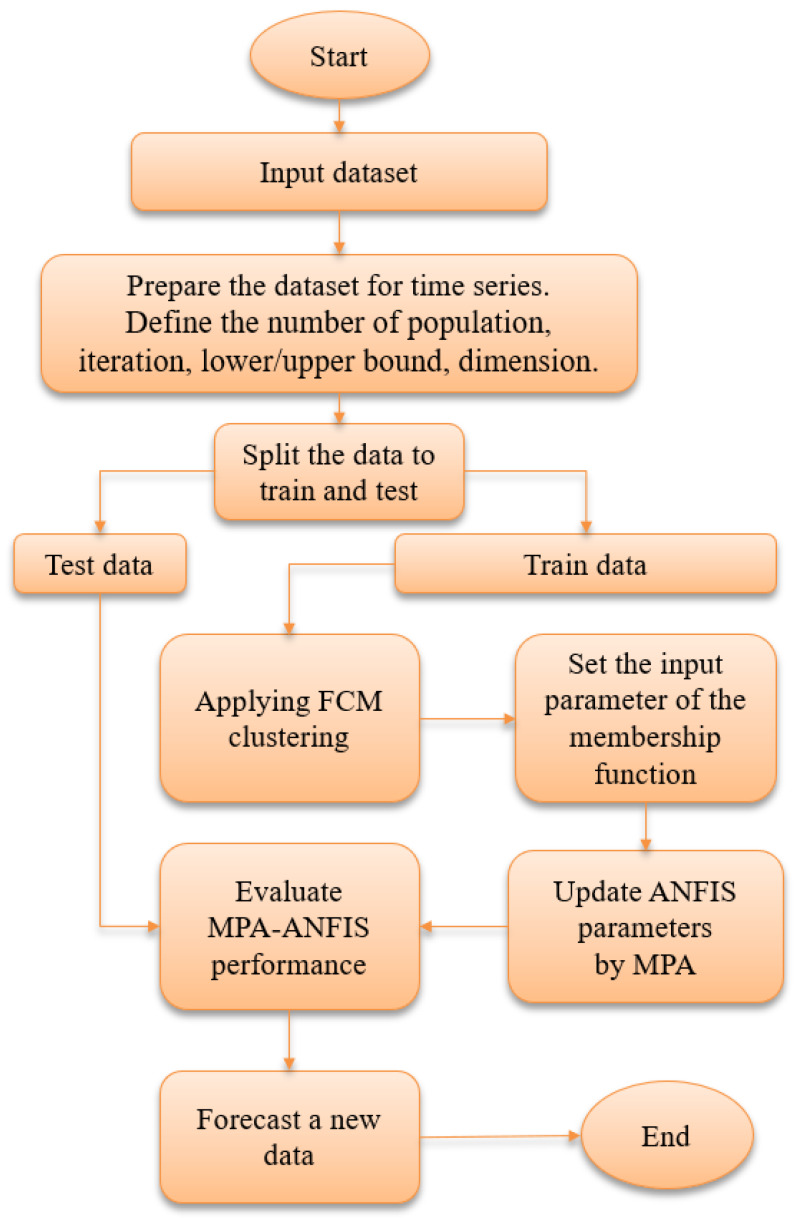
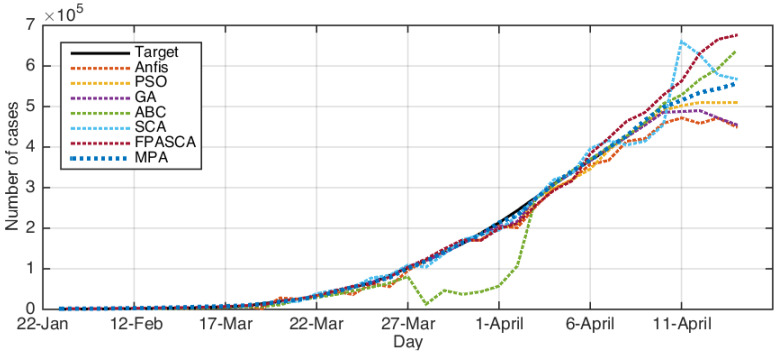
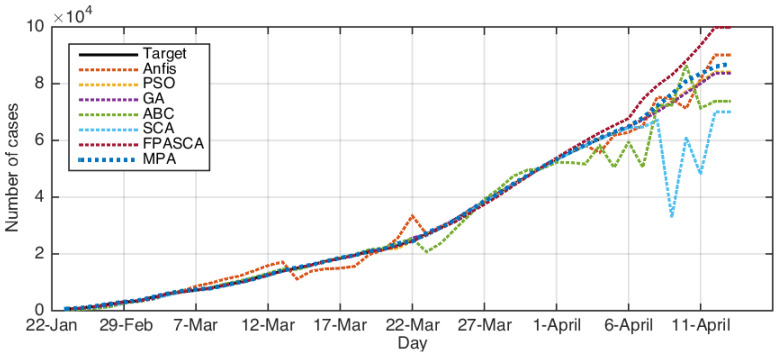
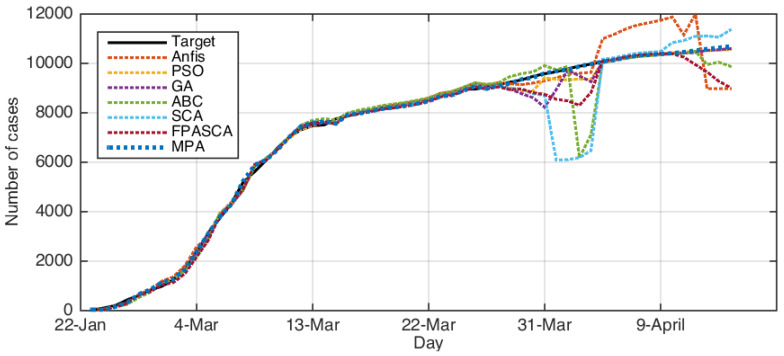
The current pandemic of the new coronavirus, severe acute respiratory syndrome coronavirus 2 (SARS-CoV-2), or COVID-19, has received wide attention by scholars and researchers. The vast increase in infected people is a significant challenge for each country and the international community in general. The prediction and forecasting of the number of infected people (so-called confirmed cases) is a critical issue that helps in understanding the fast spread of COVID-19. Therefore, in this article, we present an improved version of the ANFIS (adaptive neuro-fuzzy inference system) model to forecast the number of infected people in four countries, Italy, Iran, Korea, and the USA. The improved version of ANFIS is based on a new nature-inspired optimizer, called the marine predators algorithm (MPA). The MPA is utilized to optimize the ANFIS parameters, enhancing its forecasting performance. Official datasets of the four countries are used to evaluate the proposed MPA-ANFIS. Moreover, we compare MPA-ANFIS to several previous methods to evaluate its forecasting performance. Overall, the outcomes show that MPA-ANFIS outperforms all compared methods in almost all performance measures, such as Root Mean Squared Error (RMSE), Mean Absolute Error (MAE), Mean Absolute Percentage Error (MAPE), Root Mean Squared Relative Error (RMSRE), and Coefficient of Determination( R 2 ). For instance, according to the results of the testing set, the R 2 of the proposed model is 96.48%, 98.59%, 98.74%, and 95.95% for Korea, Italy, Iran, and the USA, respectively. More so, the MAE is 60.31, 3951.94, 217.27, and 12,979, for Korea, Italy, Iran, and the USA, respectively.
当前由新型冠状病毒(SARS-CoV-2)引发的新冠疫情引起了学者和研究人员的广泛关注。感染人数的大量增加是每个国家和整个国际社会面临的重大挑战。预测和预测感染人数(所谓的确诊病例)是一个关键问题,有助于了解 COVID-19 的快速传播。因此,在本文中,我们提出了一种改进的自适应神经模糊推理系统(ANFIS)模型,用于预测意大利、伊朗、韩国和美国四个国家的感染人数。改进的 ANFIS 基于一种新的受自然启发的优化器,称为海洋捕食者算法(MPA)。MPA 用于优化 ANFIS 参数,提高其预测性能。使用四个国家的官方数据集来评估所提出的 MPA-ANFIS。此外,我们还将 MPA-ANFIS 与几种以前的方法进行比较,以评估其预测性能。总体而言,结果表明,MPA-ANFIS 在几乎所有性能指标(如均方根误差(RMSE)、平均绝对误差(MAE)、平均绝对百分比误差(MAPE)、均方根相对误差(RMSRE)和决定系数(R 2 ))上都优于所有比较方法。例如,根据测试集的结果,对于韩国、意大利、伊朗和美国,所提出模型的 R 2 分别为 96.48%、98.59%、98.74%和 95.95%。此外,MAE 分别为 60.31、3951.94、217.27 和 12979,对于韩国、意大利、伊朗和美国,分别。