Luque-Bolivar Andrea, Pérez-Mora Erika, Villegas Victoria Eugenia, Rondón-Lagos Milena
School of Biological Sciences, Universidad Pedagógica y Tecnológica de Colombia, Tunja 150003, Colombia.
Biology Program, Faculty of Natural Sciences, Universidad del Rosario, Bogotá 111221, Colombia.
Breast Cancer (Dove Med Press). 2020 Nov 11;12:211-229. doi: 10.2147/BCTT.S270799. eCollection 2020.
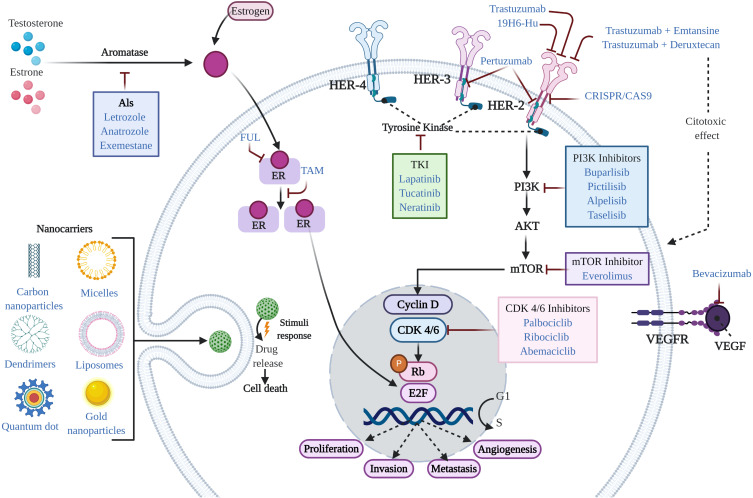
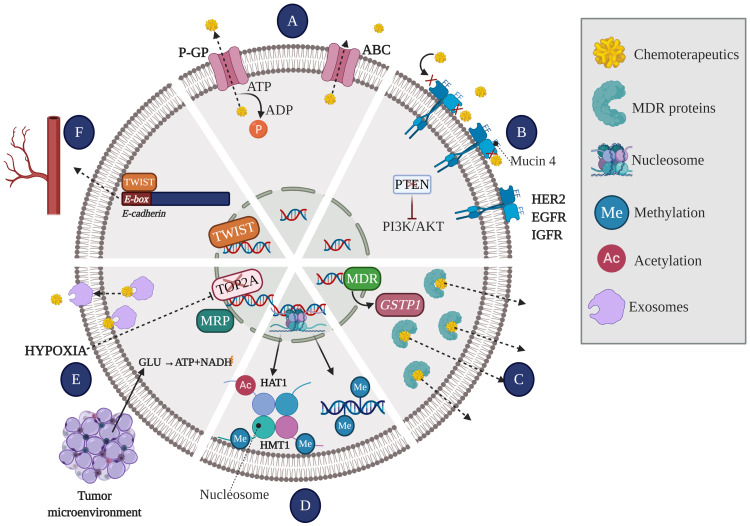
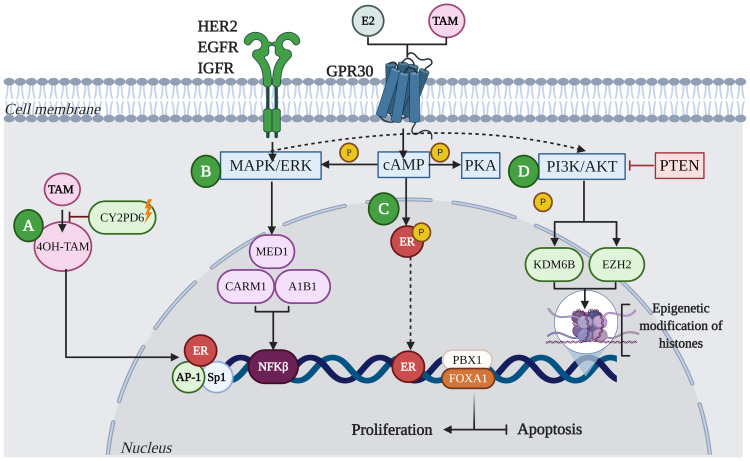
The incidence and mortality of breast cancer (BC) have increased in recent years, and BC is the main cause of cancer-related death in women worldwide. One of the most significant clinical problems in the treatment of patients with BC is the development of therapeutic resistance. Therefore, elucidating the molecular mechanisms involved in drug resistance is critical. The therapeutic decision for the management of patients with BC is based not only on the assessment of prognostic factors but also on the evaluation of clinical and pathological parameters. Although this has been a successful approach, some patients relapse and/or eventually develop resistance to treatment. This review is focused on recent studies on the possible biological and molecular mechanisms involved in both response and resistance to treatment in BC. Additionally, emerging treatments that seek to overcome resistance and reduce side effects are also described. A greater understanding of the mechanisms of action of treatments used in BC might contribute not only to the enhancement of our understanding of the mechanisms involved in the development of resistance but also to the optimization of the existing treatment regimens.
近年来,乳腺癌(BC)的发病率和死亡率有所上升,且BC是全球女性癌症相关死亡的主要原因。乳腺癌患者治疗中最显著的临床问题之一是产生治疗耐药性。因此,阐明耐药相关的分子机制至关重要。乳腺癌患者管理的治疗决策不仅基于预后因素的评估,还基于临床和病理参数的评价。尽管这是一种成功的方法,但一些患者会复发和/或最终产生治疗耐药性。本综述聚焦于近期关于乳腺癌治疗反应和耐药性可能涉及的生物学和分子机制的研究。此外,还描述了旨在克服耐药性和减少副作用的新兴治疗方法。对乳腺癌所用治疗方法作用机制的更深入理解可能不仅有助于增强我们对耐药性产生机制的认识,还有助于优化现有治疗方案。