• 文献检索
  • 文档翻译
  • 深度研究
  • 学术资讯
  • Suppr Zotero 插件Zotero 插件
  • 邀请有礼
  • 套餐&价格
  • 历史记录
应用&插件
Suppr Zotero 插件Zotero 插件浏览器插件Mac 客户端Windows 客户端微信小程序
定价
高级版会员购买积分包购买API积分包
服务
文献检索文档翻译深度研究API 文档MCP 服务
关于我们
关于 Suppr公司介绍联系我们用户协议隐私条款
关注我们

Suppr 超能文献

核心技术专利:CN118964589B侵权必究
粤ICP备2023148730 号-1Suppr @ 2026

文献检索

告别复杂PubMed语法,用中文像聊天一样搜索,搜遍4000万医学文献。AI智能推荐,让科研检索更轻松。

立即免费搜索

文件翻译

保留排版,准确专业,支持PDF/Word/PPT等文件格式,支持 12+语言互译。

免费翻译文档

深度研究

AI帮你快速写综述,25分钟生成高质量综述,智能提取关键信息,辅助科研写作。

立即免费体验

机器学习预测严重中风患者康复后的死亡率。

Machine learning to predict mortality after rehabilitation among patients with severe stroke.

机构信息

Istituti Clinici Scientifici Maugeri IRCCS, Pavia, Italy.

Department of Advanced Biomedical Sciences, University Hospital of Naples "Federico II", Naples, Italy.

出版信息

Sci Rep. 2020 Nov 18;10(1):20127. doi: 10.1038/s41598-020-77243-3.

DOI:10.1038/s41598-020-77243-3
PMID:33208913
原文链接:https://pmc.ncbi.nlm.nih.gov/articles/PMC7674405/
Abstract

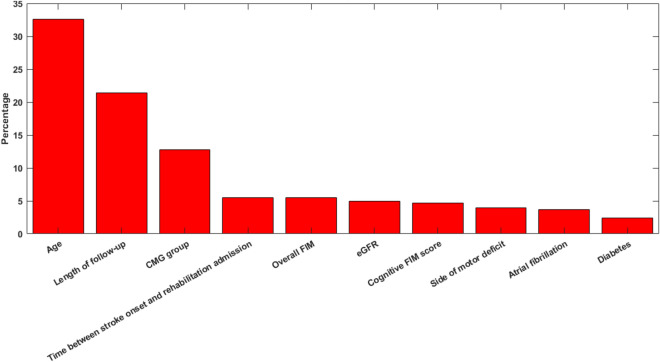
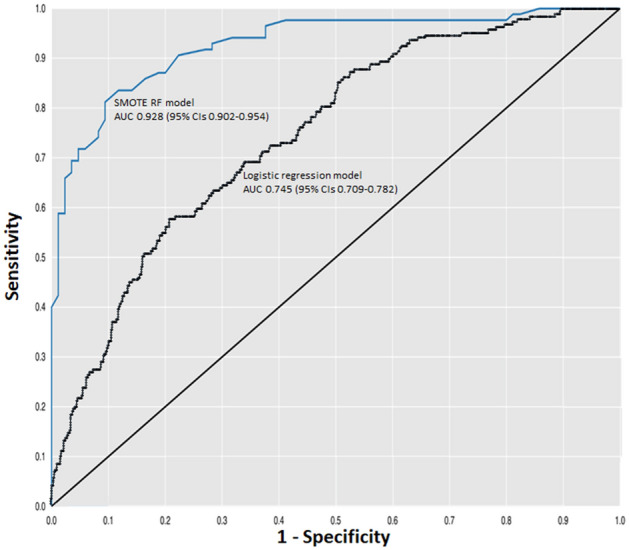
Stroke is among the leading causes of death and disability worldwide. Approximately 20-25% of stroke survivors present severe disability, which is associated with increased mortality risk. Prognostication is inherent in the process of clinical decision-making. Machine learning (ML) methods have gained increasing popularity in the setting of biomedical research. The aim of this study was twofold: assessing the performance of ML tree-based algorithms for predicting three-year mortality model in 1207 stroke patients with severe disability who completed rehabilitation and comparing the performance of ML algorithms to that of a standard logistic regression. The logistic regression model achieved an area under the Receiver Operating Characteristics curve (AUC) of 0.745 and was well calibrated. At the optimal risk threshold, the model had an accuracy of 75.7%, a positive predictive value (PPV) of 33.9%, and a negative predictive value (NPV) of 91.0%. The ML algorithm outperformed the logistic regression model through the implementation of synthetic minority oversampling technique and the Random Forests, achieving an AUC of 0.928 and an accuracy of 86.3%. The PPV was 84.6% and the NPV 87.5%. This study introduced a step forward in the creation of standardisable tools for predicting health outcomes in individuals affected by stroke.

摘要

中风是全球范围内导致死亡和残疾的主要原因之一。大约 20-25%的中风幸存者存在严重残疾,这与死亡率风险增加有关。预后是临床决策过程中的固有内容。机器学习 (ML) 方法在生物医学研究中越来越受欢迎。本研究旨在评估 ML 基于树的算法在预测 1207 名完成康复的严重残疾中风患者三年死亡率模型方面的性能,并将 ML 算法的性能与标准逻辑回归进行比较。逻辑回归模型在接受者操作特征曲线(ROC)下的面积(AUC)为 0.745,并且具有良好的校准度。在最佳风险阈值下,该模型的准确性为 75.7%,阳性预测值(PPV)为 33.9%,阴性预测值(NPV)为 91.0%。通过实施合成少数过采样技术和随机森林,ML 算法的表现优于逻辑回归模型,AUC 为 0.928,准确性为 86.3%。PPV 为 84.6%,NPV 为 87.5%。本研究在为受中风影响的个体预测健康结果创建可标准化工具方面迈出了一步。
https://cdn.ncbi.nlm.nih.gov/pmc/blobs/d5d1/7674405/d094eef6881c/41598_2020_77243_Fig3_HTML.jpg
https://cdn.ncbi.nlm.nih.gov/pmc/blobs/d5d1/7674405/8aeda57a079f/41598_2020_77243_Fig1_HTML.jpg
https://cdn.ncbi.nlm.nih.gov/pmc/blobs/d5d1/7674405/16d2cc94a34e/41598_2020_77243_Fig2_HTML.jpg
https://cdn.ncbi.nlm.nih.gov/pmc/blobs/d5d1/7674405/d094eef6881c/41598_2020_77243_Fig3_HTML.jpg
https://cdn.ncbi.nlm.nih.gov/pmc/blobs/d5d1/7674405/8aeda57a079f/41598_2020_77243_Fig1_HTML.jpg
https://cdn.ncbi.nlm.nih.gov/pmc/blobs/d5d1/7674405/16d2cc94a34e/41598_2020_77243_Fig2_HTML.jpg
https://cdn.ncbi.nlm.nih.gov/pmc/blobs/d5d1/7674405/d094eef6881c/41598_2020_77243_Fig3_HTML.jpg

相似文献

1
Machine learning to predict mortality after rehabilitation among patients with severe stroke.机器学习预测严重中风患者康复后的死亡率。
Sci Rep. 2020 Nov 18;10(1):20127. doi: 10.1038/s41598-020-77243-3.
2
Predicting post-stroke pneumonia using deep neural network approaches.使用深度神经网络方法预测卒中后肺炎。
Int J Med Inform. 2019 Dec;132:103986. doi: 10.1016/j.ijmedinf.2019.103986. Epub 2019 Oct 1.
3
Machine learning applications for the prediction of surgical site infection in neurological operations.机器学习在神经外科手术部位感染预测中的应用。
Neurosurg Focus. 2019 Aug 1;47(2):E7. doi: 10.3171/2019.5.FOCUS19241.
4
Logistic regression analysis and machine learning for predicting post-stroke gait independence: a retrospective study.基于 Logistic 回归分析和机器学习的脑卒中后步态独立性预测:一项回顾性研究。
Sci Rep. 2024 Sep 11;14(1):21273. doi: 10.1038/s41598-024-72206-4.
5
Predicting hospitalization following psychiatric crisis care using machine learning.运用机器学习预测精神科危机护理后的住院情况。
BMC Med Inform Decis Mak. 2020 Dec 10;20(1):332. doi: 10.1186/s12911-020-01361-1.
6
Predicting post-stroke activities of daily living through a machine learning-based approach on initiating rehabilitation.通过基于机器学习的方法预测脑卒中后的日常生活活动。
Int J Med Inform. 2018 Mar;111:159-164. doi: 10.1016/j.ijmedinf.2018.01.002. Epub 2018 Jan 4.
7
Development of a validated model to predict 30-day stroke and 1-year survival after carotid endarterectomy for asymptomatic stenosis using the Vascular Quality Initiative.利用血管质量倡议开发一个经过验证的模型,以预测无症状性狭窄患者颈动脉内膜切除术后30天内发生中风及1年生存率。
J Vasc Surg. 2017 Aug;66(2):433-444.e2. doi: 10.1016/j.jvs.2017.03.427. Epub 2017 Jun 2.
8
Machine learning predicts clinically significant health related quality of life improvement after sensorimotor rehabilitation interventions in chronic stroke.机器学习预测慢性中风后感觉运动康复干预后具有临床意义的健康相关生活质量改善。
Sci Rep. 2022 Jul 4;12(1):11235. doi: 10.1038/s41598-022-14986-1.
9
Stroke prognostication for discharge planning with machine learning: A derivation study.基于机器学习的出院计划中风预后预测:一项推导研究。
J Clin Neurosci. 2020 Sep;79:100-103. doi: 10.1016/j.jocn.2020.07.046. Epub 2020 Aug 5.
10
Leveraging Machine Learning Techniques to Forecast Patient Prognosis After Percutaneous Coronary Intervention.利用机器学习技术预测经皮冠状动脉介入治疗后的患者预后。
JACC Cardiovasc Interv. 2019 Jul 22;12(14):1304-1311. doi: 10.1016/j.jcin.2019.02.035. Epub 2019 Jun 26.

引用本文的文献

1
A review of machine learning applications in heart health.机器学习在心脏健康中的应用综述。
Biomed Eng Online. 2025 Aug 11;24(1):99. doi: 10.1186/s12938-025-01430-4.
2
Artificial intelligence in stroke risk assessment and management via retinal imaging.通过视网膜成像进行中风风险评估与管理的人工智能
Front Comput Neurosci. 2025 Feb 17;19:1490603. doi: 10.3389/fncom.2025.1490603. eCollection 2025.
3
A 25-Year Retrospective of the Use of AI for Diagnosing Acute Stroke: Systematic Review.25 年来 AI 用于诊断急性中风的回顾:系统评价。

本文引用的文献

1
Classifying the type of delivery from cardiotocographic signals: A machine learning approach.从胎心监护信号中分类分娩类型:一种机器学习方法。
Comput Methods Programs Biomed. 2020 Nov;196:105712. doi: 10.1016/j.cmpb.2020.105712. Epub 2020 Aug 18.
2
Machine learning predictive system based upon radiodensitometric distributions from mid-thigh CT images.基于大腿中部CT图像的放射密度分布的机器学习预测系统。
Eur J Transl Myol. 2020 Apr 1;30(1):8892. doi: 10.4081/ejtm.2019.8892. eCollection 2020 Apr 7.
3
A machine learning-based approach to directly compare the diagnostic accuracy of myocardial perfusion imaging by conventional and cadmium-zinc telluride SPECT.
J Med Internet Res. 2024 Sep 10;26:e59711. doi: 10.2196/59711.
4
Machine learning applications in stroke medicine: advancements, challenges, and future prospectives.机器学习在中风医学中的应用:进展、挑战与未来展望。
Neural Regen Res. 2024 Apr;19(4):769-773. doi: 10.4103/1673-5374.382228.
5
Towards Interpretable Multimodal Predictive Models for Early Mortality Prediction of Hemorrhagic Stroke Patients.迈向用于出血性中风患者早期死亡率预测的可解释多模态预测模型
AMIA Jt Summits Transl Sci Proc. 2023 Jun 16;2023:128-137. eCollection 2023.
6
Intelligent assistant diagnosis for pediatric inguinal hernia based on a multilayer and unbalanced classification model.基于多层非平衡分类模型的小儿腹股沟疝智能辅助诊断
Front Physiol. 2023 Mar 14;14:1105891. doi: 10.3389/fphys.2023.1105891. eCollection 2023.
7
Clustering and prediction of long-term functional recovery patterns in first-time stroke patients.首次中风患者长期功能恢复模式的聚类与预测
Front Neurol. 2023 Mar 8;14:1130236. doi: 10.3389/fneur.2023.1130236. eCollection 2023.
8
Rehabilomics: A state-of-the-art review of framework, application, and future considerations.康复组学:对框架、应用及未来考量的最新综述
Front Neurol. 2023 Mar 8;14:1103349. doi: 10.3389/fneur.2023.1103349. eCollection 2023.
9
Big Data in Stroke: How to Use Big Data to Make the Next Management Decision.大数据与脑卒中:如何利用大数据做出下一步管理决策
Neurotherapeutics. 2023 Apr;20(3):744-757. doi: 10.1007/s13311-023-01358-4. Epub 2023 Mar 10.
10
Identification of a Gait Pattern for Detecting Mild Cognitive Impairment in Parkinson's Disease.识别帕金森病轻度认知障碍的步态模式。
Sensors (Basel). 2023 Feb 10;23(4):1985. doi: 10.3390/s23041985.
一种基于机器学习的方法,用于直接比较传统和碲化镉锌 SPECT 心肌灌注成像的诊断准确性。
J Nucl Cardiol. 2022 Feb;29(1):46-55. doi: 10.1007/s12350-020-02187-0. Epub 2020 May 18.
4
Clinical Application of Computational Methods in Precision Oncology: A Review.计算方法在精准肿瘤学中的临床应用:综述
JAMA Oncol. 2020 Aug 1;6(8):1282-1286. doi: 10.1001/jamaoncol.2020.1247.
5
MRI Radiomics for the Prediction of Fuhrman Grade in Clear Cell Renal Cell Carcinoma: a Machine Learning Exploratory Study.MRI 影像组学在预测肾透明细胞癌 Fuhrman 分级中的应用:一项机器学习探索性研究。
J Digit Imaging. 2020 Aug;33(4):879-887. doi: 10.1007/s10278-020-00336-y.
6
Mortality and recurrent vascular events after first incident stroke: a 9-year community-based study of 0·5 million Chinese adults.首次脑卒中后死亡率和复发性血管事件:一项针对 50 万中国成年人的 9 年社区为基础的研究。
Lancet Glob Health. 2020 Apr;8(4):e580-e590. doi: 10.1016/S2214-109X(20)30069-3.
7
Machine learning and artificial intelligence research for patient benefit: 20 critical questions on transparency, replicability, ethics, and effectiveness.机器学习和人工智能研究如何造福患者:透明度、可重复性、伦理和有效性方面的 20 个关键问题。
BMJ. 2020 Mar 20;368:l6927. doi: 10.1136/bmj.l6927.
8
Sex Differences in Long-Term Mortality and Functional Outcome After Rehabilitation in Patients With Severe Stroke.重症中风患者康复后长期死亡率及功能转归的性别差异
Front Neurol. 2020 Feb 18;11:84. doi: 10.3389/fneur.2020.00084. eCollection 2020.
9
Assessing cardiovascular risks from a mid-thigh CT image: a tree-based machine learning approach using radiodensitometric distributions.基于 CT 图像股中部评估心血管风险:使用放射密度分布的基于树的机器学习方法。
Sci Rep. 2020 Feb 18;10(1):2863. doi: 10.1038/s41598-020-59873-9.
10
Application of data mining in a cohort of Italian subjects undergoing myocardial perfusion imaging at an academic medical center.数据挖掘在意大利一学术医疗中心进行心肌灌注成像队列研究中的应用。
Comput Methods Programs Biomed. 2020 Jun;189:105343. doi: 10.1016/j.cmpb.2020.105343. Epub 2020 Jan 16.