Tefera Gosaye Mekonen, Teferi Lema Getachew
Clinical Pharmacy Unit, Department of Pharmacy, Ambo University, Ambo, Ethiopia.
Ginchi Health Center, Pharmacy department, Ambo, Ethiopia.
Open Access Emerg Med. 2020 Nov 12;12:365-375. doi: 10.2147/OAEM.S277269. eCollection 2020.
Acute poisoning is a common reason for visiting the emergency department (ED) worldwide. However, little is known about this issue in the western part of Ethiopia. This study was carried out to determine the prevalence, predictors, and treatment outcome of acute poisoning at the ED of western Ethiopia.
A hospital record-based retrospective study design was conducted on all patients admitted to the ED of the two hospitals between 01 January 2018 to 17 March 2019. Socio-demographic, clinical presentation, medication history, poisoning characteristics, time to hospital arrival, treatment given, and outcome of treatment were collected. All collected data were analyzed using SPSS Version 20. Backward multiple logistic regression analysis at p-value ≤0.05 tested the predictor for treatment outcome.
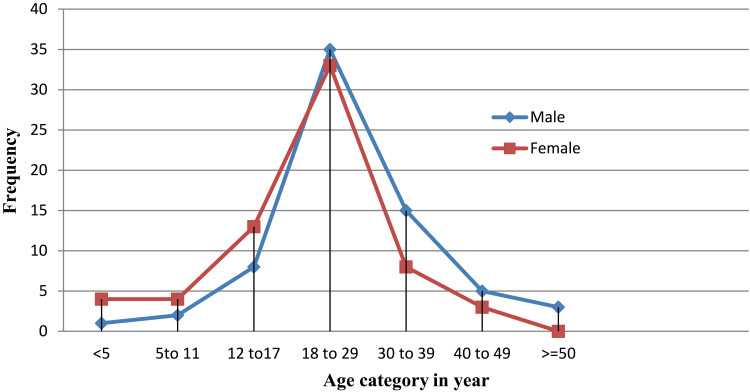
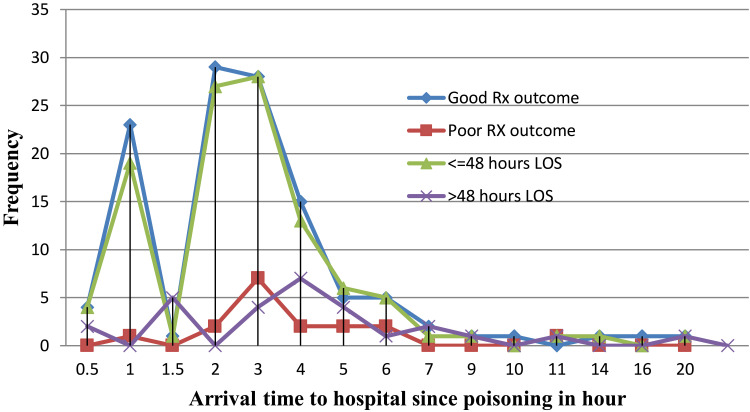
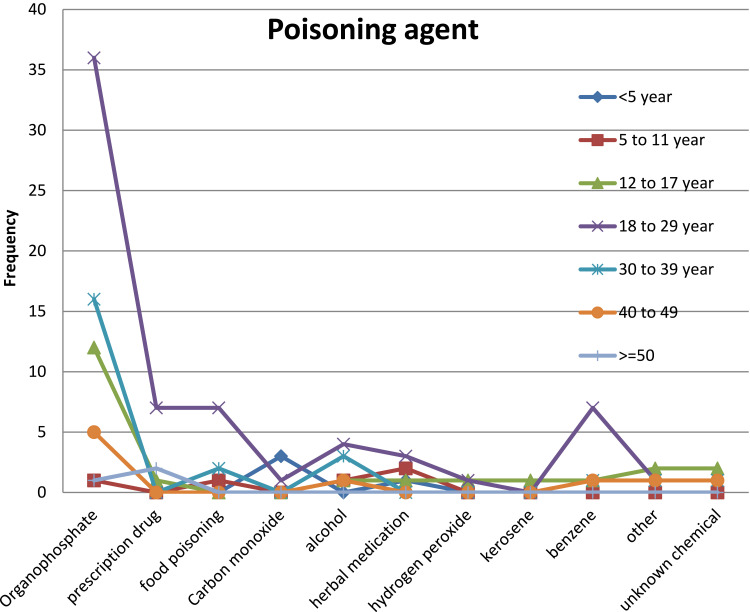
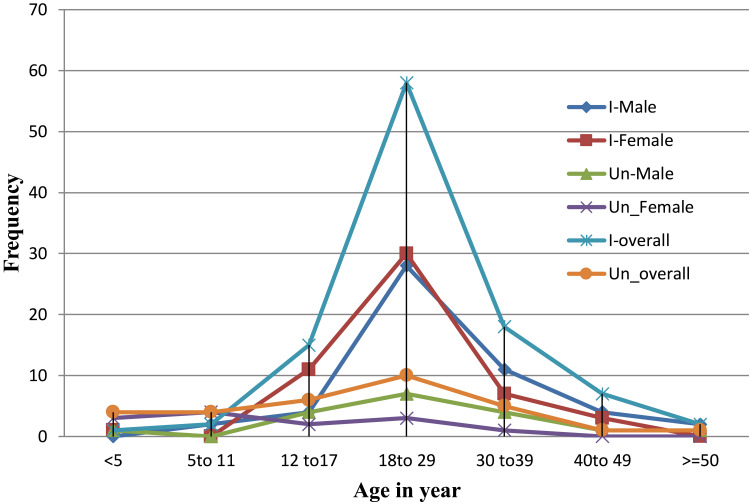
The prevalence of acute poisoning was 134/7883 (1.7%) per ED admissions. The mean ±SD age of the study participants was 23.90±10.606 with female to male ratio of 1:1.06. The most vulnerable patients to poisoning were individuals in the age range of 18 to 29 years 68/134 (50.7%) for both genders. Moreover, the most common poisoning agent was organophosphate 72/134 (53.7%). Besides, intentional poisoning was the most common 103/134 (76.9%) manner of poisoning with family disharmony 37/103 (35.9%) as the common reason. The case fatality rate of acute poisoning in the two hospitals was 2/134 (1.5%). The mean ±SD length of hospital stay was 1.86 ±0.943. The independent predictors of poor treatment outcome of acute poisoning were age ≥35 years [p-value= 0.049], female gender [p-value= 0.027], and hospital stay of >48 hours [p-value= 0.035].
The prevalence of acute poisoning in western Ethiopia is higher than the ever-reported data in Ethiopia. Thus, stakeholders should have to pay more attention to prevention and control strategies and appropriate handling of agrochemical substances to minimize their negative effects on this productive age group.
急性中毒是全球急诊就诊的常见原因。然而,埃塞俄比亚西部对这一问题了解甚少。本研究旨在确定埃塞俄比亚西部急诊急性中毒的患病率、预测因素和治疗结果。
采用基于医院记录的回顾性研究设计,对2018年1月1日至2019年3月17日期间两所医院急诊科收治的所有患者进行研究。收集社会人口统计学、临床表现、用药史、中毒特征、到达医院的时间、给予的治疗以及治疗结果。所有收集的数据均使用SPSS 20版进行分析。p值≤0.05的向后多因素逻辑回归分析检验治疗结果的预测因素。
急诊入院患者中急性中毒的患病率为134/7883(1.7%)。研究参与者的平均年龄±标准差为23.90±10.606岁,男女比例为1:1.06。最易中毒的患者是18至29岁的人群,男女合计68/134(50.7%)。此外,最常见的中毒剂是有机磷,72/134(53.7%)。此外,故意中毒是最常见的中毒方式,103/134(76.9%),家庭不和是常见原因,37/103(35.9%)。两所医院急性中毒的病死率为2/134(1.5%)。平均住院时间±标准差为1.86±0.943天。急性中毒治疗效果不佳的独立预测因素为年龄≥35岁[p值=0.049]、女性[p值=0.027]和住院时间>48小时[p值=0.035]。
埃塞俄比亚西部急性中毒的患病率高于埃塞俄比亚以往报告的数据。因此,利益相关者应更加关注预防和控制策略以及农用化学品的妥善处理,以尽量减少其对这一生产年龄组的负面影响。