UniCamillus, Saint Camillus International University of Health Sciences, Rome, Italy.
Department of Biomedicine and Control, University of Rome Torvergata, Rome, Italy.
Pan Afr Med J. 2020 Sep 14;37:49. doi: 10.11604/pamj.2020.37.49.23310. eCollection 2020.
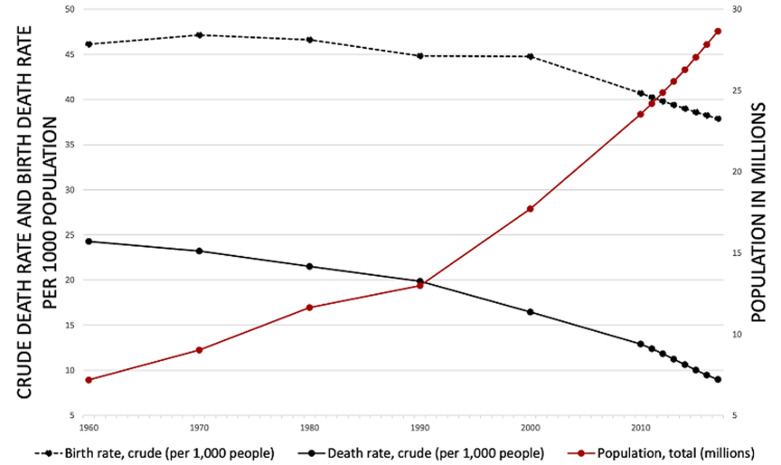
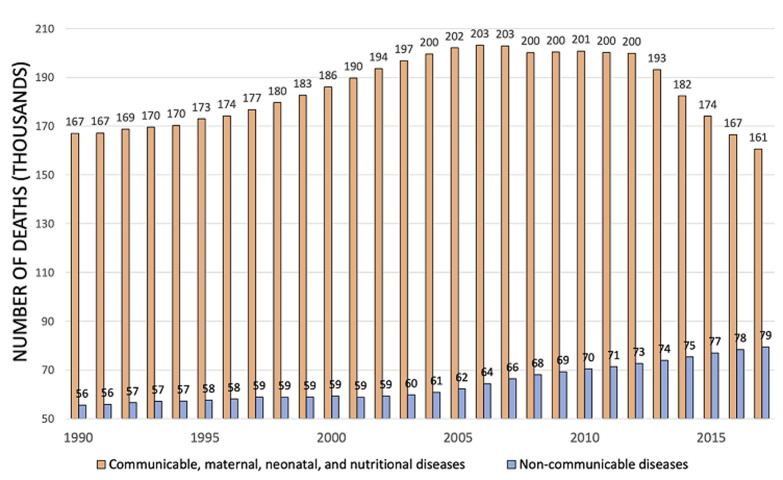
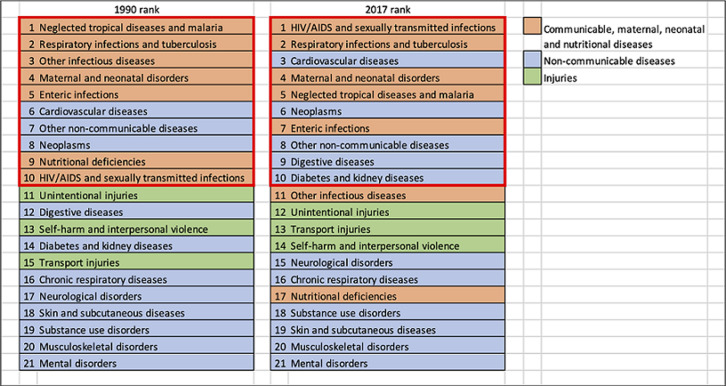
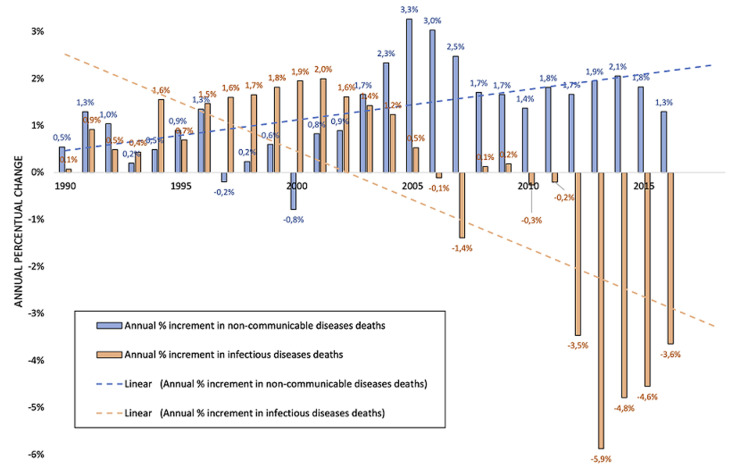
Epidemiological transition theory aims to describe changes in epidemiological scenarios at the global and national level. The assumption is the shift from infectious diseases (IDs) to non-communicable diseases (NCDs). Some authors argue that this theory failed to describe epidemiology in sub-Saharan Africa. We considered the case of Mozambique, where is occurring a rapid demographic change, with dramatic growth of the population. According to the data, we concluded that NCDs are increasing in Mozambique, but due to the vast predominance of IDs, a double burden of disease model is more accurate to describe the actual epidemiological context of the country. Consequently, health funding focusing on IDs should take into account the concomitant epidemiological scenario and try to encompass other health challenges.
流行病学转变理论旨在描述全球和国家层面的流行病学情况变化。其假设是传染病(IDs)向非传染性疾病(NCDs)的转变。一些作者认为该理论未能描述撒哈拉以南非洲的流行病学。我们以莫桑比克为例,该国正在经历快速的人口变化,人口急剧增长。根据数据,我们得出结论,莫桑比克的 NCD 正在增加,但由于 IDs 的巨大优势,双重疾病负担模型更能准确描述该国的实际流行病学情况。因此,关注 IDs 的卫生资金应考虑到同时存在的流行病学情况,并尝试涵盖其他健康挑战。