Bettencourt Sara, Miranda Catarina, Pozdniakova Tatiana A, Sampaio Paula, Franco-Duarte Ricardo, Pais Célia
CBMA-Centre of Molecular and Environmental Biology, Department of Biology, University of Minho, Campus de Gualtar, 4710-057 Braga, Portugal.
IB-S-Institute of Science and Innovation for Bio-Sustainability, University of Minho, Campus de Gualtar, 4710-057 Braga, Portugal.
Microorganisms. 2020 Nov 17;8(11):1809. doi: 10.3390/microorganisms8111809.
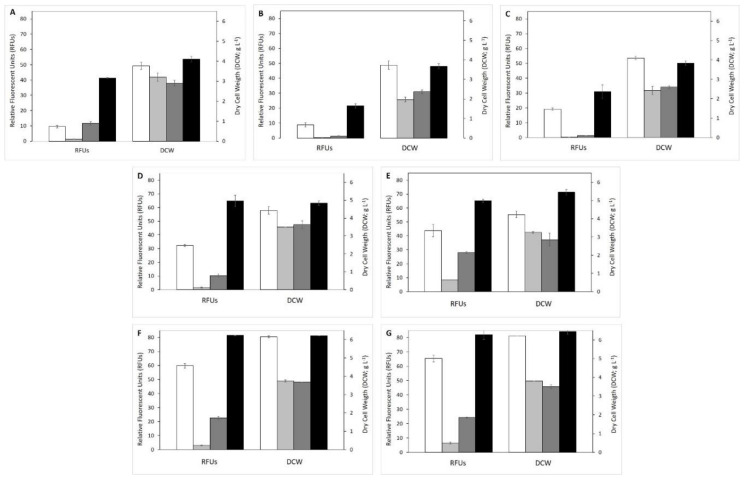
Four yeast isolates from the species-, , , and -previously selected by their oleaginous character and growth flexibility in different carbon sources, were tested for their capacity to convert volatile fatty acids into lipids, in the form of single cell oils. Growth, lipid yields, volatile fatty acids consumption, and long-chain fatty acid profiles were evaluated in media supplemented with seven different volatile fatty acids (acetic, butyric, propionic, isobutyric, valeric, isovaleric, and caproic), and also in a dark fermentation effluent filtrate. Yeasts and attained lipid productivities of more than 40% (/), mainly composed of oleic (>40%), palmitic (20%), and stearic (20%) acids, both in synthetic media and in the waste-derived effluent filtrate. These isolates may be potential candidates for single cell oil production in larger scale applications by using alternative carbon sources, combining economic and environmental benefits.
先前根据其产油特性和在不同碳源中的生长灵活性从、、和物种中选出的四株酵母分离株,被测试了将挥发性脂肪酸转化为单细胞油形式的脂质的能力。在添加了七种不同挥发性脂肪酸(乙酸、丁酸、丙酸、异丁酸、戊酸、异戊酸和己酸)的培养基中,以及在黑暗发酵出水滤液中,评估了生长、脂质产量、挥发性脂肪酸消耗和长链脂肪酸谱。酵母和在合成培养基和废物衍生的出水滤液中均实现了超过40%(/)的脂质生产率,主要由油酸(>40%)、棕榈酸(20%)和硬脂酸(20%)组成。通过使用替代碳源,这些分离株可能是大规模应用中生产单细胞油的潜在候选者,兼具经济和环境效益。