Sjöström Karin, Hickman Rachel A, Tepper Viktoria, Olmos Antillón Gabriela, Järhult Josef D, Emanuelson Ulf, Fall Nils, Sternberg Lewerin Susanna
Department of Clinical Sciences, Swedish University of Agricultural Sciences, 750 07 Uppsala, Sweden.
Department of Medical Biochemistry and Microbiology, Zoonosis Science Center, Uppsala University, 751 23 Uppsala, Sweden.
Antibiotics (Basel). 2020 Nov 21;9(11):834. doi: 10.3390/antibiotics9110834.
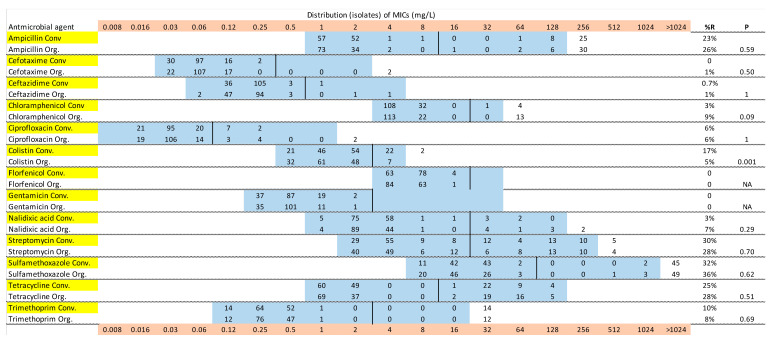
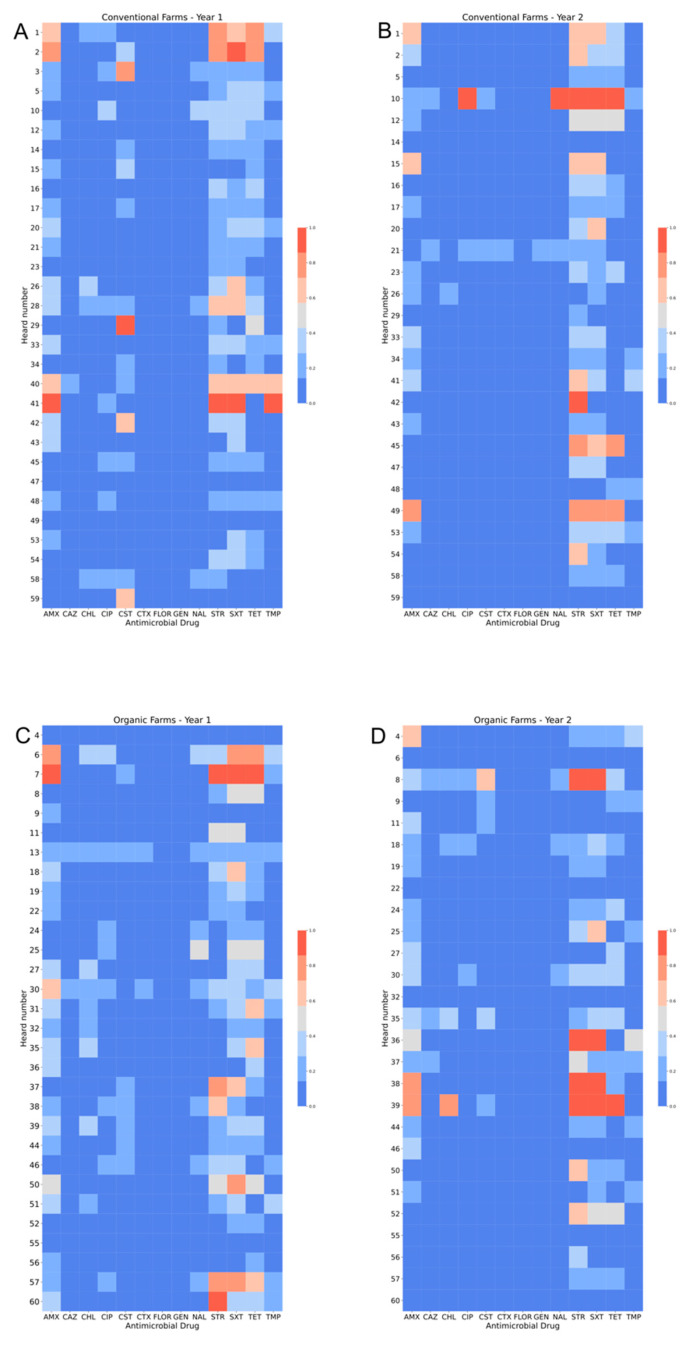
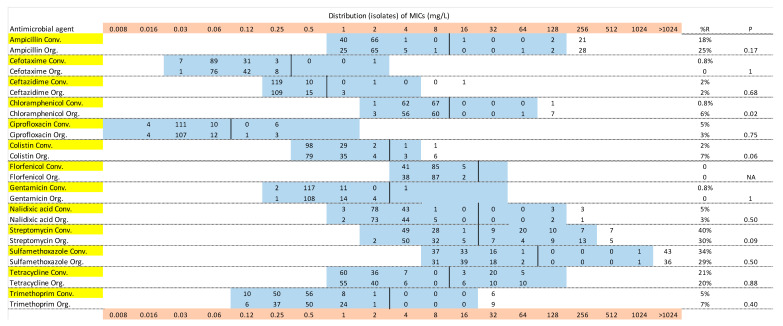
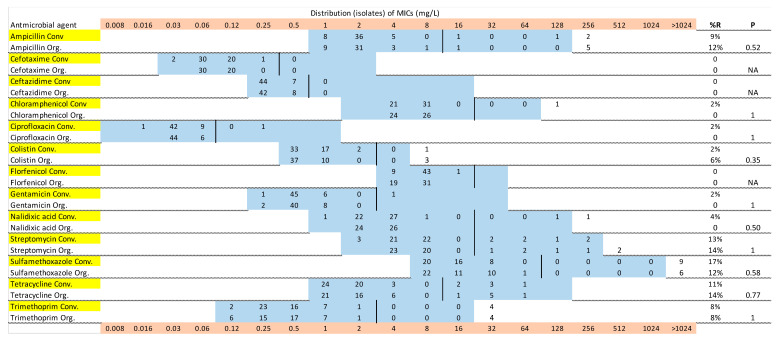
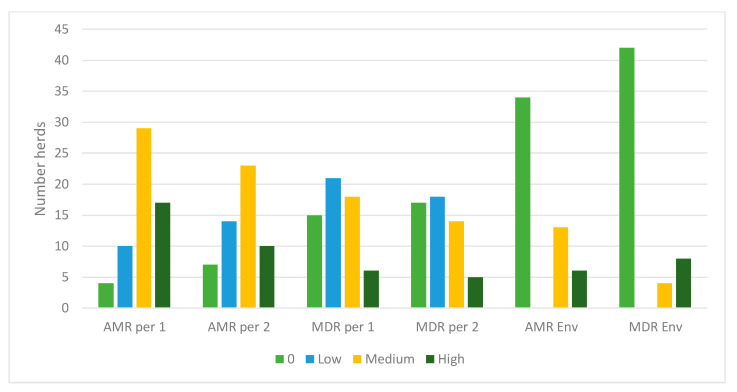
Monitoring antimicrobial resistance (AMR) and use (AMU) is important for control. We used from healthy young calves as an indicator to evaluate whether AMR patterns differ between Swedish organic and conventional dairy herds and whether the patterns could be related to AMU data. Samples were taken twice, in 30 organic and 30 conventional dairy herds. Selective culturing for , without antibiotics and with nalidixic acid or tetracycline, was used to estimate the proportions of resistant isolates. Microdilution was used to determine the minimum inhibitory concentrations (MICs) for thirteen antimicrobial substances. AMU data were based on collection of empty drug packages. Less than 8% of the bacterial growth on non-selective plates was also found on selective plates with tetracycline, and 1% on plates with nalidixic acid. Despite some MIC variations, resistance patterns were largely similar in both periods, and between organic and conventional herds. For most substances, only a few isolates were classified as resistant. The most common resistances were against ampicillin, streptomycin, sulfamethoxazole, and tetracycline. No clear association with AMU could be found. The lack of difference between organic and conventional herds is likely due to a generally good animal health status and consequent low AMU in both categories.
监测抗菌药物耐药性(AMR)和使用情况(AMU)对于控制工作很重要。我们以健康幼犊作为指标,评估瑞典有机和传统奶牛场之间的AMR模式是否存在差异,以及这些模式是否与AMU数据相关。在30个有机奶牛场和30个传统奶牛场中进行了两次采样。采用不加抗生素以及添加萘啶酸或四环素的选择性培养方法来估计耐药菌株的比例。使用微量稀释法测定13种抗菌物质的最低抑菌浓度(MIC)。AMU数据基于空药包的收集。在非选择性平板上不到8%的细菌生长在含四环素的选择性平板上也能发现,在含萘啶酸的平板上为1%。尽管MIC存在一些差异,但两个时期以及有机和传统奶牛场之间的耐药模式基本相似。对于大多数物质,只有少数菌株被归类为耐药。最常见的耐药情况是对氨苄西林、链霉素、磺胺甲恶唑和四环素。未发现与AMU有明显关联。有机和传统奶牛场之间缺乏差异可能是由于总体动物健康状况良好,因此两类奶牛场的AMU都较低。