Department of Ophthalmology, University of Kansas Medical Center, Kansas City, Kansas, USA.
Department of Anatomy and Cell Biology, University of Kansas Medical Center, Kansas City, Kansas, USA; Department of Biochemistry and Cell Biology, Geisel School of Medicine at Dartmouth College, Hanover, New Hampshire, USA.
J Biol Chem. 2021 Jan-Jun;296:100117. doi: 10.1074/jbc.RA119.010936. Epub 2020 Dec 3.
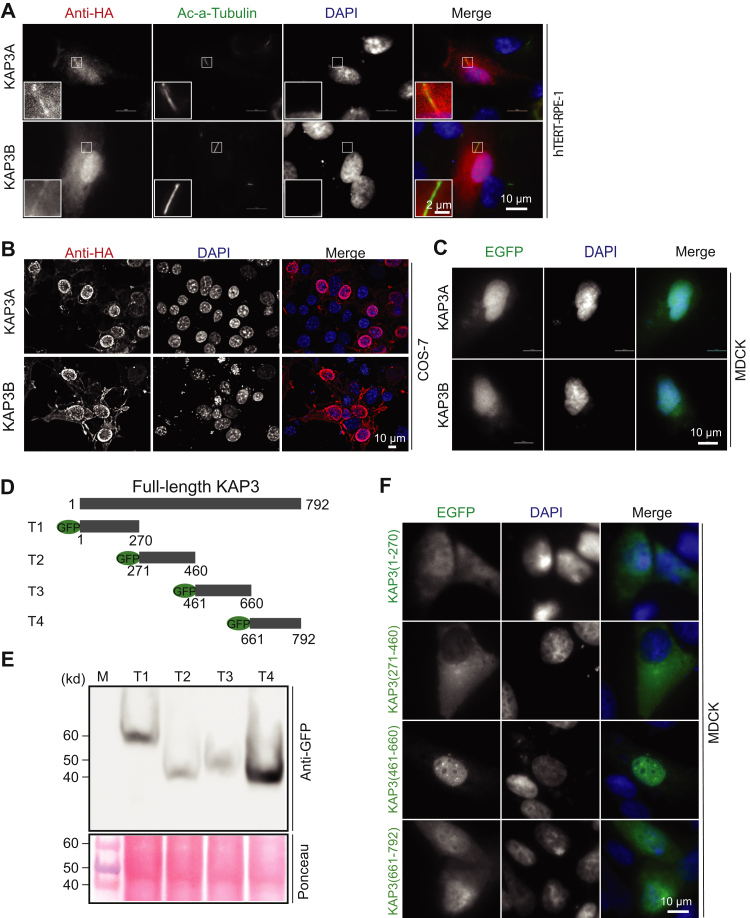
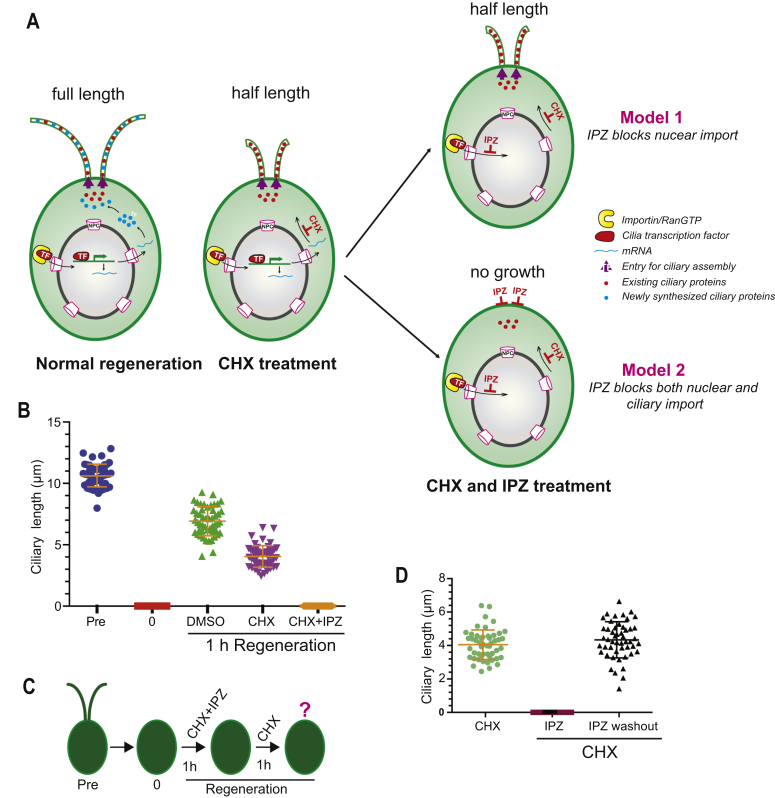
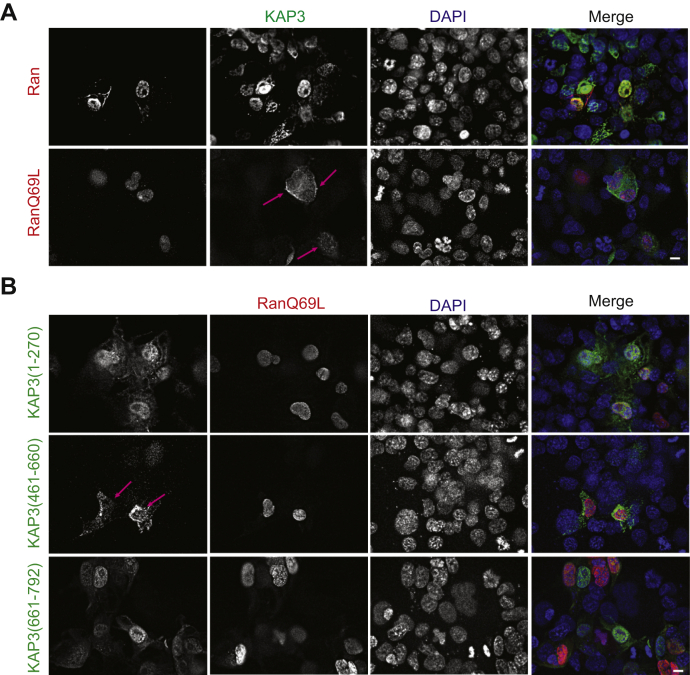
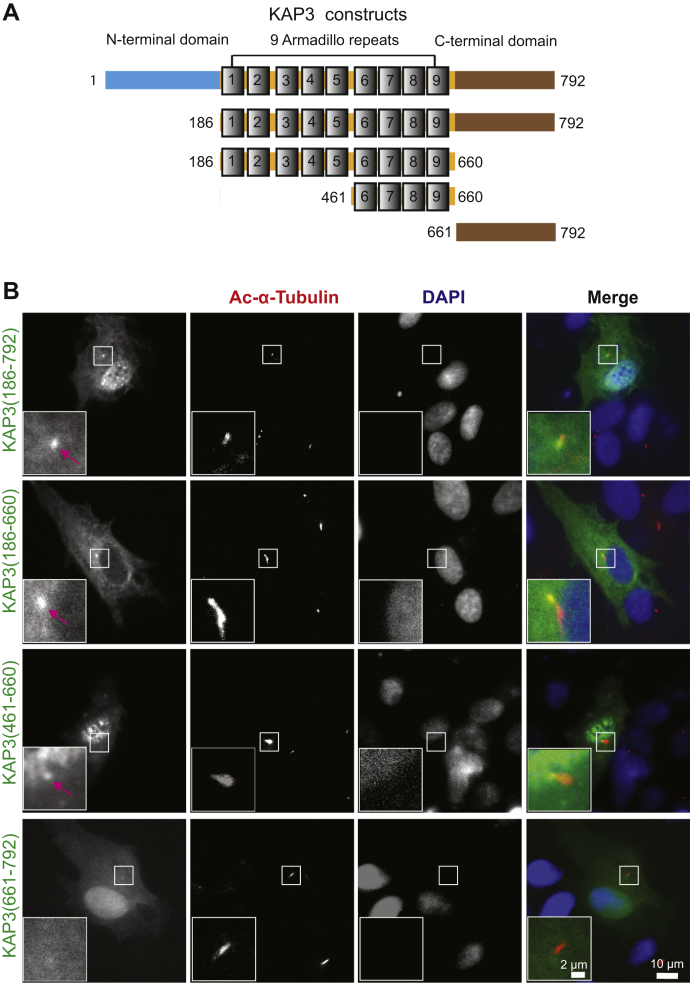
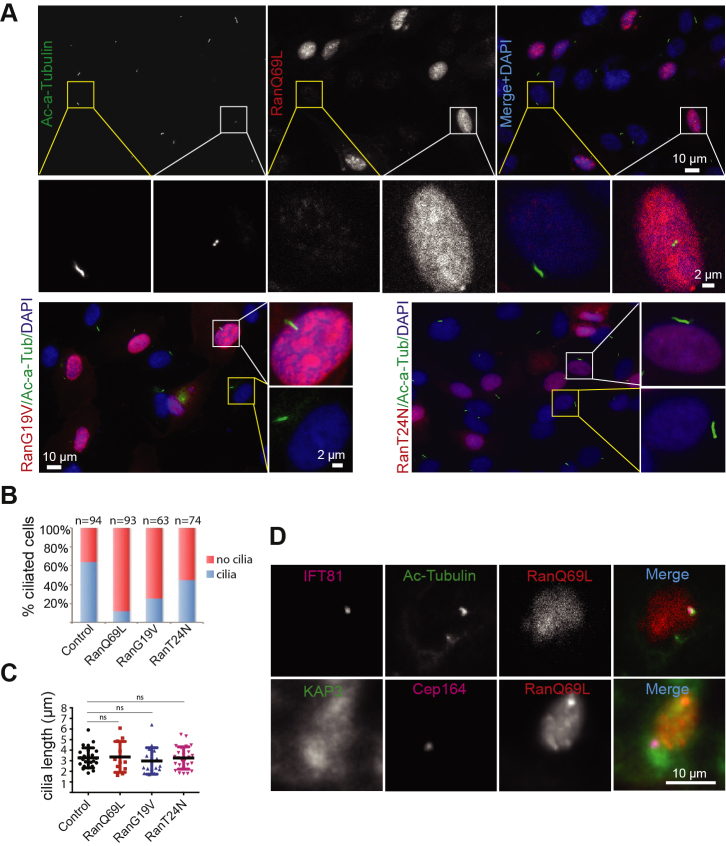
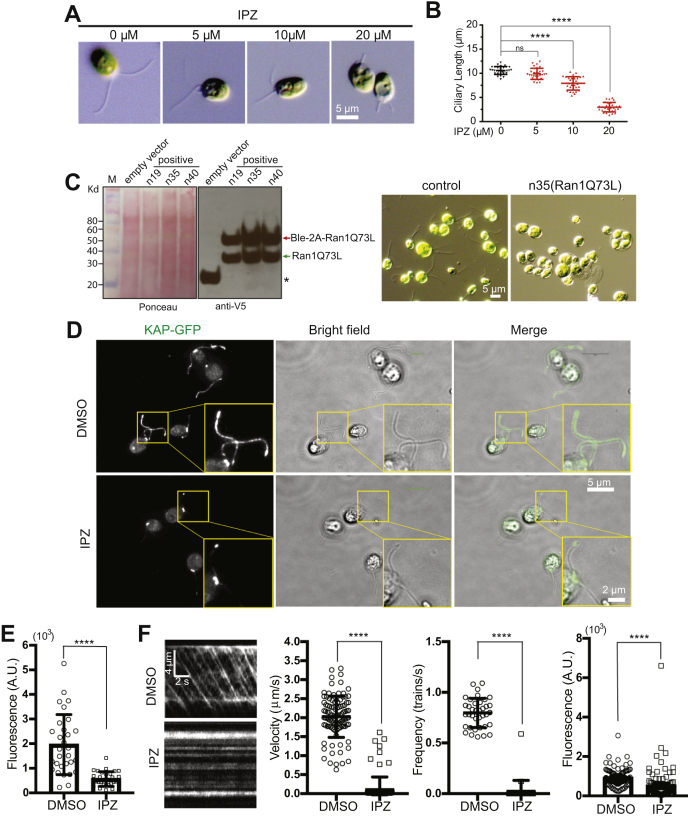
Kinesin is part of the microtubule-binding motor protein superfamily, which serves important roles in cell division and intraorganellar transport. The heterotrimeric kinesin-2, consisting of the heterodimeric motor subunits, kinesin family member 3A/3B (KIF3A/3B), and kinesin-associated protein 3 (KAP3), is highly conserved across species from the unicellular eukaryote Chlamydomonas to humans. It plays diverse roles in cargo transport including anterograde (base to tip) trafficking in cilia. However, the molecular determinants mediating trafficking of heterotrimeric kinesin-2 itself are poorly understood. It has been previously suggested that ciliary transport is analogous to nuclear transport mechanisms. Using Chlamydomonas and human telomerase reverse transcriptase-retinal pigment epithelial cell line, we show that RanGTP, a small GTPase that dictates nuclear transport, regulates ciliary trafficking of KAP3, a key component for functional kinesin-2. We found that the armadillo-repeat region 6 to 9 (ARM6-9) of KAP3, required for its nuclear translocation, is also necessary and sufficient for its targeting to the ciliary base. Given that KAP3 is essential for cilium formation and there are the emerging roles for RanGTP/importin β in ciliary protein targeting, we further investigated the effect of RanGTP in cilium formation and maintenance. We found that precise control of RanGTP levels, revealed by different Ran mutants, is crucial for cilium formation and maintenance. Most importantly, we were able to provide orthogonal support in an algal model system that segregates RanGTP regulation of ciliary protein trafficking from its nuclear roles. Our work provides important support for the model that nuclear import mechanisms have been co-opted for independent roles in ciliary import.
驱动蛋白是微管结合马达蛋白超家族的一部分,在细胞分裂和细胞器内运输中发挥着重要作用。异源三聚体驱动蛋白-2 由异二聚体马达亚基、驱动蛋白家族成员 3A/3B(KIF3A/3B)和驱动蛋白相关蛋白 3(KAP3)组成,在从单细胞真核生物衣藻到人等物种中高度保守。它在货物运输中发挥着多种作用,包括纤毛的顺行(基底到顶端)运输。然而,介导异源三聚体驱动蛋白-2 自身运输的分子决定因素还知之甚少。先前有人提出,纤毛运输类似于核运输机制。我们使用衣藻和人端粒酶逆转录酶-视网膜色素上皮细胞系表明,RanGTP,一种决定核运输的小分子 GTPase,调节 KAP3 的纤毛运输,KAP3 是功能性驱动蛋白-2 的关键组成部分。我们发现,KAP3 的核易位所必需的臂板重复区 6 至 9(ARM6-9)对于其靶向纤毛基底也是必需和充分的。鉴于 KAP3 对于纤毛形成是必不可少的,并且 RanGTP/importinβ 在纤毛蛋白靶向中出现了新兴作用,我们进一步研究了 RanGTP 对纤毛形成和维持的影响。我们发现,不同的 Ran 突变体揭示的 RanGTP 水平的精确控制对于纤毛形成和维持是至关重要的。最重要的是,我们能够在藻类模型系统中提供正交支持,该系统将 RanGTP 对纤毛蛋白运输的调节与其核作用分开。我们的工作为核输入机制被篡夺用于纤毛输入的独立作用的模型提供了重要支持。