Reverberi Eleonora, D'Angelo Chiara, Littlewood Martin A, Gozzoli Caterina Francesca
Department of Psychology, Catholic University of the Sacred Heart, Milan, Italy.
School of Sport and Exercise Sciences, Liverpool John Moores University, Liverpool, United Kingdom.
Front Psychol. 2020 Nov 10;11:567776. doi: 10.3389/fpsyg.2020.567776. eCollection 2020.
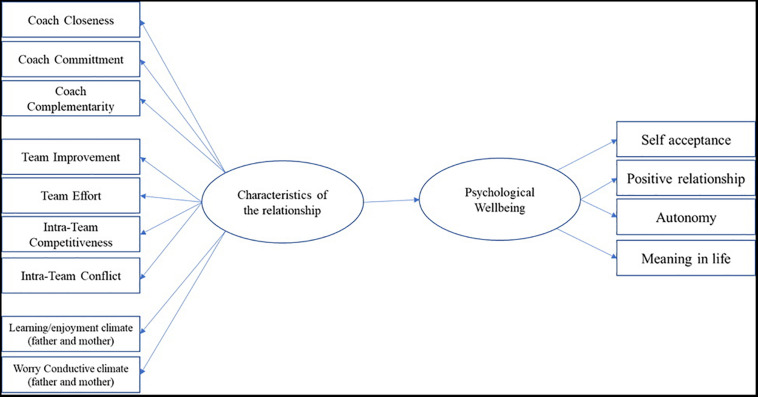
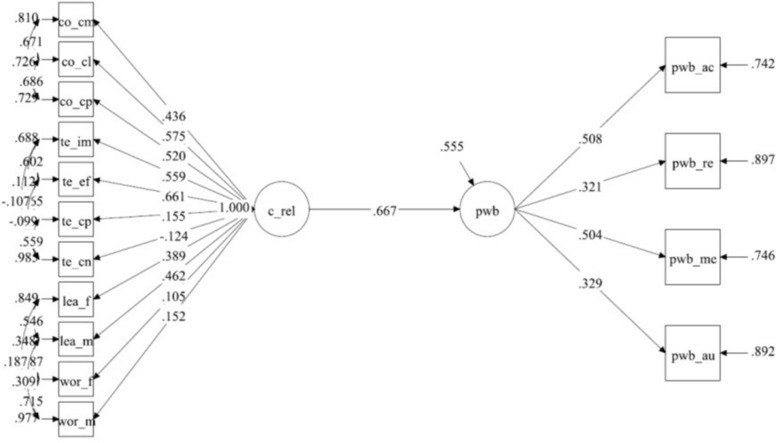
Well-being in youth sport is a growing topic in literature. Practicing sports at a youth level is recognized as an important opportunity for growth and development but also an experience that conversely can prove to be tiring and cause discomfort. Sometimes expectations and pressures make it a risky experience. This is emphasized even more when looking at very popular and spectacular sports, such as football in some European Countries; practicing football often solicits the hope of becoming champions one day and thus being able living thanks to the beloved sport. How do young Italian football practitioners feel? What role do relationships with significant others belonging to the world of sport and extra-sport play on the well-being of young athletes? On which specific aspects of psychological well-being (PWB) are these relationships based? Are there any differences between elite and amateurs levels? These are the questions upon which this paper focuses, considering a sample of young Italian football practitioners. Analysis reveals a strong and positive influence of some dimensions of the relationships with significant others on PWB, specifically team effort, coach closeness, and parental learning climate. Moreover, elite players perceive significantly better relationships than sub-elite and amateurs and have significantly higher levels of PWB. Those results provide a first evidence for the importance of good relationships within and outside sport for an effective development of youth football players since they positively influence players' PWB, which is higher in elite players. It emerges the necessity to further investigate different aspects of PWB and to deepen the knowledge about the meaning of relationship in developmental athletes according to a psychosocial approach.
青少年体育运动中的幸福感是文献中一个日益受到关注的话题。在青少年阶段参与体育运动被视为成长和发展的重要契机,但反之也可能是一段疲惫且令人不适的经历。有时,期望和压力会使其成为一种有风险的体验。在一些欧洲国家,当我们审视足球这类非常受欢迎且引人注目的运动时,这种情况更为突出;参与足球运动往往承载着有朝一日成为冠军并依靠这项热爱的运动谋生的期望。意大利年轻的足球从业者感受如何?与体育界及体育界之外的重要他人的关系对年轻运动员的幸福感有何作用?这些关系基于心理幸福感(PWB)的哪些具体方面?精英水平和业余水平之间是否存在差异?本文以意大利年轻足球从业者为样本,聚焦于这些问题。分析表明,与重要他人关系的某些维度对心理幸福感有强烈且积极的影响,特别是团队协作、与教练的亲密程度以及家庭的学习氛围。此外,精英球员所感知到的关系明显优于次精英和业余球员,且其心理幸福感水平显著更高。这些结果首次证明了体育内外良好关系对于青少年足球运动员有效发展的重要性,因为它们对球员的心理幸福感有积极影响,而精英球员的心理幸福感更高。由此可见,有必要进一步研究心理幸福感的不同方面,并根据社会心理方法深入了解发展中运动员关系的意义。