Department of Physics, University of York, Heslington, York, North Yorkshire, YO10 5DD, UK.
Department of Biology, University of York, Heslington, York, North Yorkshire, YO10 5DD, UK.
NPJ Biofilms Microbiomes. 2020 Nov 27;6(1):57. doi: 10.1038/s41522-020-00169-1.
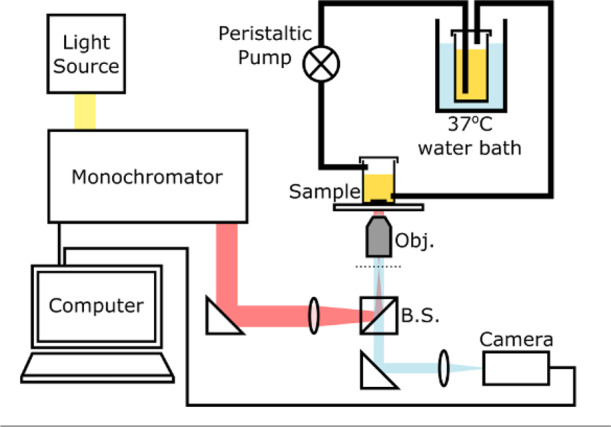
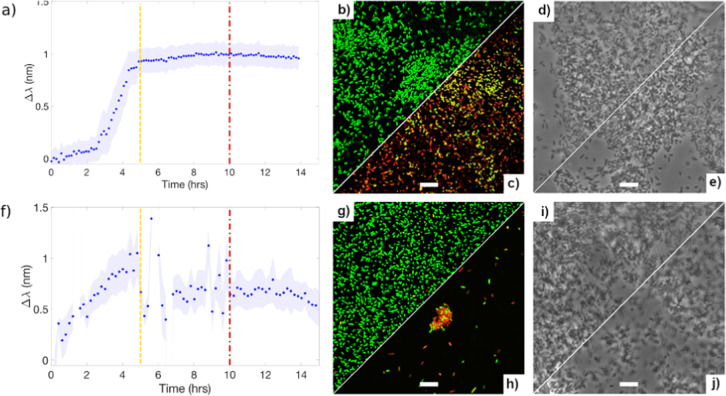
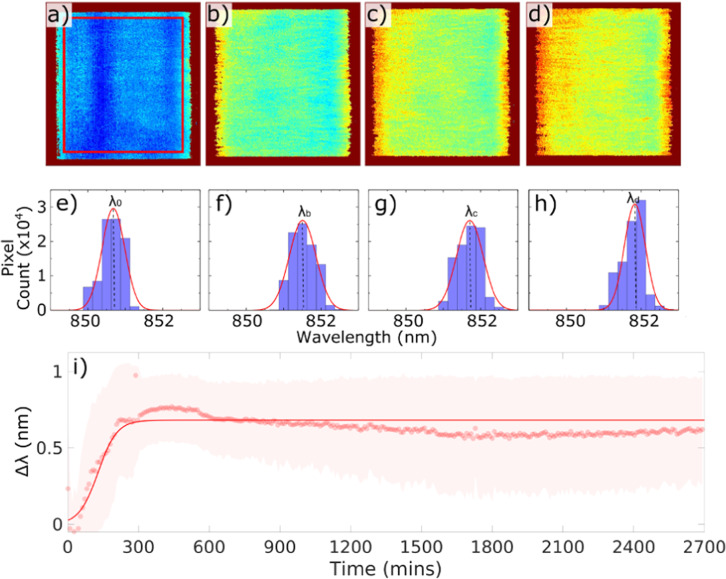
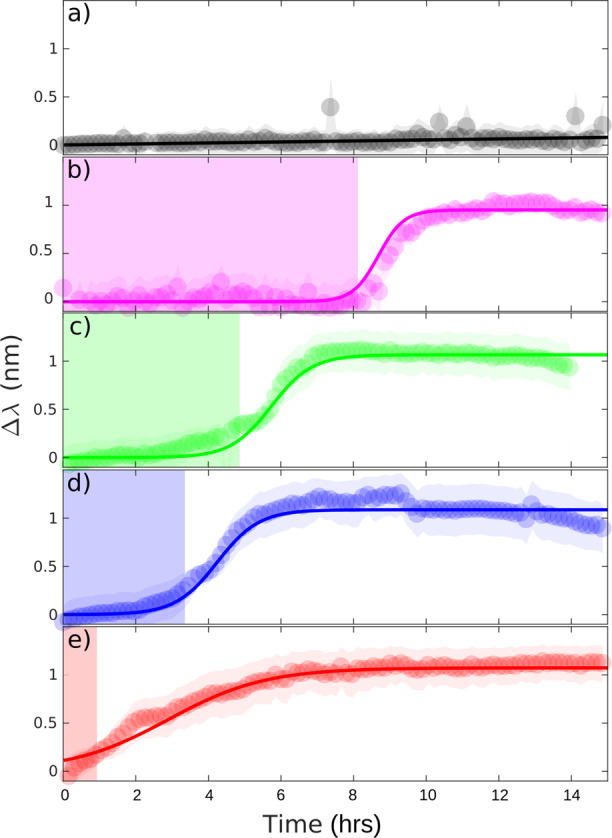
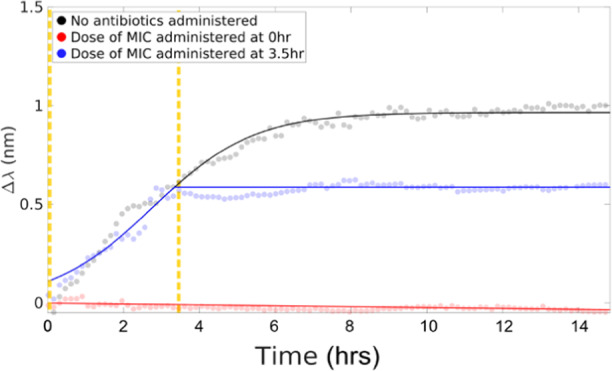
Many bacterial species readily develop biofilms that act as a protective matrix against external challenge, e.g., from antimicrobial treatment. Therefore, biofilms are often responsible for persistent and recurring infections. Established methods for studying biofilms are either destructive or focus on the biofilm's surface. A non-destructive method that is sensitive to the underside of the biofilm is highly desirable, as it allows studying the penetration of antibiotics through the film. Here, we demonstrate that the high surface sensitivity of resonant hyperspectral imaging provides this capability. The method allows us to monitor the early stages of Escherichia coli biofilm formation, cell attachment and microcolony formation, in-situ and in real-time. We study the response of the biofilm to a number of different antibiotics and verify our observations using confocal microscopy. Based on this ability to closely monitor the surface-bound cells, resonant hyperspectral imaging gives new insights into the antimicrobial resistance of biofilms.
许多细菌物种容易形成生物膜,生物膜作为一种保护性基质,可以抵御外部挑战,例如来自抗菌治疗的挑战。因此,生物膜通常是导致持续性和复发性感染的原因。现有的生物膜研究方法要么具有破坏性,要么专注于生物膜的表面。非常需要一种非破坏性的、对生物膜底面敏感的方法,因为它可以研究抗生素通过薄膜的渗透。在这里,我们证明了共振高光谱成像的高表面灵敏度提供了这种能力。该方法允许我们原位实时监测大肠杆菌生物膜形成、细胞附着和微菌落形成的早期阶段。我们研究了生物膜对多种不同抗生素的反应,并使用共聚焦显微镜验证了我们的观察结果。基于对表面结合细胞的密切监测能力,共振高光谱成像为生物膜的抗微生物耐药性提供了新的见解。