Department of Pathology and Laboratory Medicine, Weill Cornell Medicine, NY, NY, USA.
Department of Laboratory Medicine, Memorial Sloan-Kettering Cancer Center, NY, NY, USA.
Ann Diagn Pathol. 2021 Feb;50:151645. doi: 10.1016/j.anndiagpath.2020.151645. Epub 2020 Oct 13.
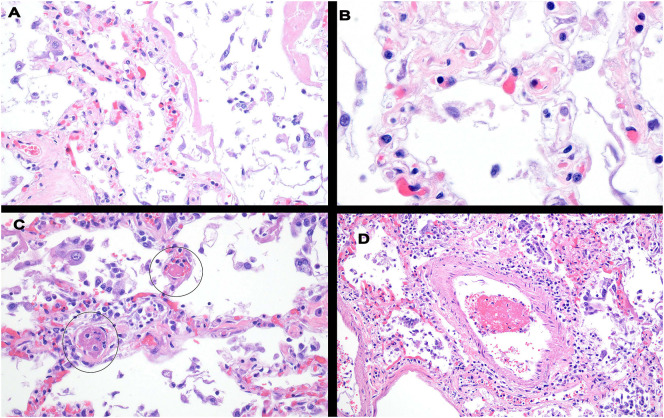
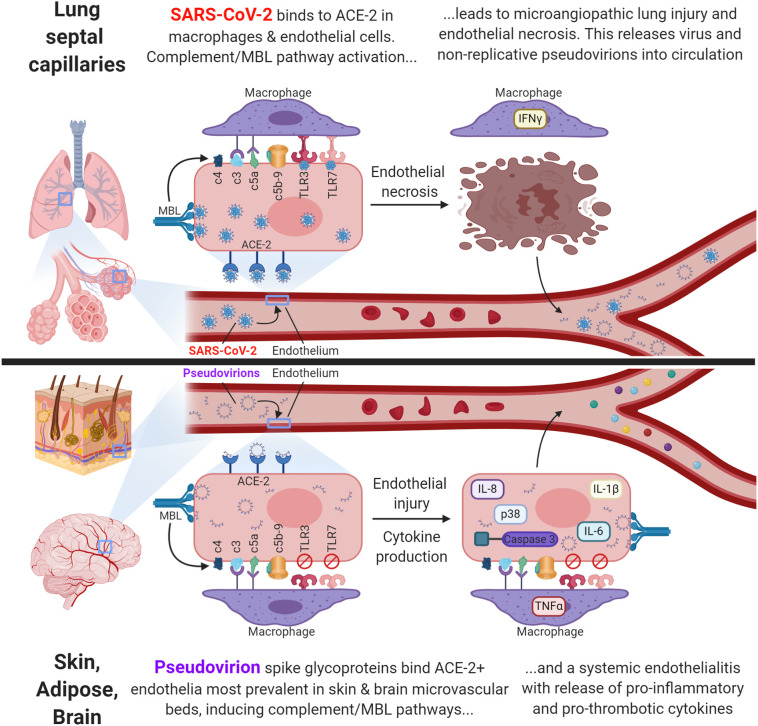
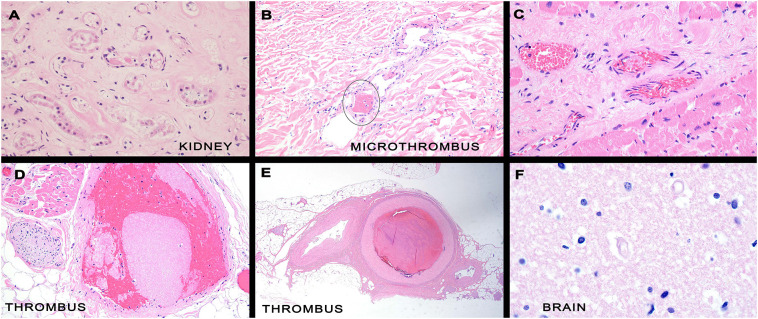
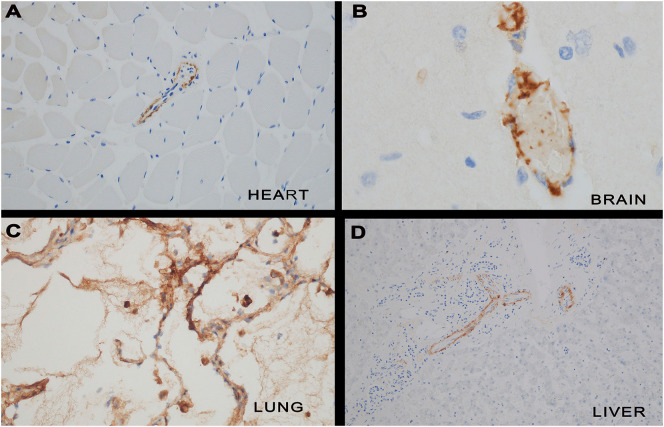
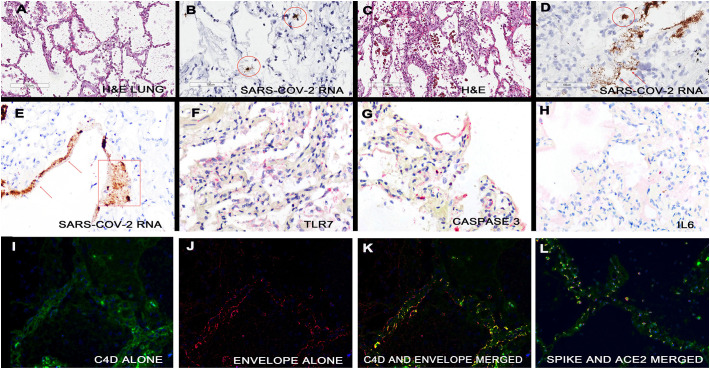
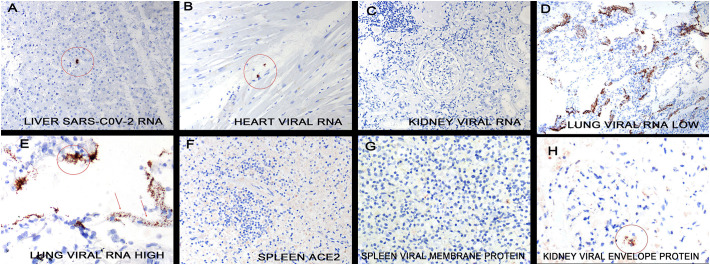
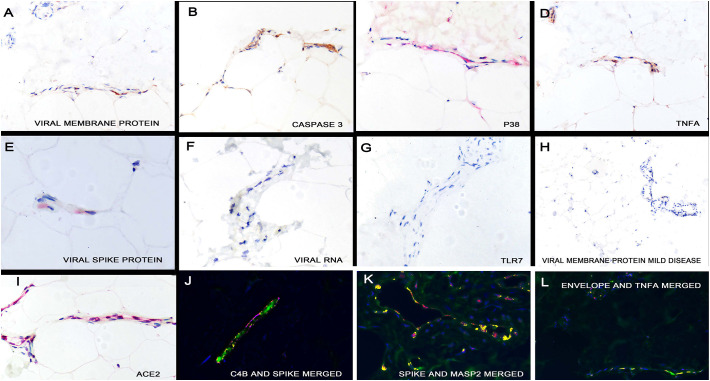
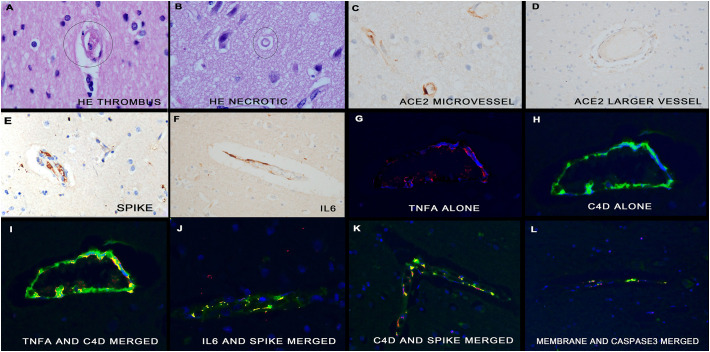
The objective of this study was to elucidate the pathophysiology that underlies severe COVID-19 by assessing the histopathology and the in situ detection of infectious SARS-CoV-2 and viral capsid proteins along with the cellular target(s) and host response from twelve autopsies. There were three key findings: 1) high copy infectious virus was limited mostly to the alveolar macrophages and endothelial cells of the septal capillaries; 2) viral spike protein without viral RNA localized to ACE2+ endothelial cells in microvessels that were most abundant in the subcutaneous fat and brain; 3) although both infectious virus and docked viral spike protein was associated with complement activation, only the endocytosed pseudovirions induced a marked up-regulation of the key COVID-19 associated proteins IL6, TNF alpha, IL1 beta, p38, IL8, and caspase 3. Importantly, this microvasculitis was associated with characteristic findings on hematoxylin and eosin examination that included endothelial degeneration and resultant basement membrane zone disruption and reduplication. It is concluded that serious COVID-19 infection has two distinct mechanisms: 1) a microangiopathy of pulmonary capillaries associated with a high infectious viral load where endothelial cell death releases pseudovirions into the circulation, and 2) the pseudovirions dock on ACE2+ endothelial cells most prevalent in the skin/subcutaneous fat and brain that activates the complement pathway/coagulation cascade resulting in a systemic procoagulant state as well as the expression of cytokines that produce the cytokine storm. The data predicts a favorable response to therapies based on either removal of circulating viral proteins and/or blunting of the endothelial-induced response.
本研究旨在通过评估 12 例尸检的组织病理学表现,原位检测感染性 SARS-CoV-2 和病毒衣壳蛋白,以及细胞靶标和宿主反应,阐明导致严重 COVID-19 的病理生理学机制。主要有三个发现:1)高拷贝的感染性病毒主要局限于肺泡巨噬细胞和隔毛细血管的内皮细胞;2)无病毒 RNA 的病毒刺突蛋白定位于富含于皮下脂肪和大脑的富含 ACE2 的微血管内皮细胞;3)尽管感染性病毒和衔接的病毒刺突蛋白都与补体激活有关,但只有内吞的假病毒颗粒能显著上调 COVID-19 相关蛋白 IL6、TNF alpha、IL1 beta、p38、IL8 和 caspase 3。重要的是,这种微血管炎与苏木精-伊红染色检查的特征性表现有关,包括内皮细胞变性和随之而来的基底膜区断裂和重复。结论是严重的 COVID-19 感染有两种不同的机制:1)与高感染性病毒载量相关的肺毛细血管微血管病,其中内皮细胞死亡将假病毒颗粒释放到循环中;2)假病毒颗粒与富含于皮肤/皮下脂肪和大脑的 ACE2+内皮细胞结合,激活补体途径/凝血级联反应,导致全身性促凝状态以及细胞因子的表达,从而产生细胞因子风暴。这些数据预测了基于清除循环病毒蛋白和/或抑制内皮诱导反应的治疗可能会有良好的反应。