Ge Jin-Nian, Yan Di, Ge Chun-Lin, Wei Min-Jie
Department of General Surgery, The First Affiliated Hospital of China Medical University, Shenyang 110001, Liaoning Province, China.
Intensive Care Unit, The Central Affiliated Hospital of Shenyang Medical College, Shenyang 110024, Liaoning Province, China.
World J Gastrointest Oncol. 2020 Nov 15;12(11):1272-1287. doi: 10.4251/wjgo.v12.i11.1272.
Recent studies have proved the important role of many oncogenic long non-coding RNAs (lncRNAs) in the progression of pancreatic cancer, but little is known about the mechanisms of tumor suppression in pancreatic cancer.
To evaluate the function of tumor suppressor lncRNA C9orf139 in pancreatic cancer progression and to study the underlying mechanism.
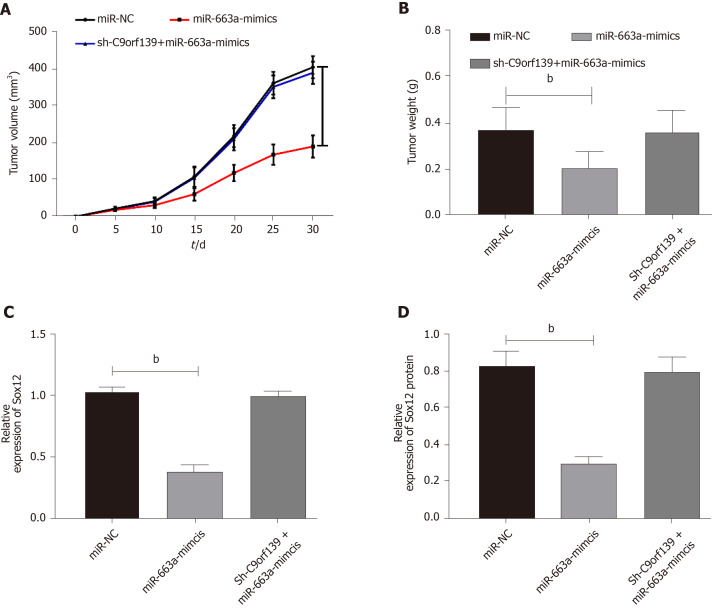
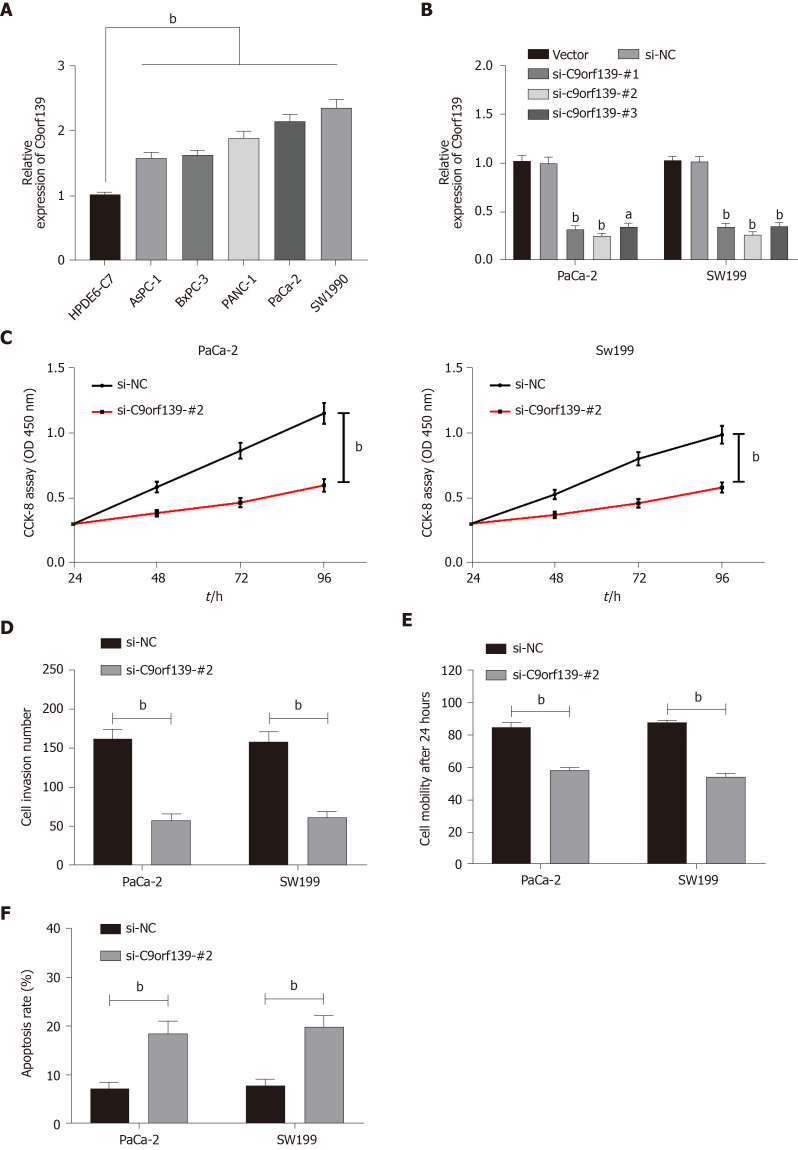
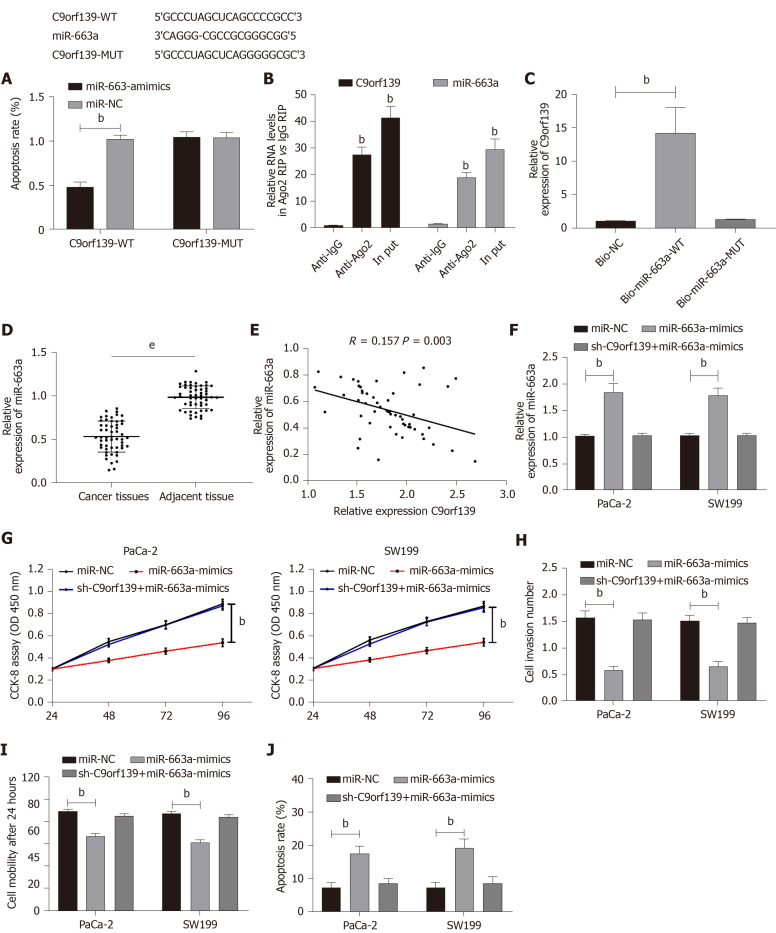
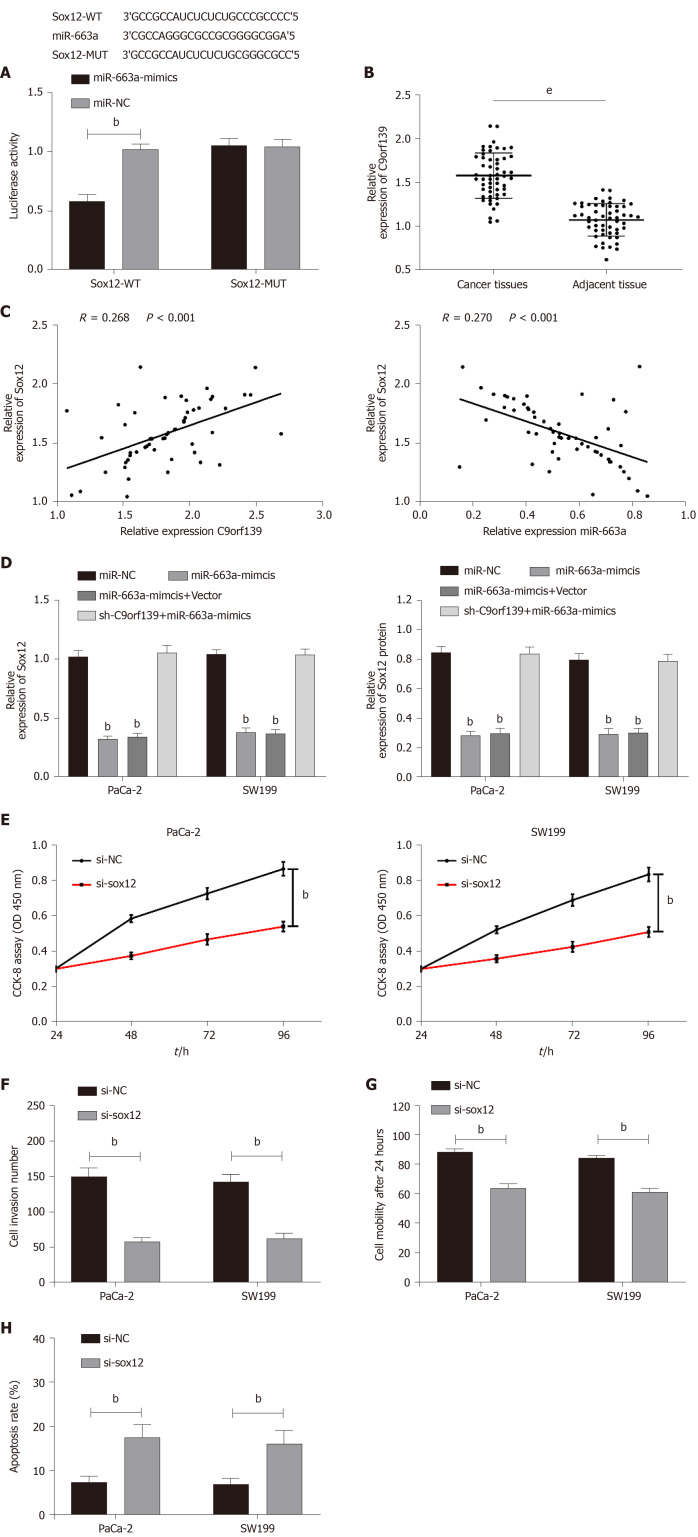
We assigned 54 patients with pancreatic ductal adenocarcinoma treated at our hospital to the patient group and 30 normal subjects undergoing physical examination to the control group. RT-qPCR was used to measure the relative expression of C9orf139 in the tissue and serum of patients, in an attempt to investigate the prognostic value of C9orf139 in pancreatic cancer patients. The luciferase reporter gene assay was performed to determine the interaction between C9orf139 and miR-663a. The biological function of C9orf139 was assessed by assays and subcutaneous tumor formation tests in animal models. To figure out the molecular mechanism of C9orf139 to act on miR-663a/Sox12, RNA pull-down, Western blot assay, RNA immunoprecipitation assay, and co-immunoprecipitation assay were performed.
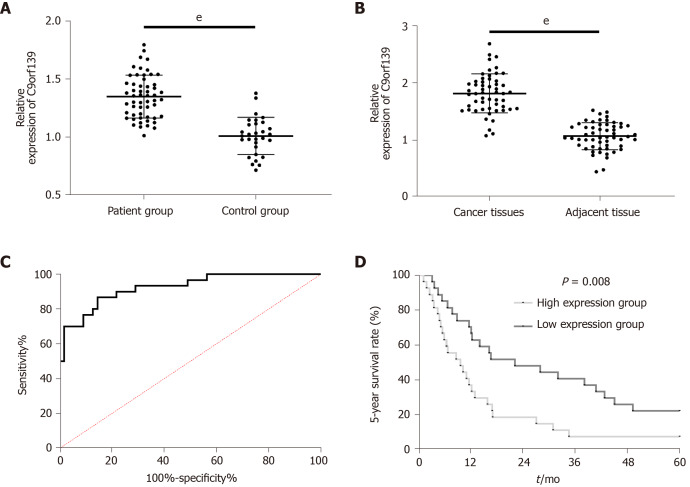
C9orf139 level significantly increased in the tissue and serum of patients, which had clinical diagnostic value for pancreatic cancer. Patients with high C9orf139 expression had a higher risk of progressing to stage III + IV, lymph node metastasis, and poor differentiation. Cox regression analysis suggested that C9orf139, tumor-node-metastasis stage, and lymph node metastasis were independent prognostic factors in patients. The underlying mechanism of C9orf139 was that it promoted the growth of pancreatic cancer cells by modulating the miR-663a/Sox12 axis.
C9orf139 is highly expressed in pancreatic cancer, qualified to be used as a potential diagnostic and prognostic marker for pancreatic cancer. Its promotion of pancreatic cancer cell growth is achieved by mediating the miR-663a/Sox12 axis.
近期研究已证实许多致癌长链非编码RNA(lncRNAs)在胰腺癌进展中起重要作用,但关于胰腺癌中肿瘤抑制机制的了解却很少。
评估肿瘤抑制性lncRNA C9orf139在胰腺癌进展中的作用,并研究其潜在机制。
我们将在我院接受治疗的54例胰腺导管腺癌患者分为患者组,将30例接受体检的正常受试者分为对照组。采用逆转录定量聚合酶链反应(RT-qPCR)检测患者组织和血清中C9orf139的相对表达,以探讨C9orf139在胰腺癌患者中的预后价值。进行荧光素酶报告基因检测以确定C9orf139与miR-663a之间的相互作用。通过 检测和动物模型中的皮下肿瘤形成试验评估C9orf139的生物学功能。为了弄清楚C9orf139作用于miR-663a/Sox12的分子机制,进行了RNA下拉、蛋白质免疫印迹检测、RNA免疫沉淀检测和免疫共沉淀检测。
患者组织和血清中C9orf139水平显著升高,对胰腺癌具有临床诊断价值。C9orf139高表达的患者进展至III + IV期、发生淋巴结转移及分化差的风险更高。Cox回归分析表明,C9orf139、肿瘤-淋巴结-转移分期和淋巴结转移是患者的独立预后因素。C9orf139的潜在机制是通过调节miR-663a/Sox12轴促进胰腺癌细胞生长。
C9orf139在胰腺癌中高表达,有资格作为胰腺癌的潜在诊断和预后标志物。它通过介导miR-663a/Sox12轴促进胰腺癌细胞生长。