CBIO-Centre for Computational Biology, Mines ParisTech, Paris, France.
Translational Sciences, SANOFI R&D, Chilly-Mazarin, France.
PLoS One. 2020 Nov 30;15(11):e0242927. doi: 10.1371/journal.pone.0242927. eCollection 2020.
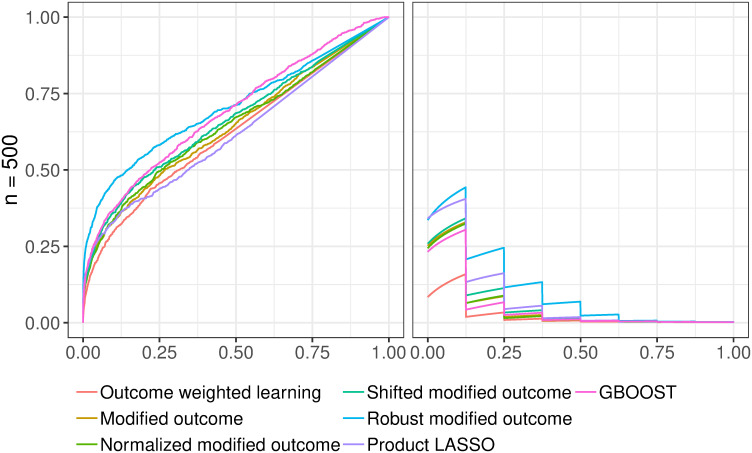
More and more genome-wide association studies are being designed to uncover the full genetic basis of common diseases. Nonetheless, the resulting loci are often insufficient to fully recover the observed heritability. Epistasis, or gene-gene interaction, is one of many hypotheses put forward to explain this missing heritability. In the present work, we propose epiGWAS, a new approach for epistasis detection that identifies interactions between a target SNP and the rest of the genome. This contrasts with the classical strategy of epistasis detection through exhaustive pairwise SNP testing. We draw inspiration from causal inference in randomized clinical trials, which allows us to take into account linkage disequilibrium. EpiGWAS encompasses several methods, which we compare to state-of-the-art techniques for epistasis detection on simulated and real data. The promising results demonstrate empirically the benefits of EpiGWAS to identify pairwise interactions.
越来越多的全基因组关联研究旨在揭示常见疾病的全基因组遗传基础。然而,由此产生的基因座通常不足以完全恢复观察到的遗传率。上位性或基因-基因相互作用是许多用来解释这种遗传缺失的假设之一。在本工作中,我们提出了 epiGWAS,这是一种用于检测上位性的新方法,可识别目标 SNP 与基因组其余部分之间的相互作用。这与通过穷尽的 SNP 两两测试进行上位性检测的经典策略形成对比。我们从随机临床试验中的因果推断中获得灵感,这使我们能够考虑连锁不平衡。epiGWAS 包含几种方法,我们将其与基于模拟和真实数据的最新上位性检测技术进行了比较。有希望的结果从经验上证明了 epiGWAS 识别成对相互作用的优势。