Centre for Sport Studies, Rey Juan Carlos University, 28043 Fuenlabrada, Spain.
GO fit LAB, Ingesport, 28003 Madrid, Spain.
Nutrients. 2020 Nov 24;12(12):3603. doi: 10.3390/nu12123603.
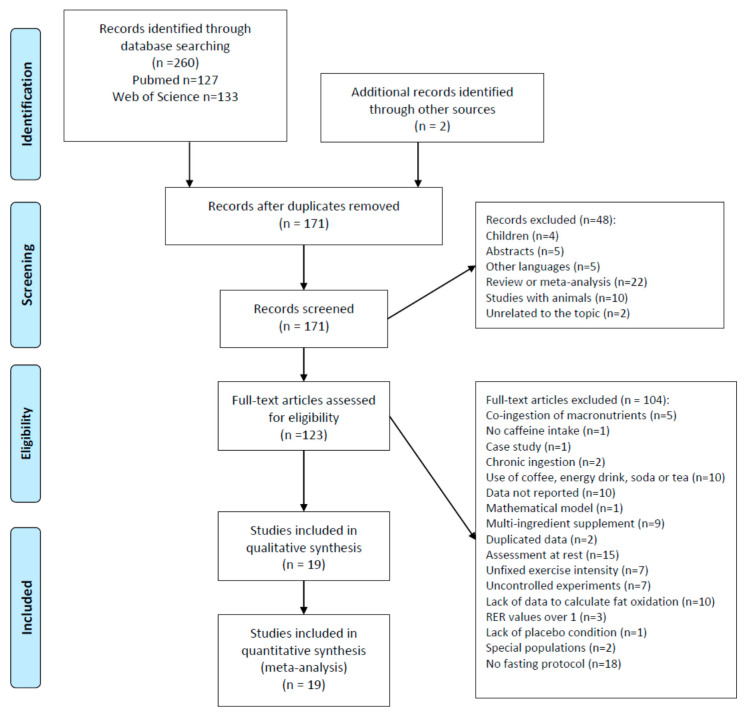
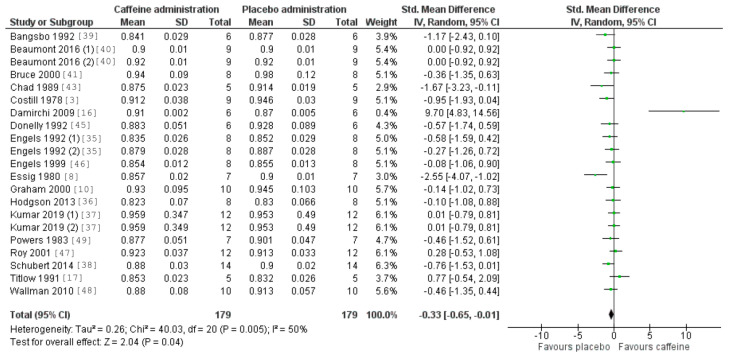
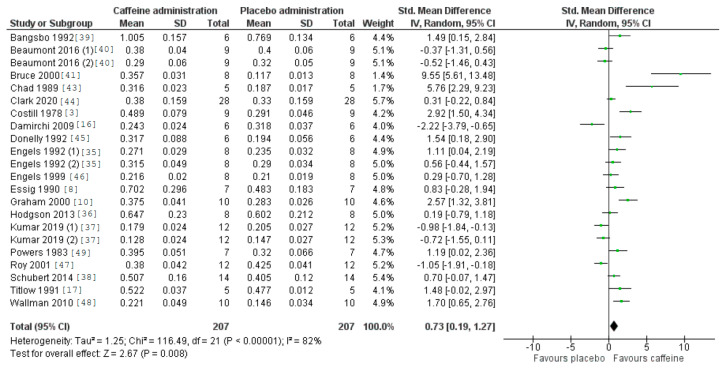
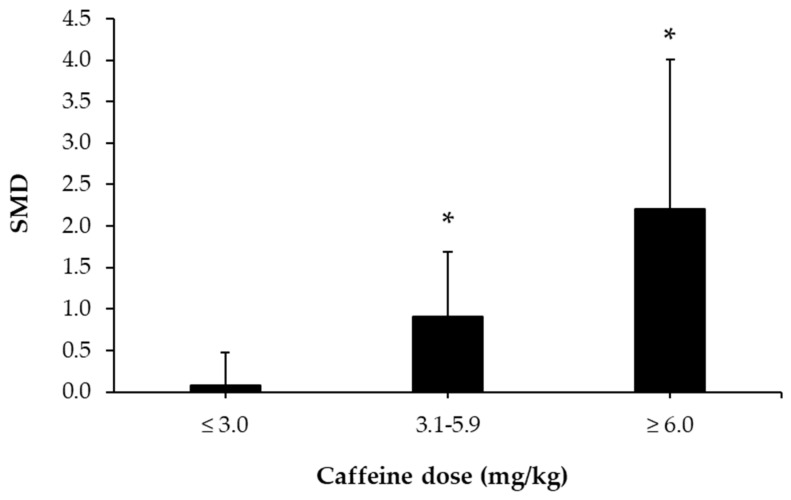
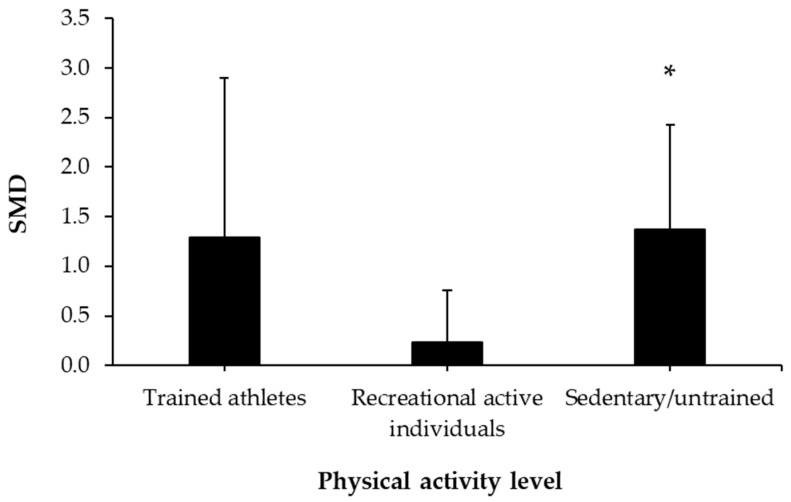
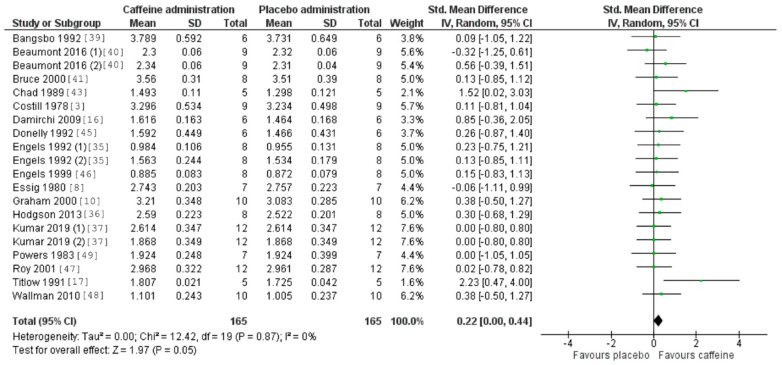
A number of previous investigations have been designed to determine the effect of acute caffeine intake on the rate of fat oxidation during exercise. However, these investigations have shown contradictory results due to the differences in the exercise protocols used or the co-ingestion of caffeine with other substances. Hence, to date, there is no consensus about the effect of caffeine on fat oxidation during exercise. The purpose of this study was to conduct a systematic review followed by a meta-analysis to establish the effect of acute intake of caffeine (ranging from 2 to 7 mg/kg of body mass) on the rate of fat oxidation during exercise. A total of 19 studies published between 1978 and 2020 were included, all of which employed crossover experimental designs in which the ingestion of caffeine was compared to a placebo. Studies were selected if the exercise intensity was consistent in the caffeine and placebo trials and if these were preceded by a fasting protocol. A subsequent meta-analysis was performed using the random effects model to calculate the standardized mean difference (SMD). The meta-analysis revealed that caffeine significantly ( = 0.008) increased the fat oxidation rate (SMD = 0.73; 95% CI = 0.19 to 1.27). This increment was consistent with a significant ( = 0.04) reduction of the respiratory exchange ratio (SMD = -0.33; 95% CI = -0.65 to -0.01) and a significant ( = 0.049) increase in the oxygen uptake (SMD = 0.23; 95% CI = 0.01 to 0.44). The results also showed that there was a dose-response effect of caffeine on the fat oxidation rate, indicating that more than 3.0 mg/kg is necessary to obtain a statistically significant effect of this stimulant on fat oxidation during exercise. Additionally, the ability of caffeine to enhance fat oxidation during exercise was higher in sedentary or untrained individuals than in trained and recreational athletes. In conclusion, pre-exercise intake of a moderate dose of caffeine may effectively increase fat utilization during aerobic exercise of submaximal intensity performed after a fasting period. However, the fitness level of the participant may modulate the magnitude of the effect of caffeine on fat oxidation during exercise.
先前有多项研究旨在确定急性摄入咖啡因对运动时脂肪氧化率的影响。然而,由于使用的运动方案不同,或咖啡因与其他物质同时摄入,这些研究结果存在矛盾。因此,迄今为止,关于咖啡因对运动时脂肪氧化的影响尚无定论。本研究旨在进行系统评价和荟萃分析,以确定急性摄入咖啡因(体重 2 至 7 毫克/千克)对运动时脂肪氧化率的影响。共纳入 19 项发表于 1978 年至 2020 年的研究,均采用交叉实验设计,比较咖啡因摄入与安慰剂。如果咖啡因和安慰剂试验中的运动强度一致,并且这些试验之前遵循禁食方案,则选择这些研究。随后使用随机效应模型进行荟萃分析,以计算标准化均数差(SMD)。荟萃分析显示,咖啡因显著( = 0.008)增加了脂肪氧化率(SMD = 0.73;95%CI = 0.19 至 1.27)。这一增量与呼吸交换率的显著降低( = 0.04)(SMD = -0.33;95%CI = -0.65 至 -0.01)和耗氧量的显著增加( = 0.049)(SMD = 0.23;95%CI = 0.01 至 0.44)一致。结果还表明,咖啡因对脂肪氧化率有剂量反应效应,表明摄入超过 3.0 毫克/千克才能使这种兴奋剂对运动时脂肪氧化产生统计学上的显著影响。此外,咖啡因在运动时增强脂肪氧化的能力在久坐不动或未经训练的个体中高于训练有素的和娱乐性的运动员。总之,空腹后进行亚最大强度的有氧运动前摄入适量的咖啡因可能会有效地增加脂肪利用。然而,参与者的健康水平可能会调节咖啡因对运动时脂肪氧化的影响程度。