Wu Qi, Chen Xinyue, Li Juanjuan, Sun Shengrong
1Department of Breast and Thyroid Surgery, Renmin Hospital of Wuhan University, Wuhan, Hubei, China.
Aging Dis. 2020 Dec 1;11(6):1640-1653. doi: 10.14336/AD.2020.0314. eCollection 2020 Dec.
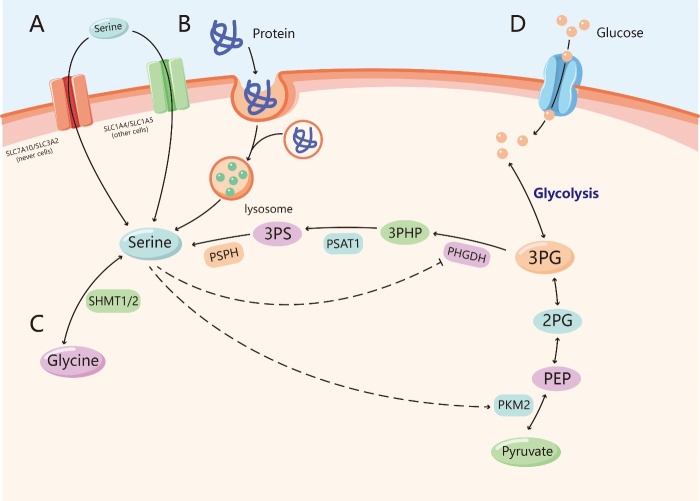
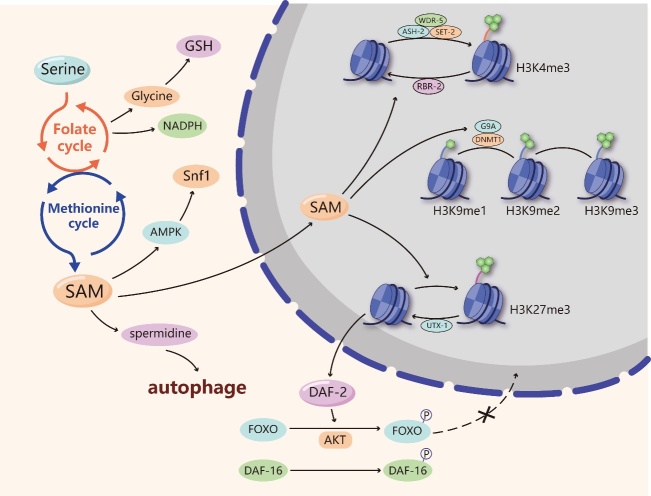
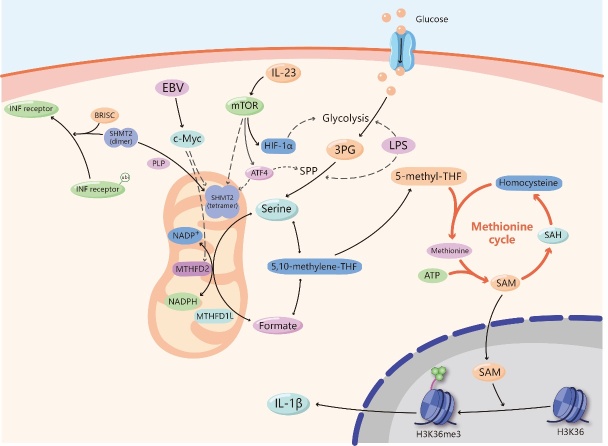
As one of the nonessential amino acids (NEAAs), serine is involved in the anabolism of multiple macromolecular substances by participating in one-carbon unit metabolism. Thus, rapidly proliferating cells such as tumor cells and activated immune cells are highly dependent on serine. Serine supports the proliferation of various immune cells through multiple pathways to enhance the antitumor immune response. Moreover, serine influences aging specificity in an epigenetic and metabolic manner. In this review, we focus on recent advances in the relationship between serine metabolism, antitumor immunity, and senescence. The metabolic regulation of serine seems to be a key point of intervention in antitumor immunity and aging-related disease, providing an opportunity for several novel therapeutics.
作为非必需氨基酸(NEAA)之一,丝氨酸通过参与一碳单位代谢参与多种大分子物质的合成代谢。因此,诸如肿瘤细胞和活化免疫细胞等快速增殖的细胞高度依赖丝氨酸。丝氨酸通过多种途径支持各种免疫细胞的增殖,以增强抗肿瘤免疫反应。此外,丝氨酸以表观遗传和代谢的方式影响衰老特异性。在本综述中,我们关注丝氨酸代谢、抗肿瘤免疫和衰老之间关系的最新进展。丝氨酸的代谢调节似乎是抗肿瘤免疫和衰老相关疾病干预的关键点,为几种新型治疗方法提供了机会。