Wang Qiuxia, Sun Hai, Li Meijia, Xu Chenglu, Zhang Yayu
Institute of Special Wild Economic Animal and Plant Sciences, Chinese Academy of Agricultural Sciences, Jilin, China.
College of Pharmacy and Biological Engineering, Chengdu University, Chengdu, China.
Front Plant Sci. 2020 Nov 12;11:563240. doi: 10.3389/fpls.2020.563240. eCollection 2020.
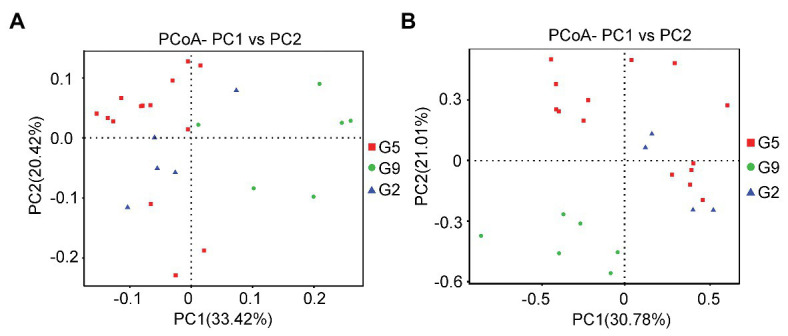
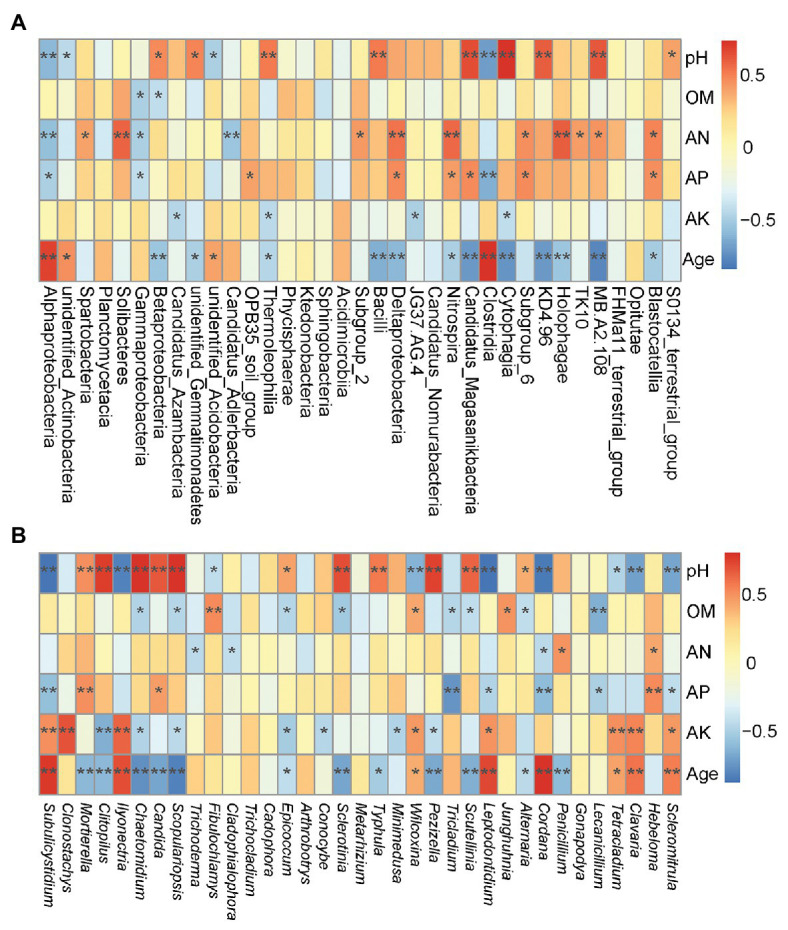
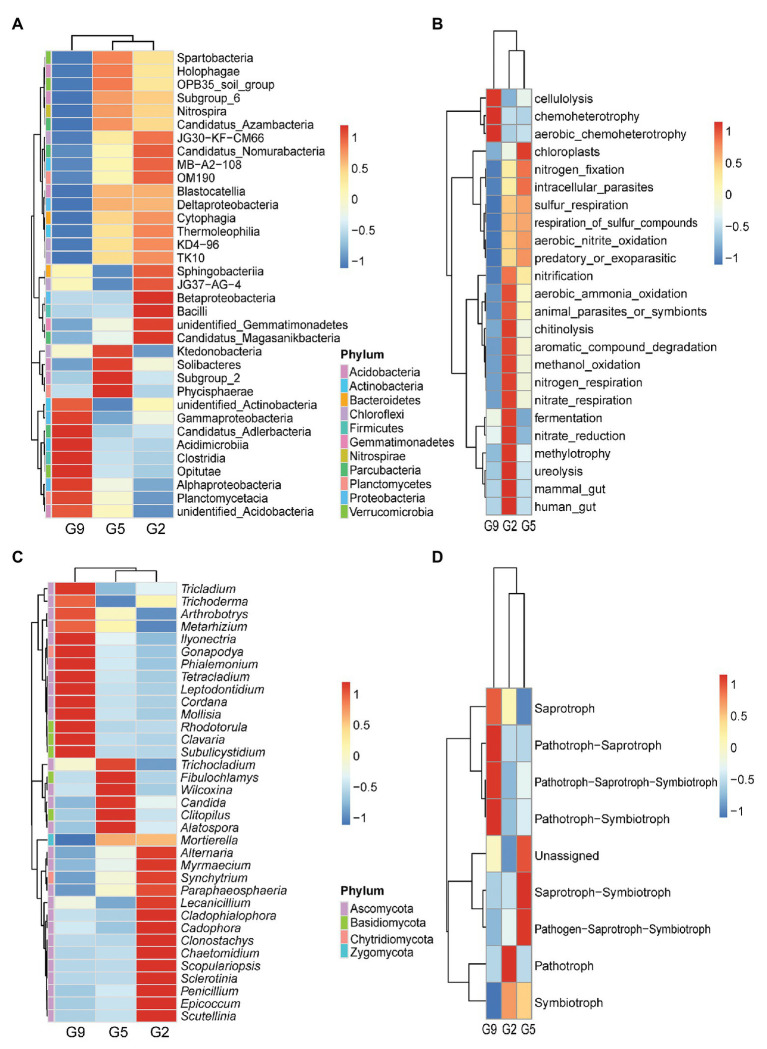
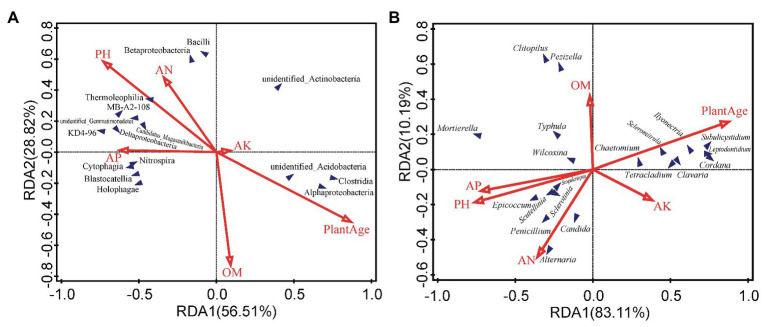
Transplantation is a cultivation mode widely applied in perennial plant growing. This method might be an effective way to alleviate problems associated with continuous cultivation (4-6 years) in ginseng production, but the alleviating mechanism and effects on soil microbial community is unclear. To study this issue, non-transplanted 2-year-old, and 5-year-old (transplantation mode: 2 + 3) and 9-year-old (transplantation mode: 3 + 3 + 3) ginseng rhizosphere soils were analyzed MiSeq sequencing. The results showed that 9-year-old ginseng rhizosphere soil had lower available nitrogen and the lowest pH, available phosphorus, observed species and community diversity and richness (Chao1, and ACE) among all samples ( < 0.05). The abundances of some bacterial classes (Thermoleophilia, Bacilli, and Nitrospira) and fungal genera (, , and spp.) and functional richness associated with nutrient element cycles and antifungal activity decreased, while abundances of some fungal genera (, , and spp.) increased with increasing age of ginseng plants ( < 0.05 or < 0.01). However, there was greater similarity between soil samples of 2-year-old and transplanted 5-year-old ginseng plants and the increase in cultivation time from 2 to 5 years did not significantly influence the microbial community, suggesting that transplantation is a viable strategy for suppressing soil-borne diseases in plants over long growth periods.
移栽是多年生植物种植中广泛应用的一种栽培方式。这种方法可能是缓解人参生产中连作(4 - 6年)相关问题的有效途径,但缓解机制及其对土壤微生物群落的影响尚不清楚。为研究此问题,对未移栽的2年生、5年生(移栽模式:2 + 3)和9年生(移栽模式:3 + 3 + 3)人参根际土壤进行了MiSeq测序分析。结果表明,在所有样本中,9年生人参根际土壤的有效氮含量较低,pH值、有效磷、观测物种数以及群落多样性和丰富度(Chao1和ACE)最低(P < 0.05)。随着人参植株年龄的增加,一些细菌类群(嗜热菌纲、芽孢杆菌纲和硝化螺旋菌纲)、真菌属(、、和 spp.)的丰度以及与营养元素循环和抗真菌活性相关的功能丰富度降低,而一些真菌属(、、和 spp.)的丰度增加(P < 0.05或P < 0.01)。然而,2年生和移栽5年生人参植株的土壤样本之间相似度更高,并表明从2年到5年种植时间的增加并未显著影响微生物群落,这表明移栽是在较长生长周期内抑制人参土传病害的可行策略。