State Key Laboratory of Genetic Resources and Evolution, Kunming Institute of Zoology, Chinese Academy of Sciences, Kunming, China.
State Key Laboratory for Conservation and Utilization of Bio-Resources in Yunnan, School of Life Sciences, Yunnan University, Kunming, China.
Mol Biol Evol. 2021 Apr 13;38(4):1529-1536. doi: 10.1093/molbev/msaa313.
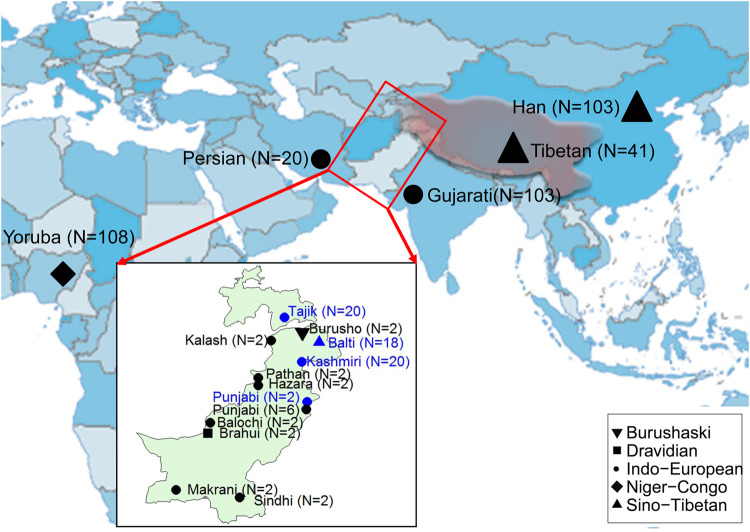
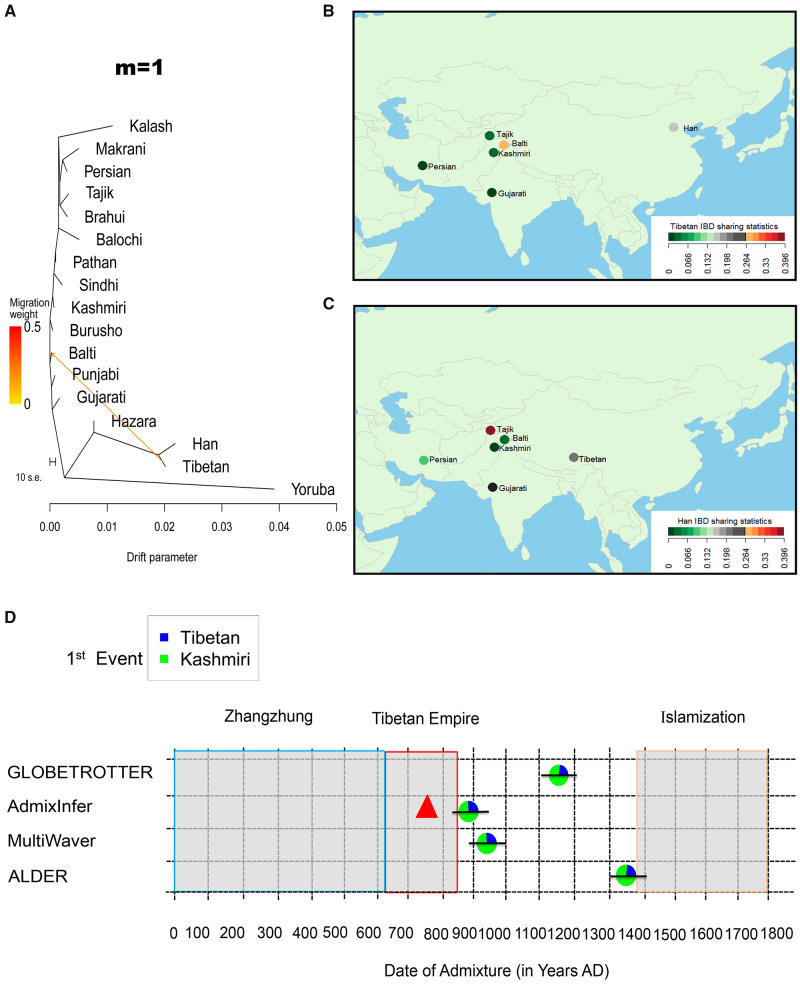
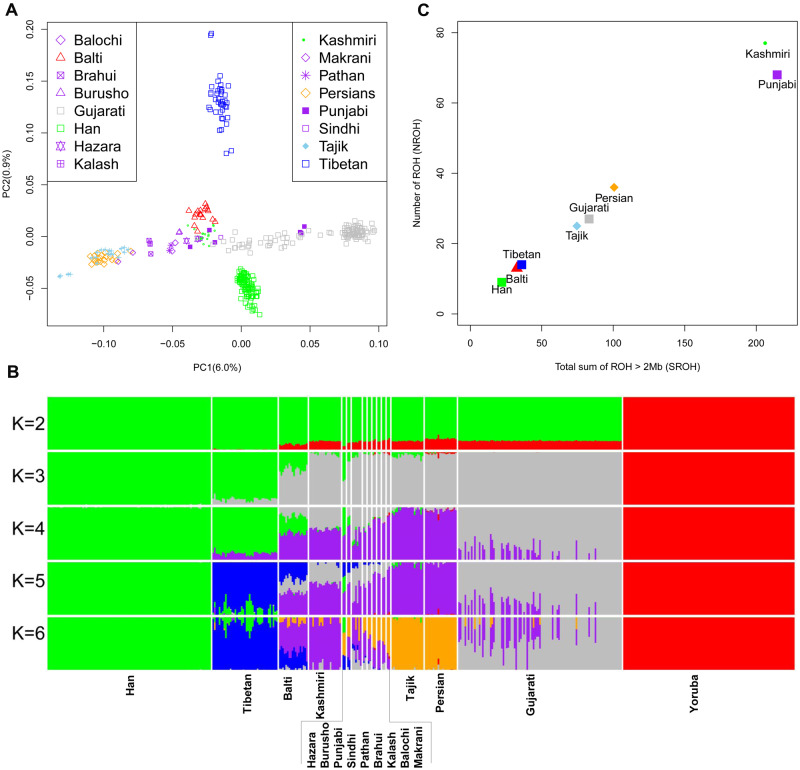
The rise and expansion of Tibetan Empire in the 7th to 9th centuries AD affected the course of history across East Eurasia, but the genetic impact of Tibetans on surrounding populations remains undefined. We sequenced 60 genomes for four populations from Pakistan and Tajikistan to explore their demographic history. We showed that the genomes of Balti people from Baltistan comprised 22.6-26% Tibetan ancestry. We inferred a single admixture event and dated it to about 39-21 generations ago, a period that postdated the conquest of Baltistan by the ancient Tibetan Empire. The analyses of mitochondrial DNA, Y, and X chromosome data indicated that both ancient Tibetan males and females were involved in the male-biased dispersal. Given the fact that the Balti people adopted Tibetan language and culture in history, our study suggested the impact of Tibetan Empire on Baltistan involved dominant cultural and minor demic diffusion.
公元 7 至 9 世纪,藏人建立的吐蕃帝国兴起并扩张,对东亚和北亚的历史进程产生了深远影响,但藏族人对周边人群的基因影响仍不清楚。我们对来自巴基斯坦和塔吉克斯坦的四个群体的 60 个人类基因组进行了测序,以探索它们的人口历史。研究结果表明,巴尔蒂人有 22.6%-26%的藏族血统。我们推断这是一次单一的混合事件,发生在大约 39-21 代之前,这一时期晚于古吐蕃帝国征服巴尔蒂斯坦。线粒体 DNA、Y 染色体和 X 染色体数据的分析表明,古代藏族男性和女性都参与了男性为主的扩散。鉴于巴尔蒂人在历史上采用了藏语和藏文化,我们的研究表明,吐蕃帝国对巴尔蒂斯坦的影响涉及到主导的文化和较小的人群扩散。