Laboratory of Microbiology, Wageningen University, Stippeneng4, 6708 WE Wageningen, The Netherlands.
Corbion, Arkelsedijk 46, 4206 AC Gorinchem, The Netherlands.
FEMS Microbiol Rev. 2021 May 5;45(3). doi: 10.1093/femsre/fuaa061.
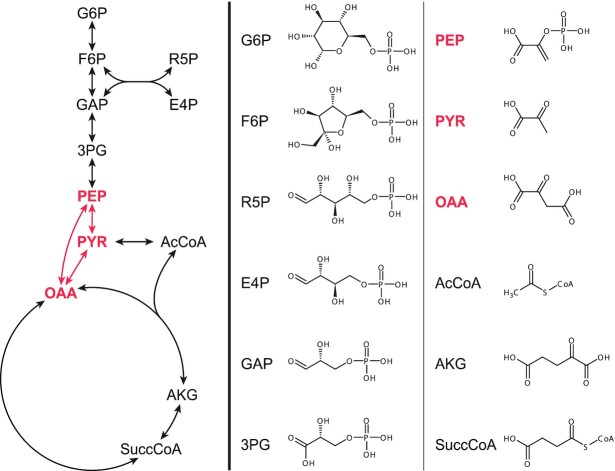
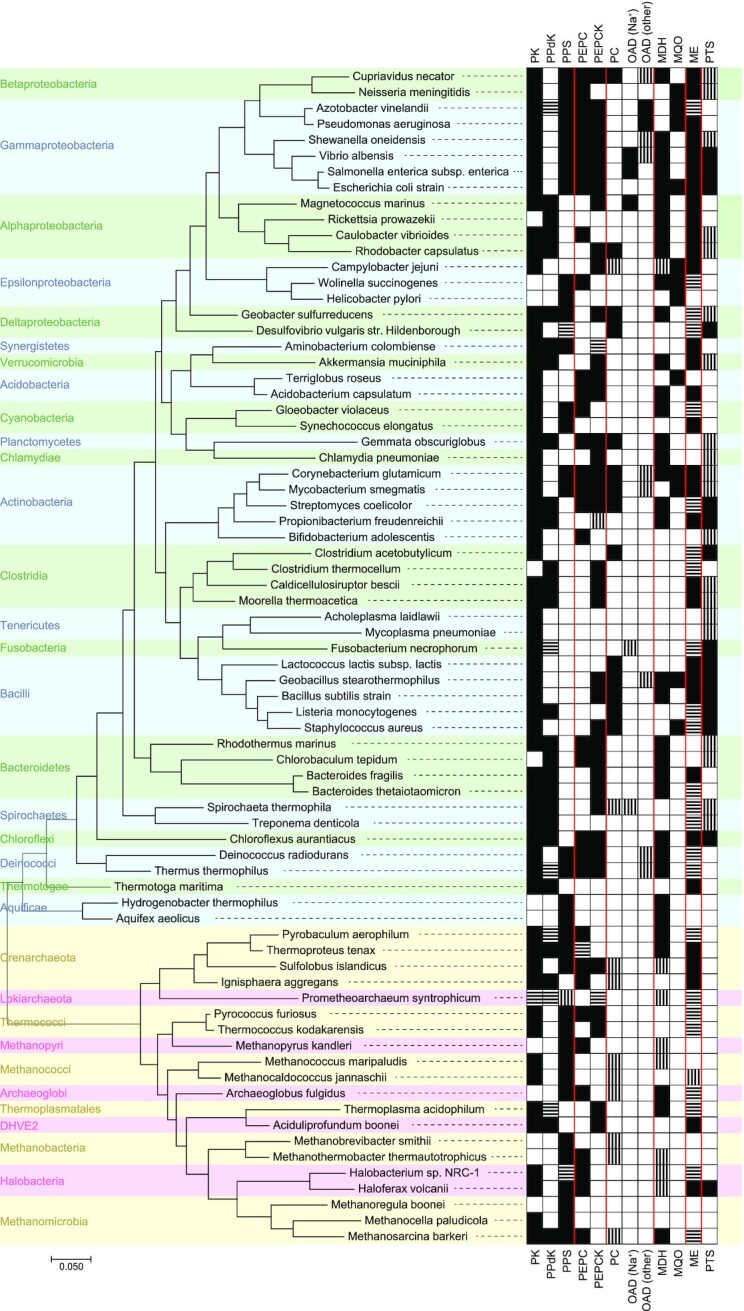
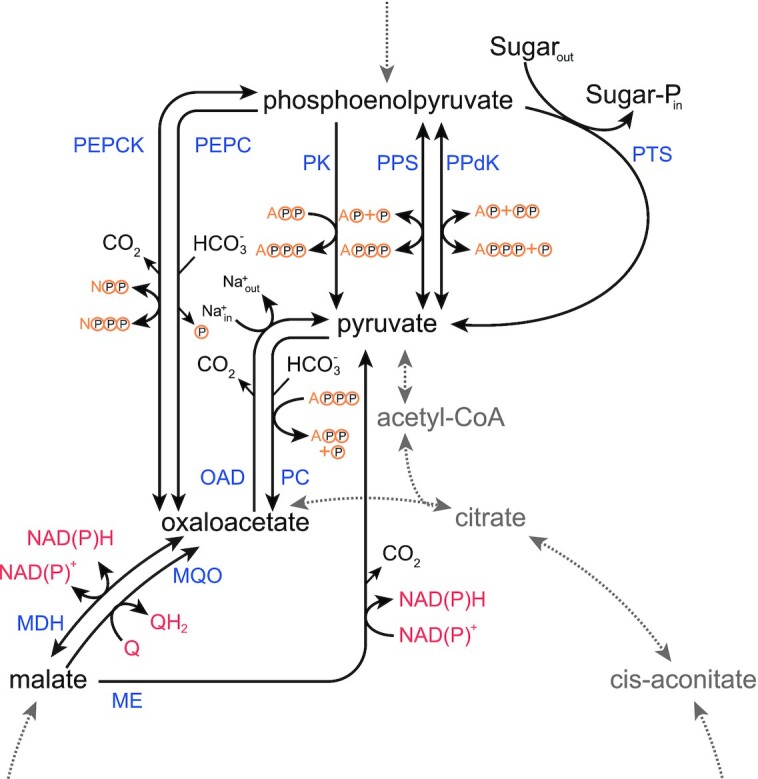
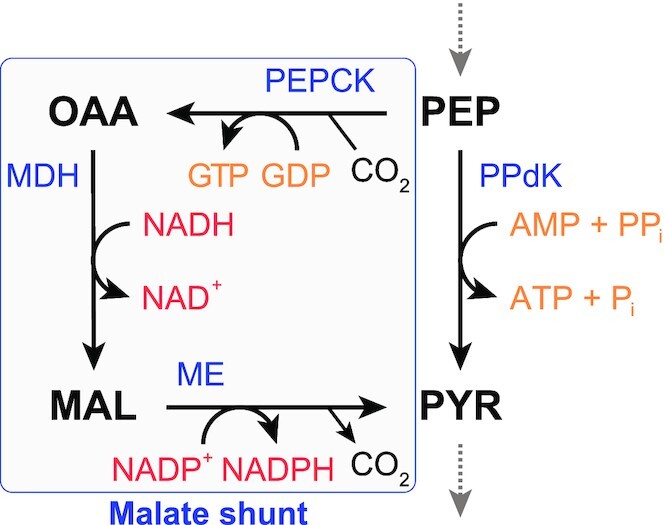
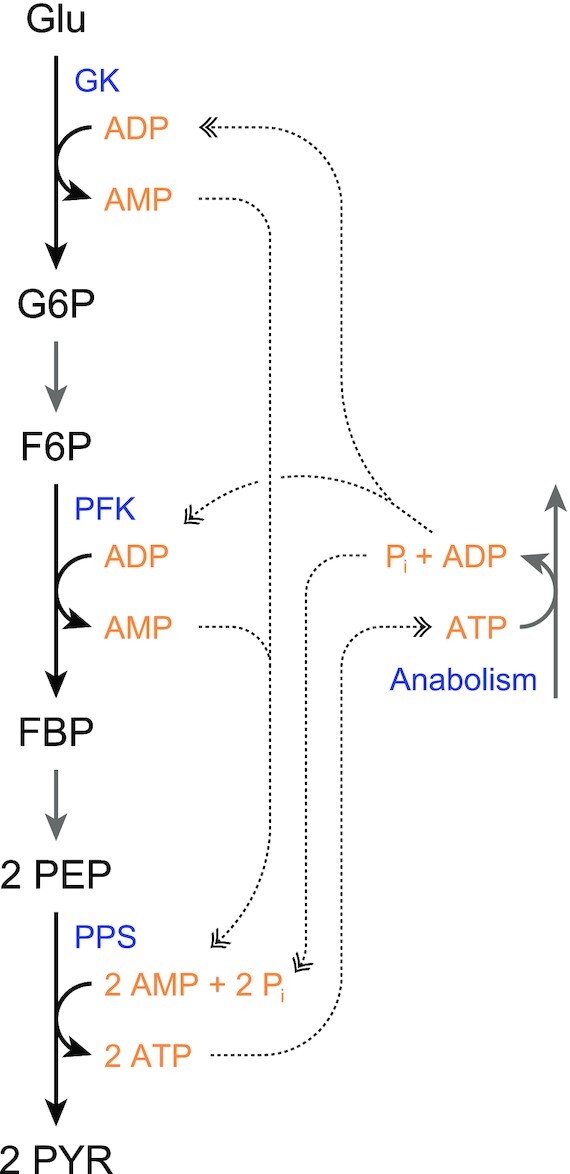
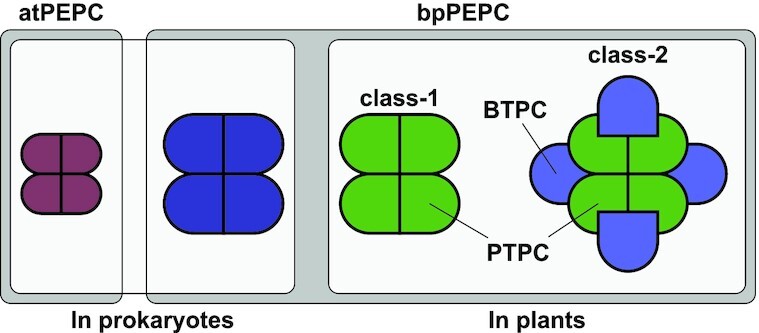
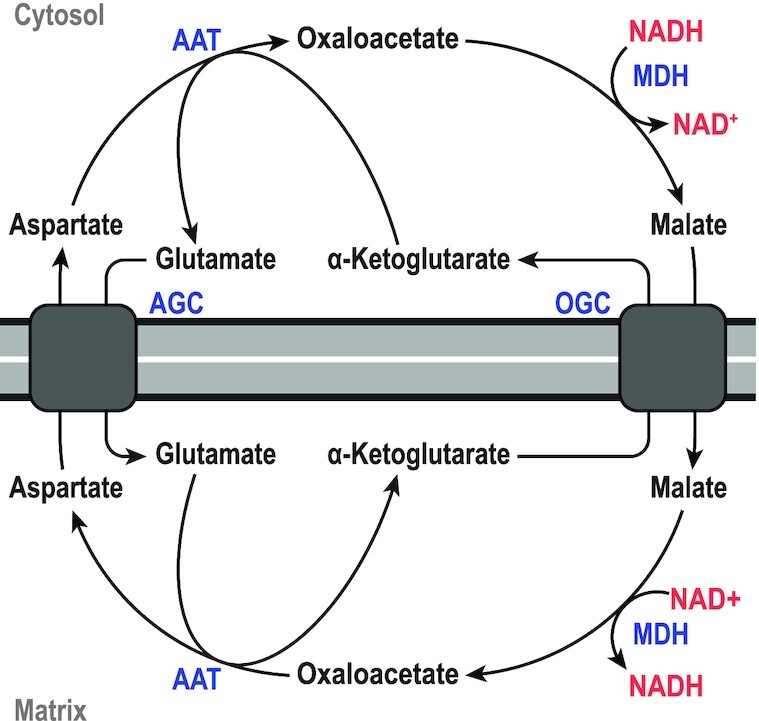
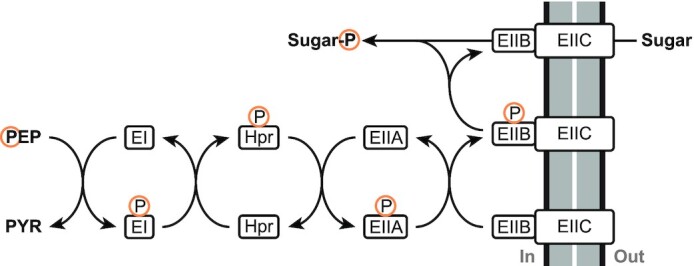
At the junction between the glycolysis and the tricarboxylic acid cycle-as well as various other metabolic pathways-lies the phosphoenolpyruvate (PEP)-pyruvate-oxaloacetate node (PPO-node). These three metabolites form the core of a network involving at least eleven different types of enzymes, each with numerous subtypes. Obviously, no single organism maintains each of these eleven enzymes; instead, different organisms possess different subsets in their PPO-node, which results in a remarkable degree of variation, despite connecting such deeply conserved metabolic pathways as the glycolysis and the tricarboxylic acid cycle. The PPO-node enzymes play a crucial role in cellular energetics, with most of them involved in (de)phosphorylation of nucleotide phosphates, while those responsible for malate conversion are important redox enzymes. Variations in PPO-node therefore reflect the different energetic niches that organisms can occupy. In this review, we give an overview of the biochemistry of these eleven PPO-node enzymes. We attempt to highlight the variation that exists, both in PPO-node compositions, as well as in the roles that the enzymes can have within those different settings, through various recent discoveries in both bacteria and archaea that reveal deviations from canonical functions.
在糖酵解和三羧酸循环以及其他各种代谢途径的交界处,存在着磷酸烯醇丙酮酸(PEP)-丙酮酸-草酰乙酸节点(PPO 节点)。这三种代谢物构成了一个涉及至少 11 种不同类型酶的网络的核心,每种酶都有许多亚型。显然,没有任何一种单一的生物体能够维持这 11 种酶中的每一种;相反,不同的生物体在其 PPO 节点中拥有不同的子集,这导致了尽管连接着糖酵解和三羧酸循环等深度保守的代谢途径,但仍然存在着显著的变化。PPO 节点酶在细胞能量学中起着至关重要的作用,其中大多数酶参与核苷酸磷酸的(去)磷酸化,而那些负责苹果酸转化的酶则是重要的氧化还原酶。因此,PPO 节点的变化反映了生物体可以占据的不同能量生态位。在这篇综述中,我们概述了这 11 种 PPO 节点酶的生物化学。我们试图通过细菌和古菌中的各种最新发现来突出存在的变化,这些发现揭示了在不同的环境中,酶的组成和功能都存在着偏离典型功能的情况。