Ear Institute, University College London, 332 Gray's Inn Road, London, WC1X 8EE, UK.
Department of Experimental Psychology, University of Oxford, Oxford, OX1 3PH, UK.
Behav Res Methods. 2021 Aug;53(4):1551-1562. doi: 10.3758/s13428-020-01514-0. Epub 2020 Dec 9.
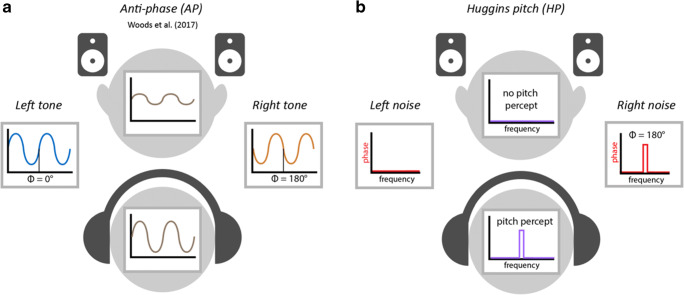
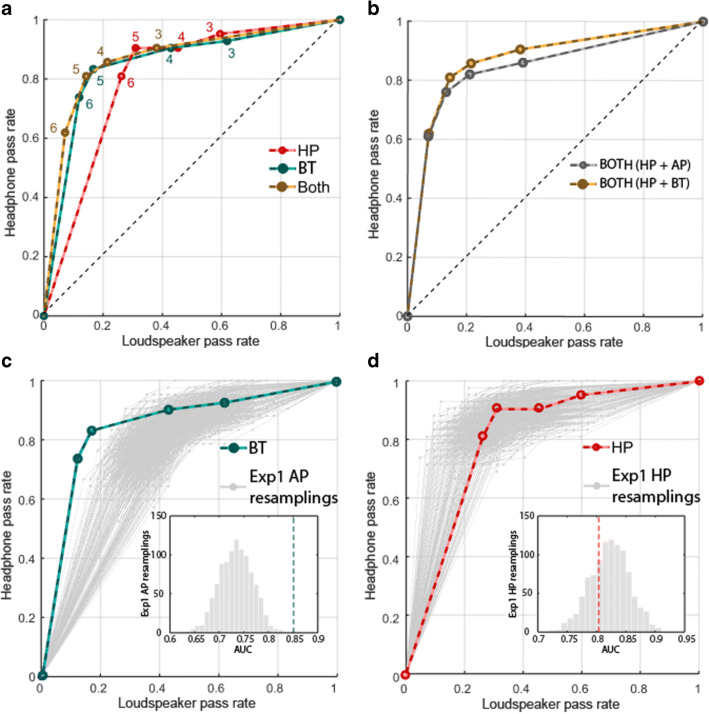
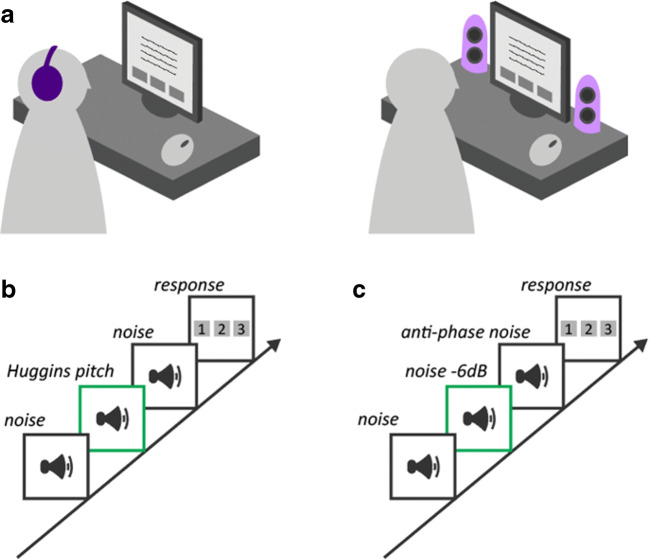
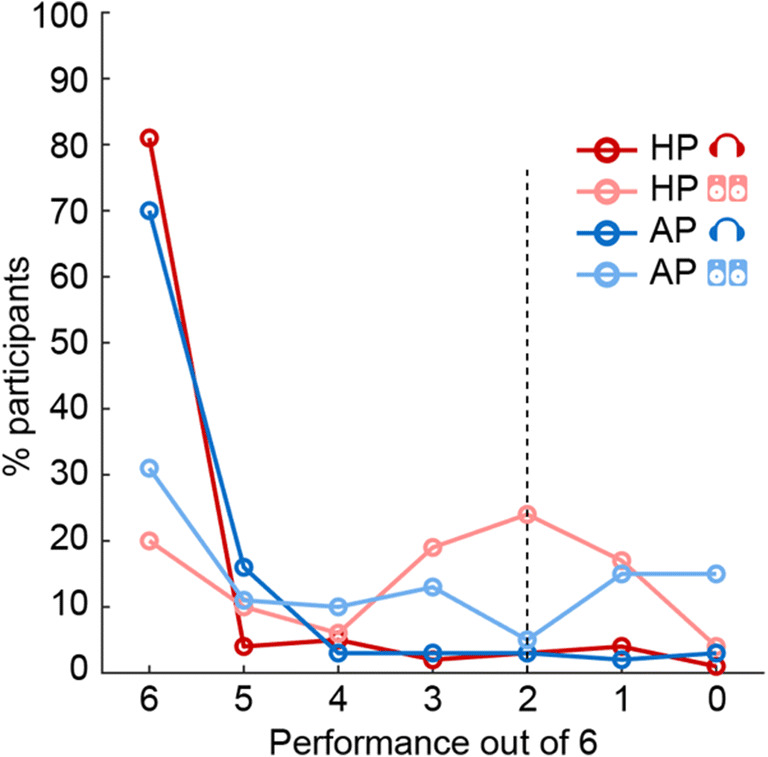
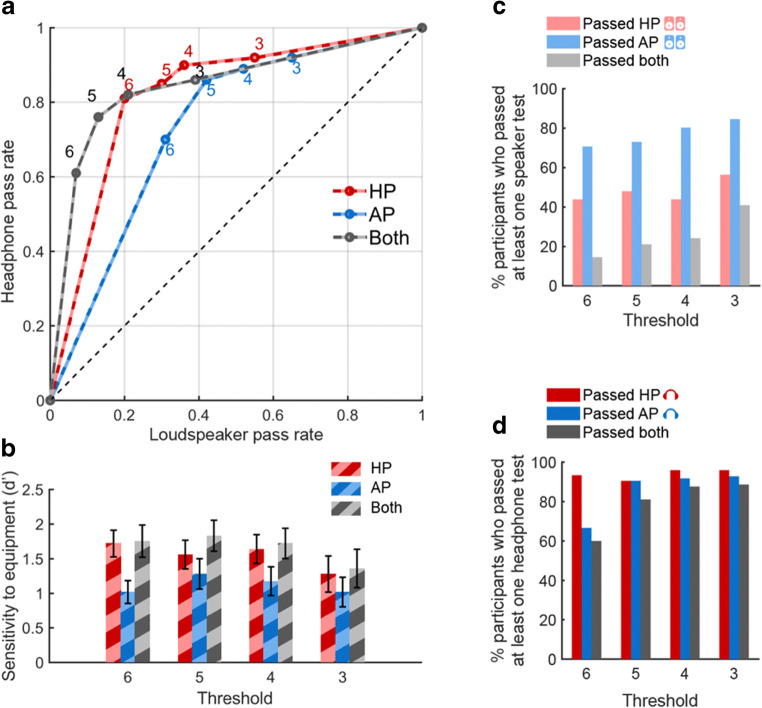
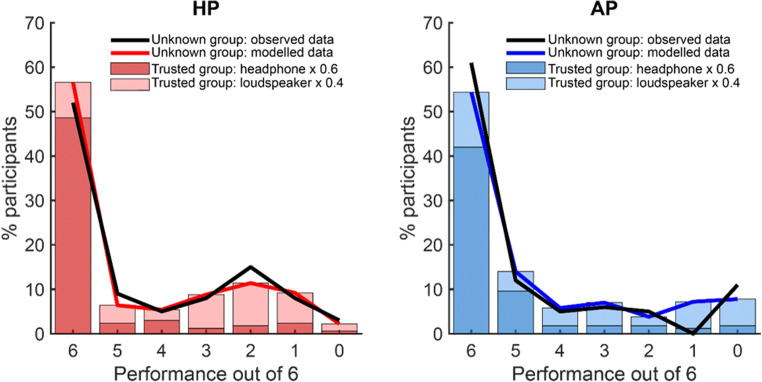
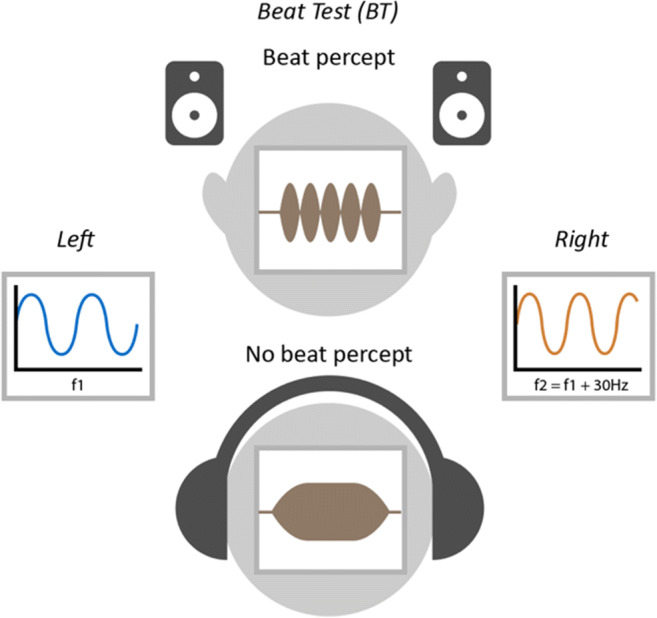
Online experimental platforms can be used as an alternative to, or complement, lab-based research. However, when conducting auditory experiments via online methods, the researcher has limited control over the participants' listening environment. We offer a new method to probe one aspect of that environment, headphone use. Headphones not only provide better control of sound presentation but can also "shield" the listener from background noise. Here we present a rapid (< 3 min) headphone screening test based on Huggins Pitch (HP), a perceptual phenomenon that can only be detected when stimuli are presented dichotically. We validate this test using a cohort of "Trusted" online participants who completed the test using both headphones and loudspeakers. The same participants were also used to test an existing headphone test (AP test; Woods et al., 2017, Attention Perception Psychophysics). We demonstrate that compared to the AP test, the HP test has a higher selectivity for headphone users, rendering it as a compelling alternative to existing methods. Overall, the new HP test correctly detects 80% of headphone users and has a false-positive rate of 20%. Moreover, we demonstrate that combining the HP test with an additional test-either the AP test or an alternative based on a beat test (BT)-can lower the false-positive rate to ~ 7%. This should be useful in situations where headphone use is particularly critical (e.g., dichotic or spatial manipulations). Code for implementing the new tests is publicly available in JavaScript and through Gorilla (gorilla.sc).
在线实验平台可以作为基于实验室研究的替代或补充。然而,当通过在线方法进行听觉实验时,研究人员对参与者的听力环境的控制有限。我们提供了一种新的方法来探测环境的一个方面,即耳机的使用。耳机不仅可以更好地控制声音呈现,还可以“屏蔽”听众免受背景噪音的干扰。在这里,我们提出了一种快速(<3 分钟)的耳机筛选测试,该测试基于胡金斯音高(HP),这是一种只能在双耳刺激时才能检测到的感知现象。我们使用一组“可信赖”的在线参与者来验证该测试,他们使用耳机和扬声器完成了该测试。同一批参与者还用于测试现有的耳机测试(AP 测试;Woods 等人,2017 年,注意力感知心理物理学)。我们证明,与 AP 测试相比,HP 测试对头戴耳机的用户具有更高的选择性,因此是现有方法的一个引人注目的替代方案。总的来说,新的 HP 测试对头戴耳机用户的检测准确率为 80%,假阳性率为 20%。此外,我们证明,将 HP 测试与其他测试(AP 测试或基于节拍测试(BT)的替代测试)结合使用可以将假阳性率降低到~7%。这在耳机使用特别重要的情况下(例如,双声道或空间操作)应该是有用的。实现新测试的代码以 JavaScript 形式公开提供,并通过 Gorilla(gorilla.sc)提供。