Kannaujiya Ajit Kumar, Kumar Kaushalendra, Upadhyay Ashish Kumar, McDougal Lotus, Raj Anita, Singh Abhishek
International Institute for Population Sciences, Mumbai, India.
Department of Public Health & Mortality Studies, International Institute for Population Sciences, Mumbai, India.
SSM Popul Health. 2020 Nov 24;12:100700. doi: 10.1016/j.ssmph.2020.100700. eCollection 2020 Dec.
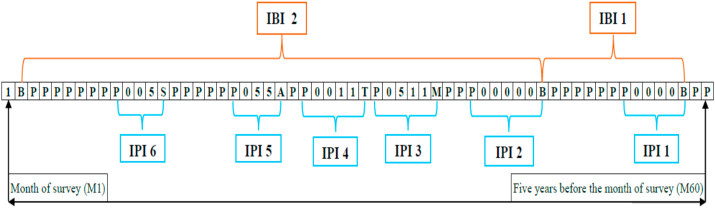
Evidence on the effect of interpregnancy interval (IPI) on low birth weight (LBW) births is limited in developing countries including India. Our study aims to examine association between IPI and LBW births in India. We used data from the fourth round of the National Family Health Survey (NFHS-4) conducted in 2015-16 with a representative sample of 52,825 most recent births for examining the association between IPI and LBW. IPI is defined as the gap between the first month in which the index pregnancy was reported in the reproductive calendar (referred to as the month of conception) and the month of pregnancy outcome (including live births and terminations) of preceding pregnancy. Reproductive calendar data were used to estimate IPI. Association between IPI and LBW were examined using multivariable binary logistic regressions. Seventeen percent of the births in our sample were LBW, and more than half (57.6%) of these were accompanied with IPI less than 18 months. Prevalence of LBW births was highest among mother's who had IPI less than six months (19.4%). Regression results, adjusted for control variables, indicate that the risk of LBW was significantly higher among births whose mothers had IPI less than six months (odds ratio: 1.19, 95% CI:1.05-1.36) compared with those whose mothers had IPI between 18 and 23 months. This study provides additional evidence on the association between short IPI (<6 months) and LBW births in India. Promoting spacing methods of family planning is an option that India may consider for increasing the IPI and thereby reducing LBW births. Ensuring recommended iron and folic acid tablets/equivalent syrup and TT injections for every pregnant woman may offset the adverse consequences of shorter IPI.
在包括印度在内的发展中国家,关于妊娠间隔(IPI)对低体重(LBW)儿出生影响的证据有限。我们的研究旨在探讨印度IPI与低体重儿出生之间的关联。我们使用了2015 - 2016年进行的第四轮全国家庭健康调查(NFHS - 4)的数据,该调查以52,825例最近出生的婴儿为代表性样本,用于研究IPI与低体重儿之间的关联。IPI定义为生殖日历中报告本次妊娠的第一个月(称为受孕月)与前次妊娠的妊娠结局月(包括活产和终止妊娠)之间的间隔。使用生殖日历数据来估算IPI。通过多变量二元逻辑回归分析IPI与低体重儿之间的关联。我们样本中17%的婴儿为低体重儿,其中超过一半(57.6%)的母亲妊娠间隔小于18个月。妊娠间隔小于6个月的母亲所生低体重儿的比例最高(19.4%)。经控制变量调整后的回归结果表明,与母亲妊娠间隔在18至23个月之间的婴儿相比,母亲妊娠间隔小于6个月的婴儿出生时低体重的风险显著更高(优势比:1.19,95%置信区间:1.05 - 1.36)。本研究为印度妊娠间隔短(<6个月)与低体重儿出生之间的关联提供了更多证据。推广计划生育的间隔方法是印度可以考虑的一种选择,以增加妊娠间隔,从而减少低体重儿的出生。确保为每位孕妇提供推荐的铁和叶酸片/等效糖浆以及破伤风类毒素注射,可能会抵消较短妊娠间隔带来的不良后果。