Inria Sophia Antipolis Méditerranée Research Centre, MathNeuro Team, Sophia Antipolis, France.
Laboratoire de Physique Théorique et Modélisation, Université de Cergy-Pontoise,CNRS, UMR 8089, Cergy-Pontoise, France.
PLoS Comput Biol. 2020 Dec 15;16(12):e1008533. doi: 10.1371/journal.pcbi.1008533. eCollection 2020 Dec.
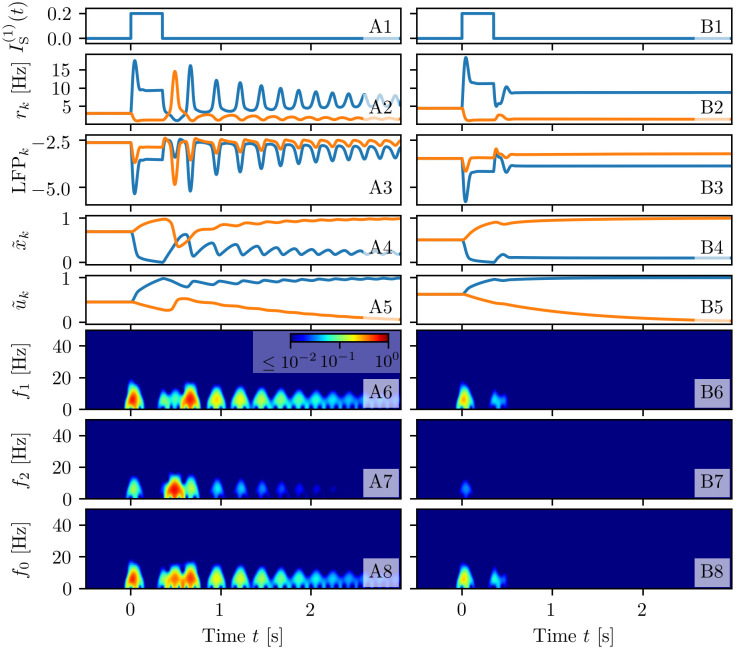
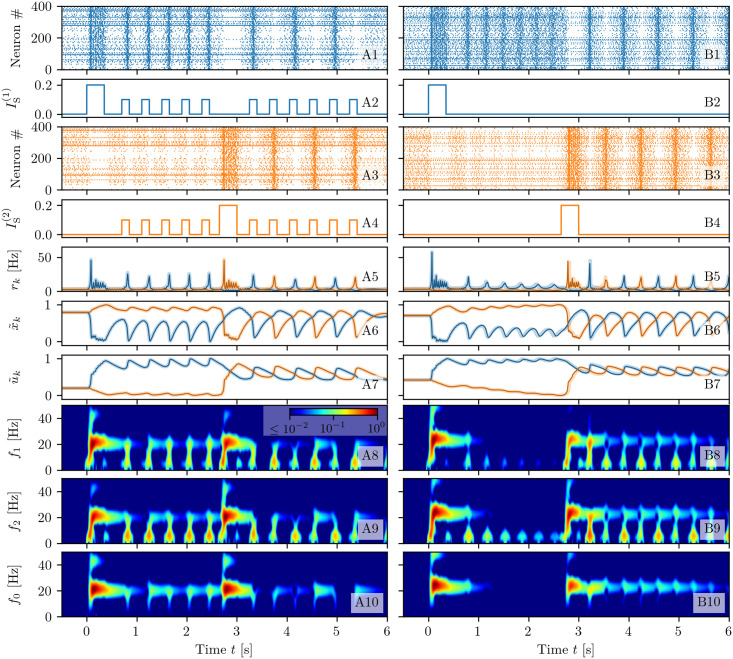
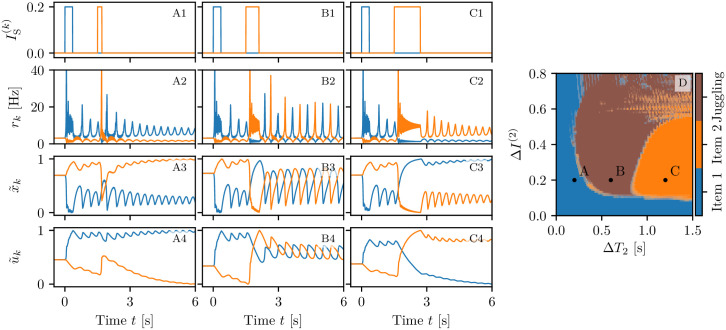
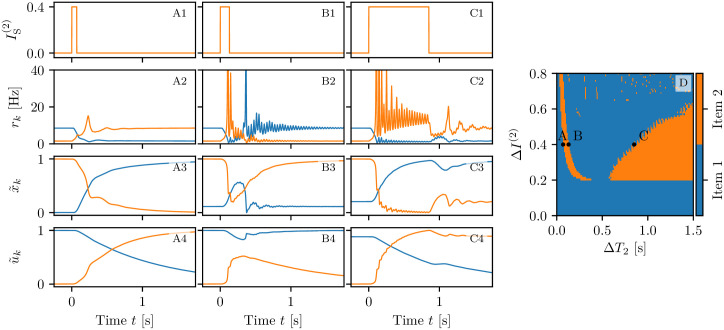
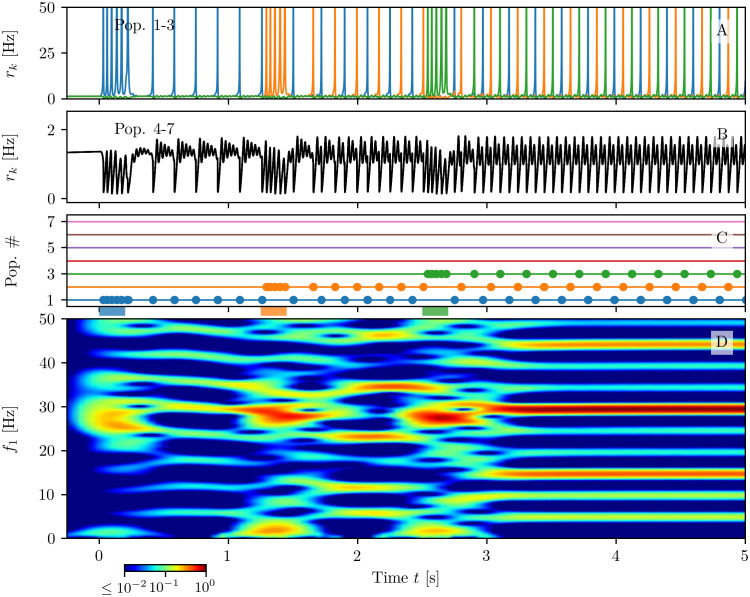
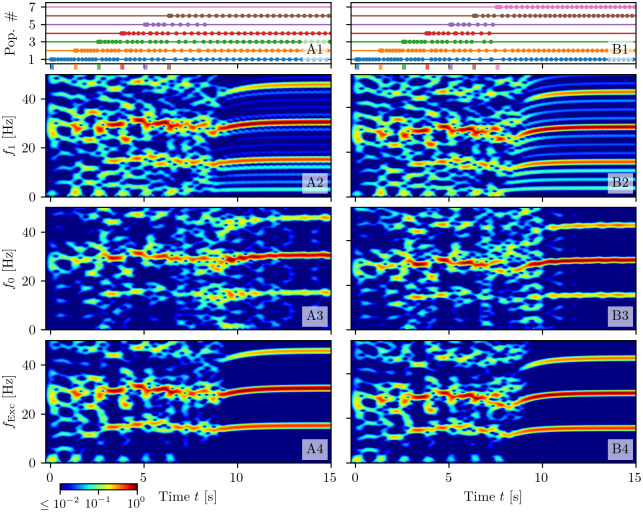
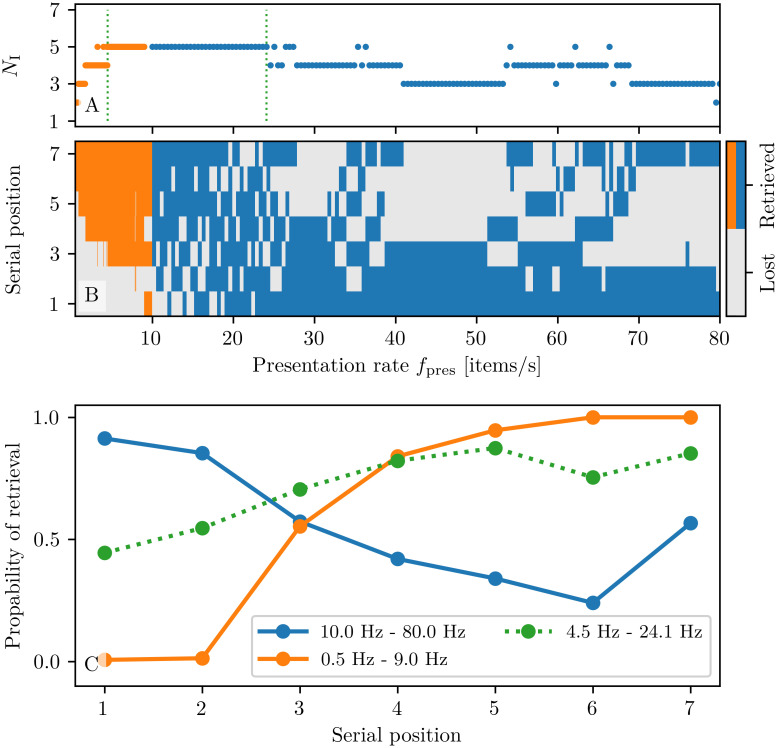
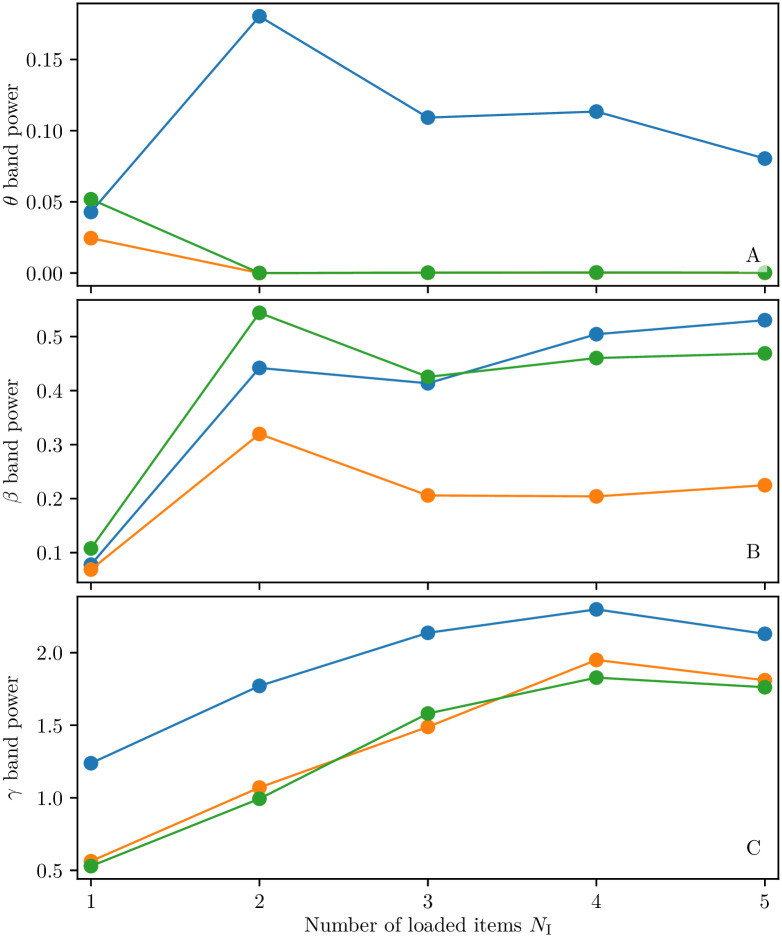
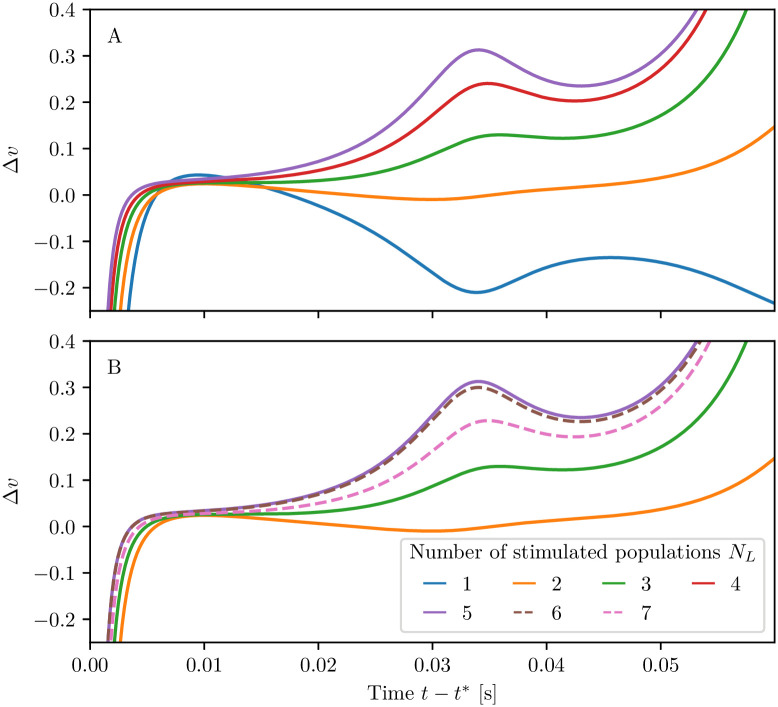
A synaptic theory of Working Memory (WM) has been developed in the last decade as a possible alternative to the persistent spiking paradigm. In this context, we have developed a neural mass model able to reproduce exactly the dynamics of heterogeneous spiking neural networks encompassing realistic cellular mechanisms for short-term synaptic plasticity. This population model reproduces the macroscopic dynamics of the network in terms of the firing rate and the mean membrane potential. The latter quantity allows us to gain insight of the Local Field Potential and electroencephalographic signals measured during WM tasks to characterize the brain activity. More specifically synaptic facilitation and depression integrate each other to efficiently mimic WM operations via either synaptic reactivation or persistent activity. Memory access and loading are related to stimulus-locked transient oscillations followed by a steady-state activity in the β-γ band, thus resembling what is observed in the cortex during vibrotactile stimuli in humans and object recognition in monkeys. Memory juggling and competition emerge already by loading only two items. However more items can be stored in WM by considering neural architectures composed of multiple excitatory populations and a common inhibitory pool. Memory capacity depends strongly on the presentation rate of the items and it maximizes for an optimal frequency range. In particular we provide an analytic expression for the maximal memory capacity. Furthermore, the mean membrane potential turns out to be a suitable proxy to measure the memory load, analogously to event driven potentials in experiments on humans. Finally we show that the γ power increases with the number of loaded items, as reported in many experiments, while θ and β power reveal non monotonic behaviours. In particular, β and γ rhythms are crucially sustained by the inhibitory activity, while the θ rhythm is controlled by excitatory synapses.
在过去的十年中,作为持续尖峰范式的替代方案,一种突触工作记忆 (WM) 理论已经发展起来。在这种情况下,我们开发了一种神经质量模型,能够精确地复制包含短期突触可塑性的现实细胞机制的异质尖峰神经网络的动力学。这个群体模型根据 firing rate 和平均膜电位来复制网络的宏观动力学。后一个量使我们能够深入了解在 WM 任务中测量的局部场电位和脑电图信号,以表征大脑活动。更具体地说,突触易化和抑制相互整合,通过突触再激活或持续活动有效地模拟 WM 操作。记忆访问和加载与刺激锁定的瞬态振荡有关,随后是β-γ 频带中的稳态活动,因此类似于在人类的振动刺激和猴子的物体识别过程中观察到的皮层活动。通过仅加载两个项目,就已经出现了记忆操纵和竞争。然而,通过考虑由多个兴奋性群体和一个共同抑制池组成的神经结构,可以在 WM 中存储更多的项目。记忆容量强烈依赖于项目的呈现率,并且在最佳频率范围内最大化。特别是,我们提供了最大记忆容量的解析表达式。此外,平均膜电位被证明是测量记忆负载的合适代理,类似于在人类实验中的事件驱动电位。最后,我们表明,正如许多实验所报道的那样,加载的项目数量增加会导致 γ 功率增加,而 θ 和 β 功率则呈现出非单调行为。特别是,β 和 γ 节律主要由抑制活动维持,而 θ 节律由兴奋性突触控制。