Department of Psychology, Colorado State University, Fort Collins, CO, United States of America.
Department of Psychiatry, Columbia University Irving Medical Center, New York, NY, United States of America.
PLoS One. 2020 Dec 17;15(12):e0243255. doi: 10.1371/journal.pone.0243255. eCollection 2020.
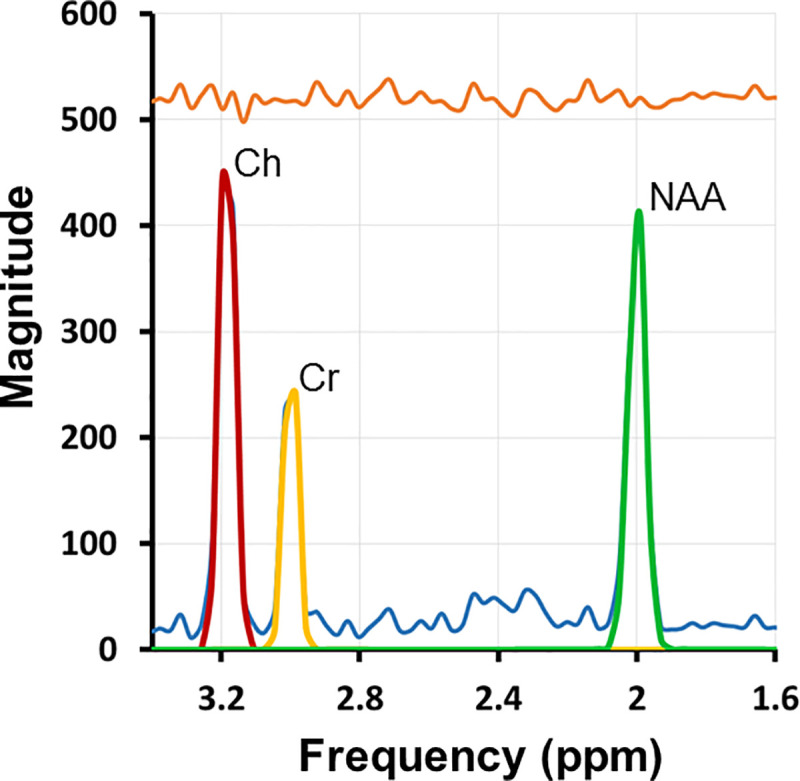
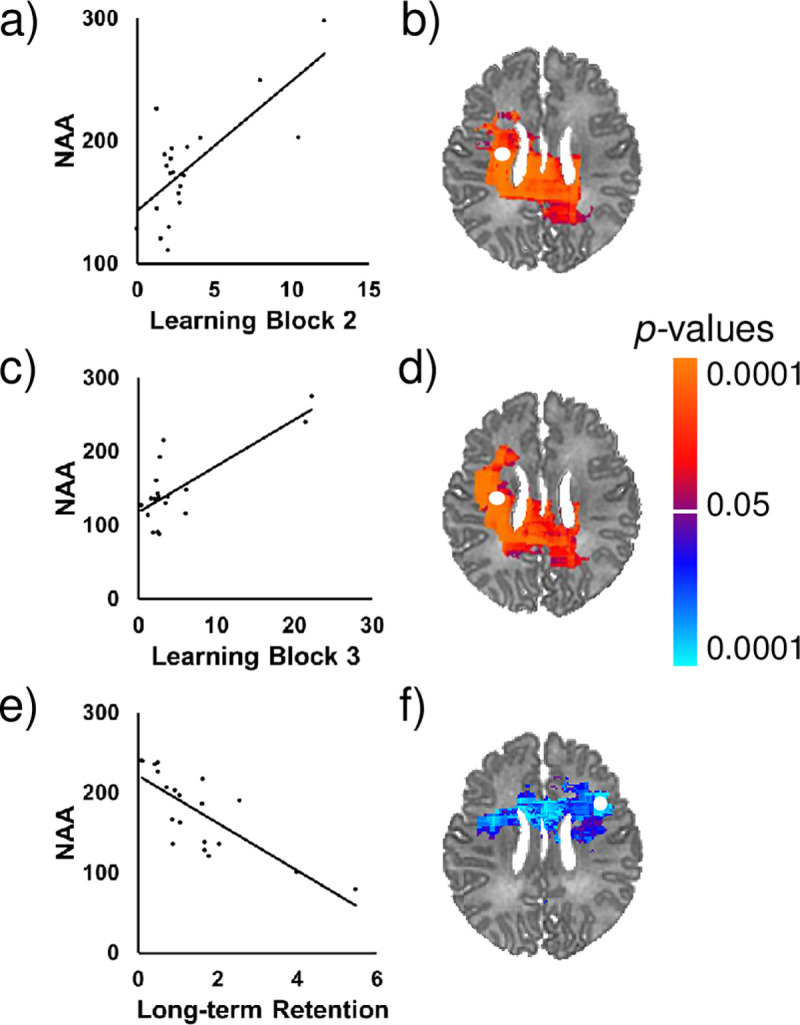
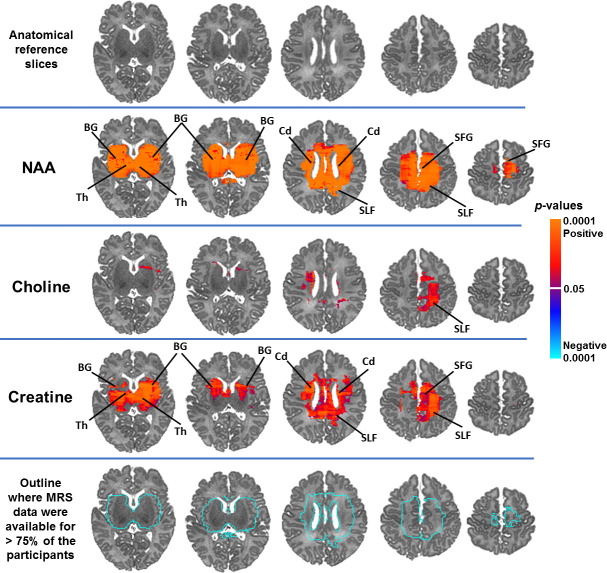
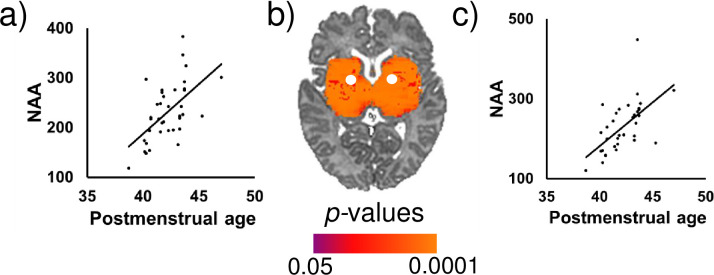
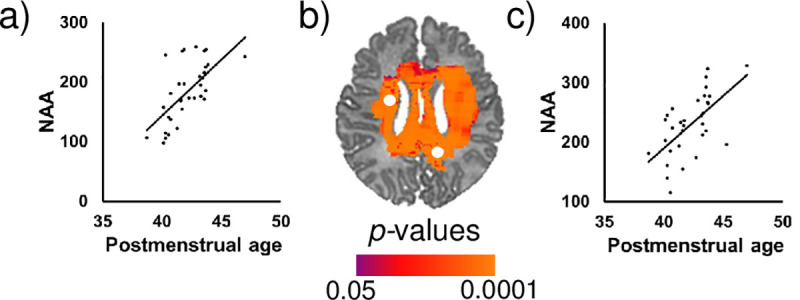
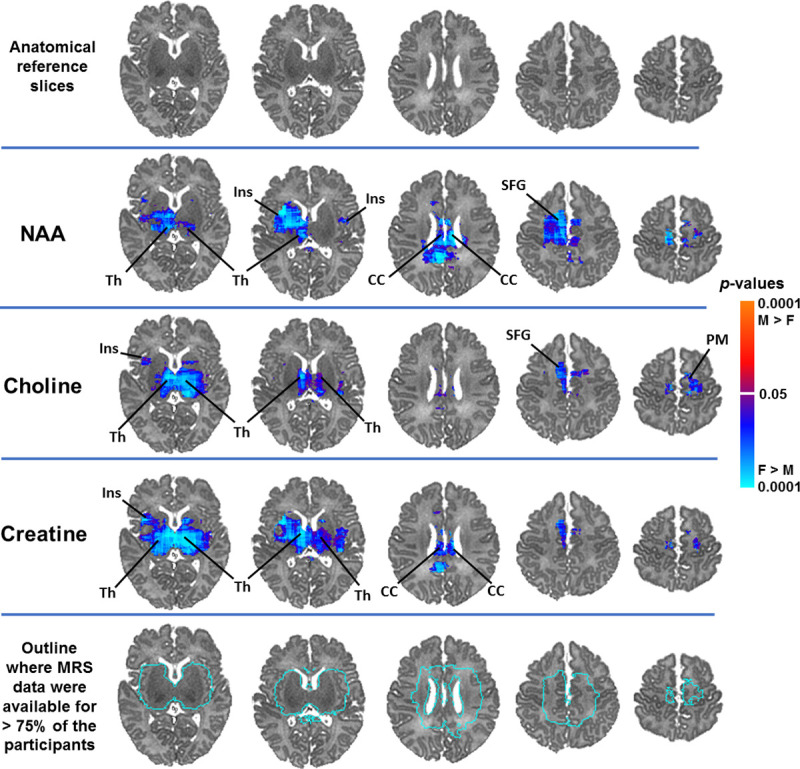
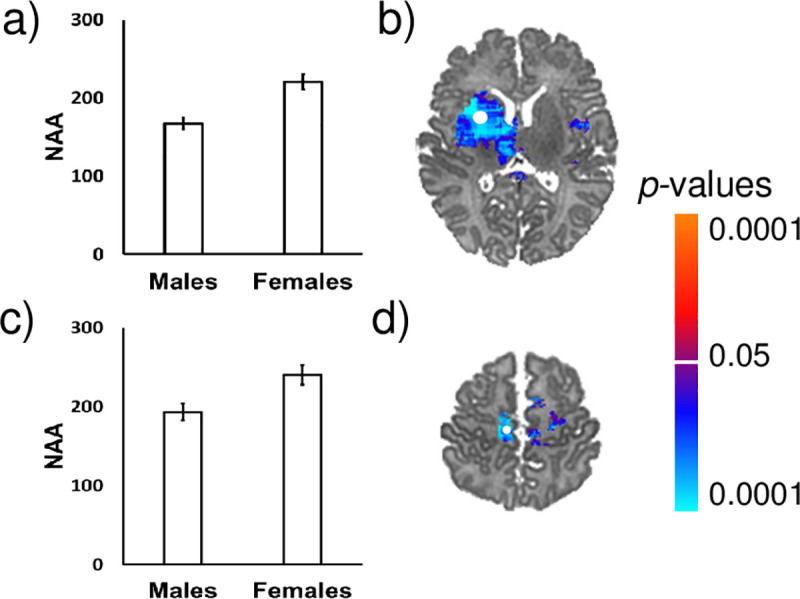
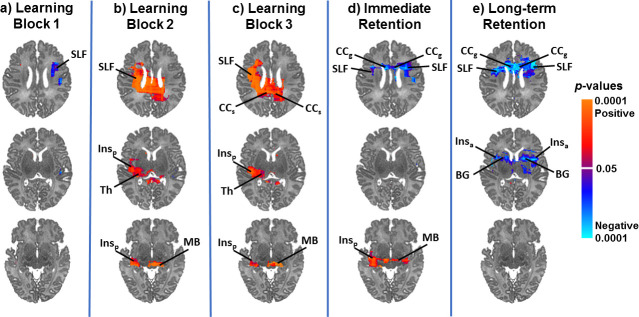
Age and sex differences in brain metabolite concentrations in early life are not well understood. We examined the associations of age and sex with brain metabolite levels in healthy neonates, and investigated the associations between neonatal brain metabolite concentrations and developmental outcomes. Forty-one infants (36-42 gestational weeks at birth; 39% female) of predominantly Hispanic/Latina mothers (mean 18 years of age) underwent MRI scanning approximately two weeks after birth. Multiplanar chemical shift imaging was used to obtain voxel-wise maps of N-acetylaspartate (NAA), creatine, and choline concentrations across the brain. The Bayley Scales of Infant and Toddler Development, a measure of cognitive, language, and motor skills, and mobile conjugate reinforcement paradigm, a measure of learning and memory, were administered at 4 months of age. Findings indicated that postmenstrual age correlated positively with NAA concentrations in multiple subcortical and white matter regions. Creatine and choline concentrations showed similar but less pronounced age related increases. Females compared with males had higher metabolite levels in white matter and subcortical gray matter. Neonatal NAA concentrations were positively associated with learning and negatively associated with memory at 4 months. Age-related increases in NAA, creatine, and choline suggest rapid development of neuronal viability, cellular energy metabolism, and cell membrane turnover, respectively, during early life. Females may undergo earlier and more rapid regional developmental increases in the density of viable neurons compared to males.
在生命早期,年龄和性别对大脑代谢物浓度的影响尚不清楚。我们研究了年龄和性别与健康新生儿大脑代谢物水平的关系,并调查了新生儿大脑代谢物浓度与发育结果之间的关系。41 名婴儿(出生时胎龄 36-40 周;39%为女性)的母亲主要为西班牙裔/拉丁裔(平均年龄 18 岁),在出生后大约两周进行了 MRI 扫描。多平面化学位移成像用于获得大脑各部位 N-乙酰天冬氨酸(NAA)、肌酸和胆碱浓度的体素图。贝利婴幼儿发育量表(Bayley Scales of Infant and Toddler Development),用于评估认知、语言和运动技能,以及移动共轭强化范式(mobile conjugate reinforcement paradigm),用于评估学习和记忆,在 4 个月大时进行。研究结果表明,胎龄与多个皮质下和白质区域的 NAA 浓度呈正相关。肌酸和胆碱浓度也呈相似但不太明显的与年龄相关的增加。与男性相比,女性在白质和皮质下灰质中的代谢物水平更高。新生儿 NAA 浓度与 4 个月时的学习呈正相关,与记忆呈负相关。NAA、肌酸和胆碱的年龄相关增加分别表明,在生命早期,神经元存活能力、细胞能量代谢和细胞膜周转率分别迅速发展。与男性相比,女性可能经历了更早期和更快速的区域性神经元密度增加。