Hasanaliyeva Gultakin, Chatzidimitrou Eleni, Wang Juan, Baranski Marcin, Volakakis Nikolaos, Seal Chris, Rosa Eduardo A S, Iversen Per Ole, Vigar Vanessa, Barkla Bronwyn, Leifert Carlo, Rempelos Leonidas
Department of Sustainable Crop and Food Protection, Faculty of Agriculture, Food and Environmental Sciences, Universita Catollica del Sacro Cuore, I-29122 Piacenza, Italy.
Nafferton Ecological Farming Group, School of Agriculture, Food and Rural Development, Newcastle University, Newcastle upon Tyne NE1 7RU, UK.
Foods. 2020 Dec 16;9(12):1874. doi: 10.3390/foods9121874.
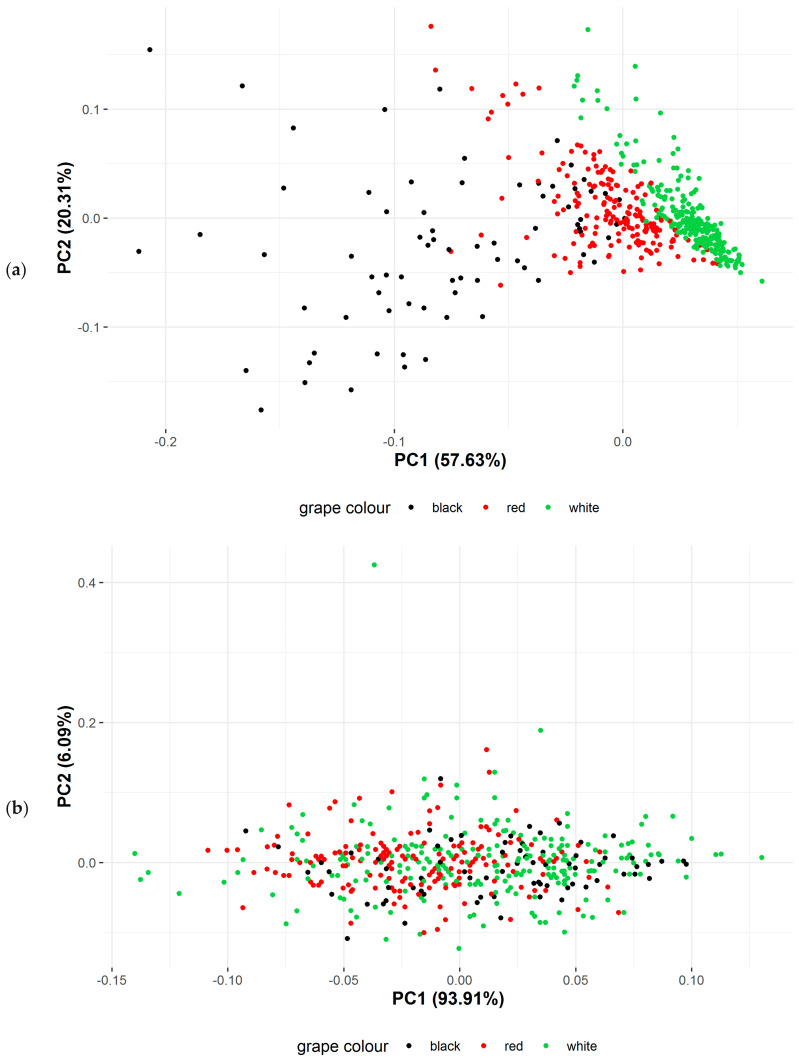
Grapes contain high concentrations of secondary metabolites and antioxidants that have been linked to a reduction of several chronic diseases. Here, we report results of a UK retail survey, which investigated the effect of the production region (Mediterranean vs. South Africa), grape type (white vs. red vs. black) and variety, and production system (organic vs. conventional) on antioxidant activity and concentrations of phenolic compounds in table grapes. Black grapes had ~180% total antioxidant activity (TAA), ~60% higher total phenolic content (TPC) and ~40 times higher anthocyanin concentrations (TAC) than white grapes, while red grapes had intermediate levels of TAA, TPC and TAC. The effects of season and production system and differences between varieties of the same grape type were substantially smaller. Grapes imported from Mediterranean countries in summer had a 14% higher TPC and ~20% higher TAA than grapes imported from South Africa in winter, and organic grapes had a 16% higher TPC and 22% higher TAA, but ~30% lower TAC than conventional grapes. Significant differences in TPC, TAA and/or TAC between organic and conventional grapes could only be detected for specific grape types, varieties and/or sampling years.
葡萄含有高浓度的次生代谢物和抗氧化剂,这些物质与多种慢性疾病的减少有关。在此,我们报告一项英国零售调查的结果,该调查研究了产地(地中海地区与南非)、葡萄类型(白葡萄、红葡萄与黑葡萄)及品种,以及生产系统(有机与传统)对鲜食葡萄抗氧化活性和酚类化合物浓度的影响。与白葡萄相比,黑葡萄的总抗氧化活性(TAA)约高180%,总酚含量(TPC)约高60%,花青素浓度(TAC)约高40倍,而红葡萄的TAA、TPC和TAC处于中间水平。季节和生产系统的影响以及同一葡萄类型不同品种之间的差异要小得多。夏季从地中海国家进口的葡萄比冬季从南非进口的葡萄TPC高14%,TAA高约20%,有机葡萄的TPC高16%,TAA高22%,但TAC比传统葡萄低约30%。有机葡萄和传统葡萄之间TPC、TAA和/或TAC的显著差异仅在特定的葡萄类型、品种和/或采样年份才能检测到。