Djibouti-WHO Representative's Office, World Health Organization, Djibouti-ville, Republic of Djibouti.
Executive Secretary, Ministry of Health Djibouti, Djibouti-ville, Republic of Djibouti.
PLoS One. 2020 Dec 22;15(12):e0243698. doi: 10.1371/journal.pone.0243698. eCollection 2020.
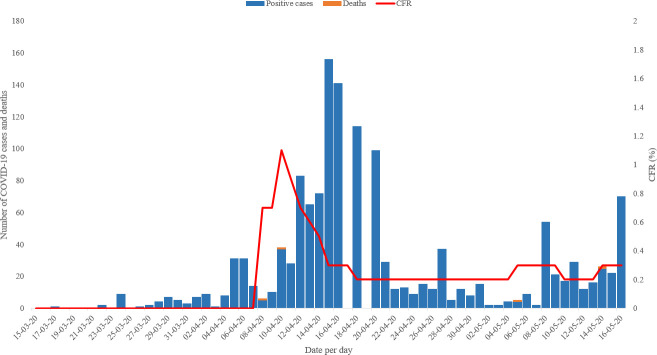
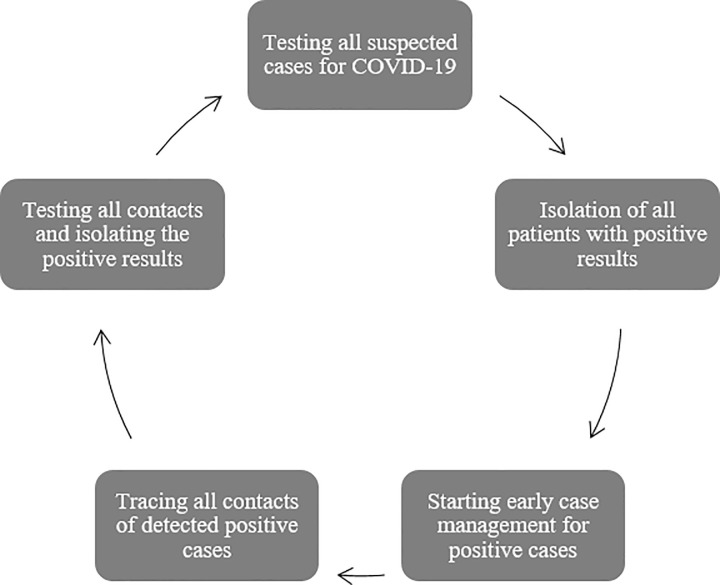
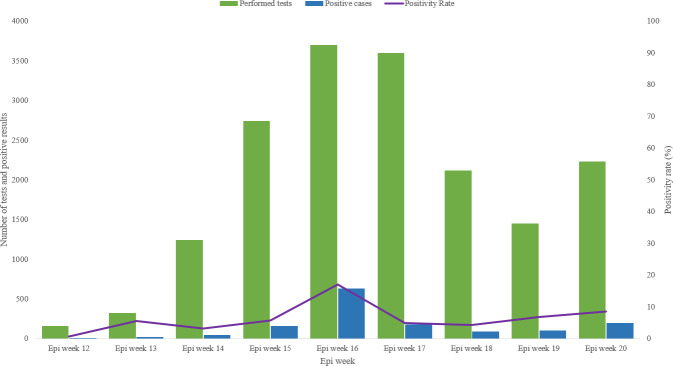
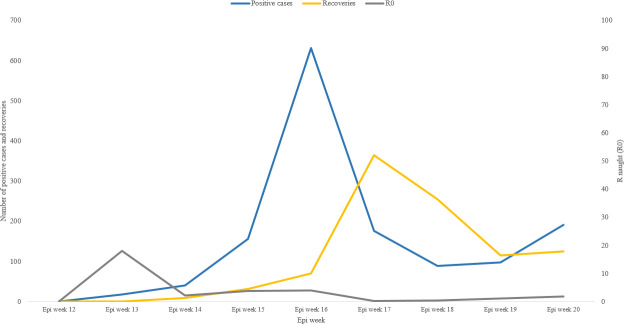
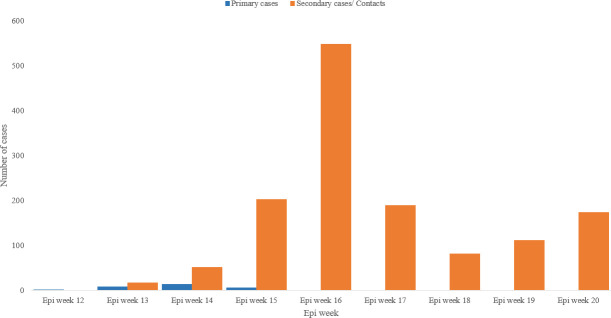
First cases of COVID-19 were reported from Wuhan, China, in December 2019, and it progressed rapidly. On 30 January, WHO declared the new disease as a PHEIC, then as a Pandemic on 11 March. By mid-March, the virus spread widely; Djibouti was not spared and was hit by the pandemic with the first case detected on 17 March. Djibouti worked with WHO and other partners to develop a preparedness and response plan, and implemented a series of intervention measures. MoH together with its civilian and military partners, closely followed WHO recommended strategy based on four pillars: testing, isolating, early case management, and contact tracing. From 17 March to 16 May, Djibouti performed the highest per capita tests in Africa and isolated, treated and traced the contacts of each positive case, which allowed for a rapid control of the epidemic. COVID-19 data included in this study was collected through MoH Djibouti during the period from 17 March to 16 May 2020. A total of 1,401 confirmed cases of COVID-19 were included in the study with 4 related deaths (CFR: 0.3%) and an attack rate of 0.15%. Males represented (68.4%) of the cases, with the age group 31-45 years old (34.2%) as the most affected. Djibouti conducted 17,532 tests, and was considered as a champion for COVID-19 testing in Africa with 18.2 tests per 1000 habitant. All positive cases were isolated, treated and had their contacts traced, which led to early and proactive diagnosis of cases and in turn yielded up to 95-98% asymptomatic cases. Recoveries reached 69% of the infected cases with R0 (0.91). The virus was detected in 4 regions in the country, with the highest percentage in the capital (83%). Djibouti responded to COVID-19 pandemic following an efficient and effective strategy, using a strong collaboration between civilian and military health assets that increased the response capacities of the country. Partnership, coordination, solidarity, proactivity and commitment were the pillars to confront COVID-19 pandemic.
2019 年 12 月,中国武汉首次报告了 COVID-19 病例,疫情迅速蔓延。1 月 30 日,世界卫生组织宣布新疾病为国际关注的突发公共卫生事件,3 月 11 日宣布为大流行。到 3 月中旬,病毒广泛传播;吉布提也未能幸免,于 3 月 17 日首次发现病例。吉布提与世界卫生组织和其他伙伴合作,制定了一项准备和应对计划,并实施了一系列干预措施。卫生部与其军民合作伙伴一起,根据四大支柱,紧密遵循世界卫生组织推荐的战略:检测、隔离、早期病例管理和接触者追踪。从 3 月 17 日至 5 月 16 日,吉布提在非洲进行了人均检测次数最高的检测,并隔离、治疗和追踪了每一个阳性病例的接触者,从而迅速控制了疫情。本研究中包含的 COVID-19 数据是通过吉布提卫生部在 2020 年 3 月 17 日至 5 月 16 日期间收集的。共有 1401 例 COVID-19 确诊病例,其中 4 例相关死亡(病死率:0.3%),发病率为 0.15%。男性(68.4%)占病例数,31-45 岁年龄组(34.2%)受影响最大。吉布提共进行了 17532 次检测,被认为是非洲 COVID-19 检测的冠军,每 1000 名居民进行 18.2 次检测。所有阳性病例均被隔离、治疗和追踪其接触者,这导致了早期和主动诊断病例,从而使多达 95-98%的无症状病例得到了检测。感染者的康复率达到 69%,R0(0.91)。该病毒在该国 4 个地区均有检出,首都(83%)的检出率最高。吉布提采取了一种高效和有效的策略来应对 COVID-19 大流行,利用军民卫生资产之间的强大合作关系,提高了该国的应对能力。合作、协调、团结、主动和承诺是应对 COVID-19 大流行的支柱。