Lukasiewicz Research Network-Textile Research Institute, Brzezinska 5/15, 92-103 Lodz, Poland.
Mar Drugs. 2020 Dec 21;18(12):660. doi: 10.3390/md18120660.
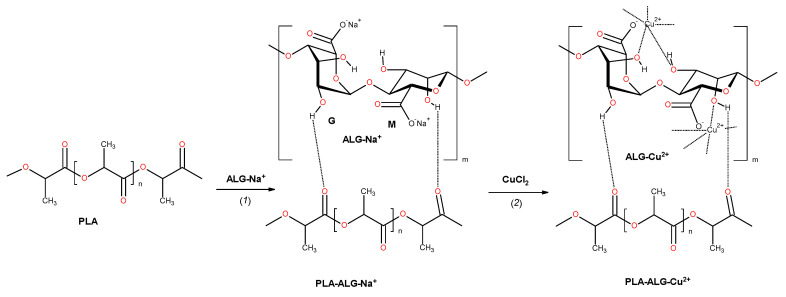
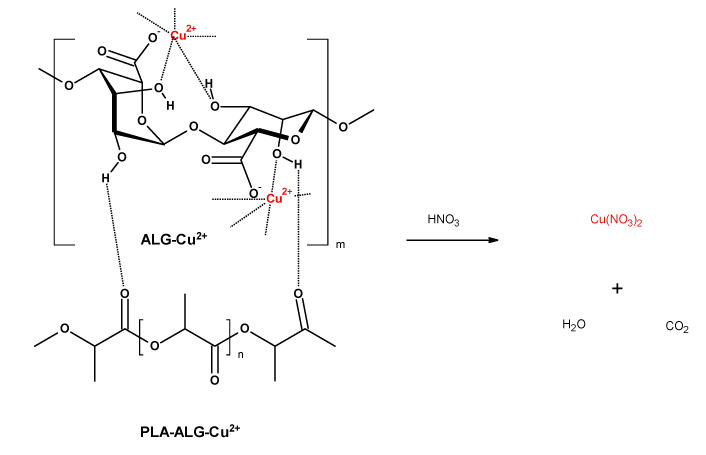
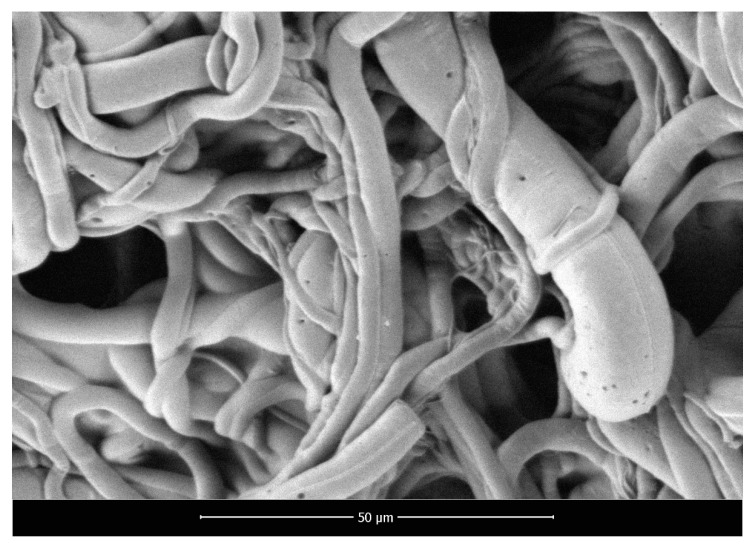
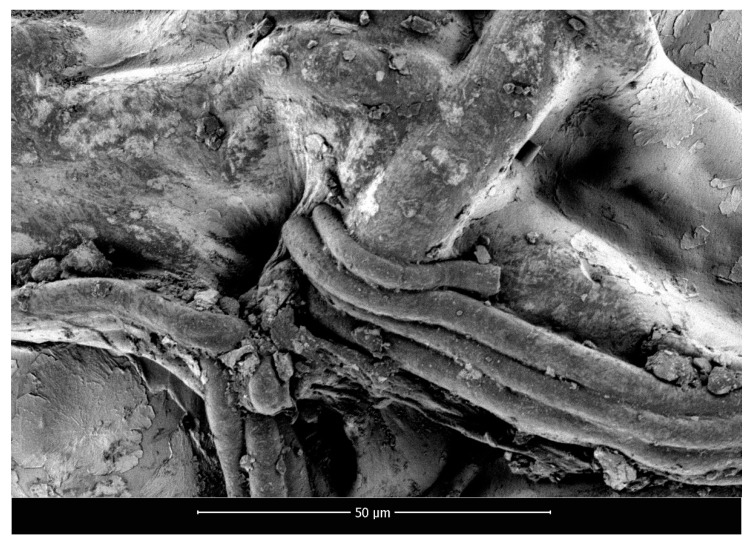
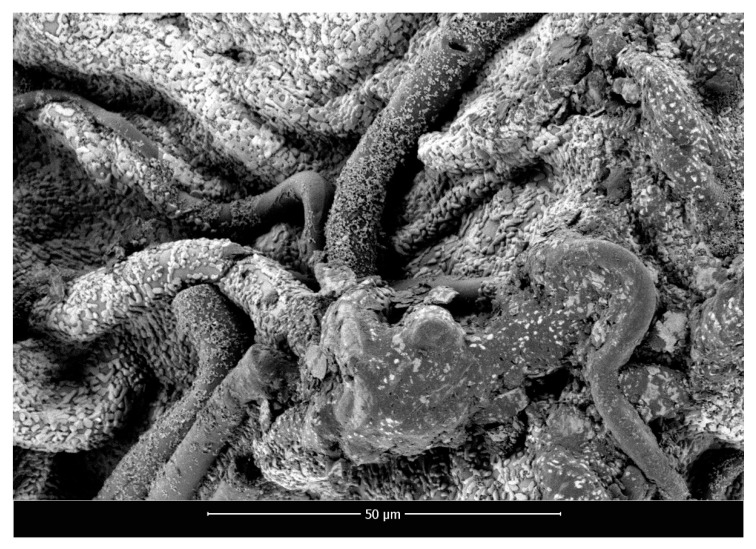
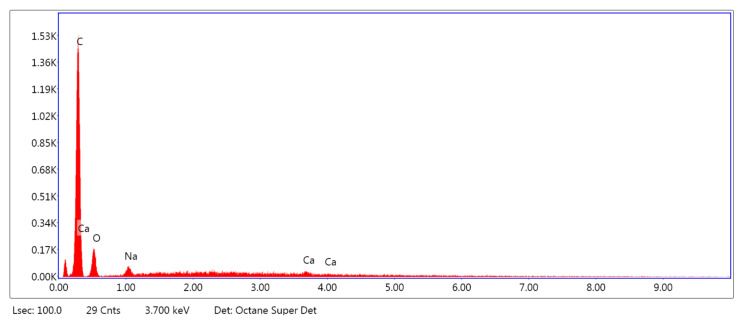
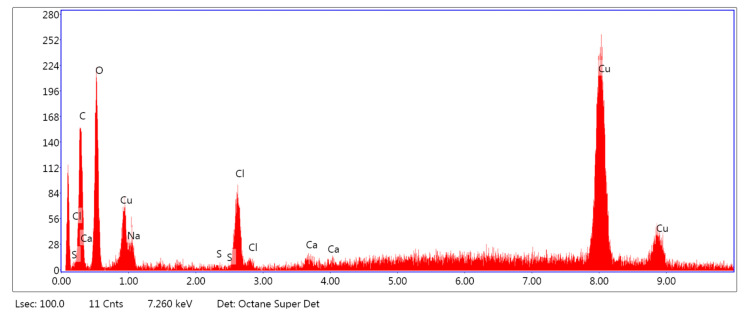
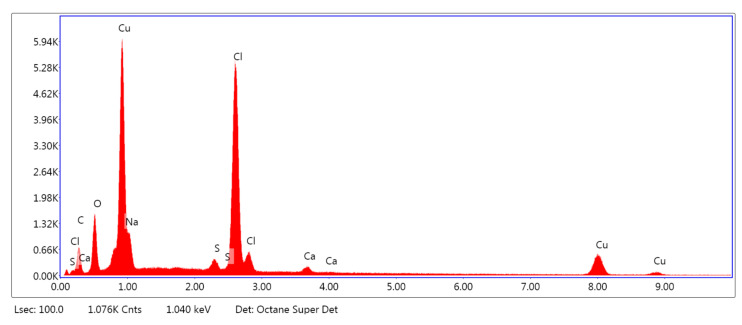
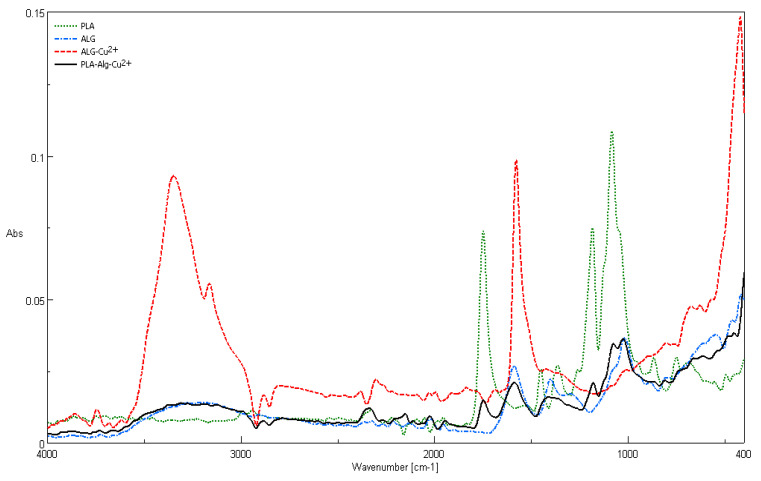
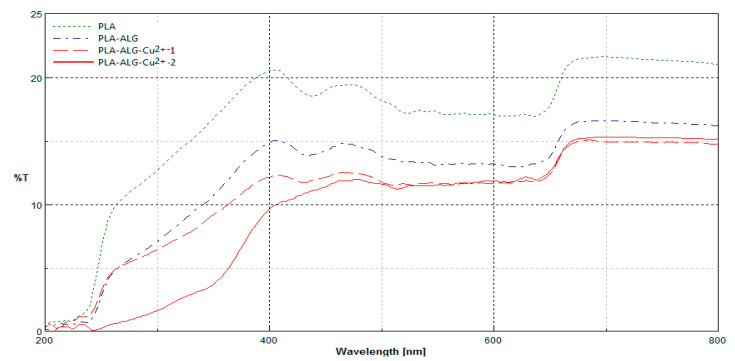
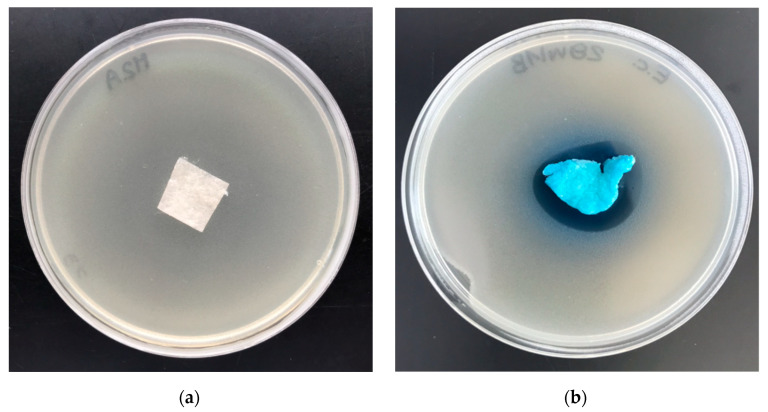
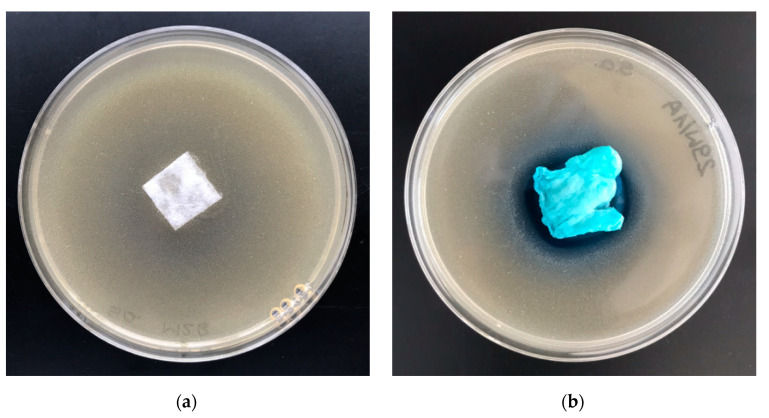
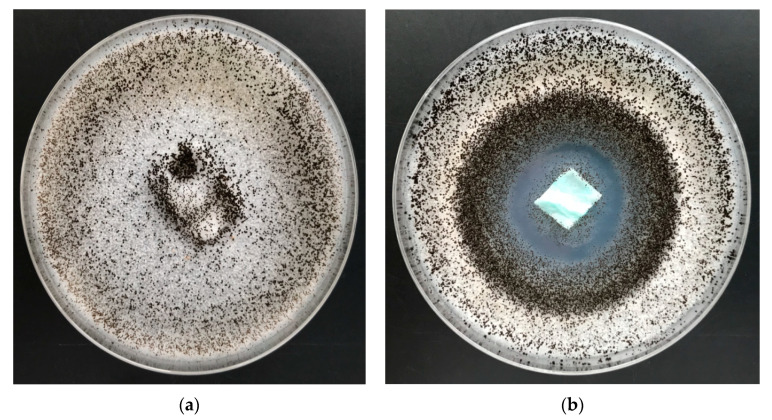
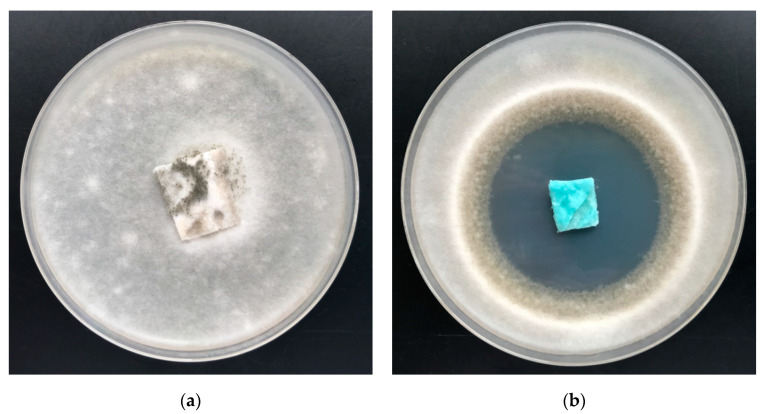
In recent years, due to an expansion of antibiotic-resistant microorganisms, there has been growing interest in biodegradable and antibacterial polymers that can be used in selected biomedical applications. The present work describes the synthesis of antimicrobial polylactide-copper alginate (PLA-ALG-Cu) composite fibers and their characterization. The composites were prepared by immersing PLA fibers in aqueous solution of sodium alginate, followed by ionic cross-linking of alginate chains within the polylactide fibers with Cu(II) ions to yield PLA-ALG-Cu composite fibers. The composites, so prepared, were characterized by scanning electron microscopy (SEM), UV/VIS transmittance and attenuated total reflection Fourier-transform infrared spectroscopy ATR-FTIR, and by determination of their specific surface area (SSA), total/average pore volumes (through application of the 5-point Brunauer-Emmett-Teller method (BET)), and ability to block UV radiation (determination of the ultraviolet protection factor (UPF) of samples). The composites were also subjected to in vitro antimicrobial activity evaluation tests against colonies of Gram-negative () and Gram-positive () bacteria and antifungal susceptibility tests against and fungal mold species. All the results obtained in this work showed that the obtained composites were promising materials to be used as an antimicrobial wound dressing.
近年来,由于抗生素耐药微生物的扩张,人们对可生物降解和抗菌的聚合物越来越感兴趣,这些聚合物可用于选定的生物医学应用。本工作描述了抗菌聚乳酸-海藻酸钠(PLA-ALG-Cu)复合纤维的合成及其表征。通过将 PLA 纤维浸入海藻酸钠的水溶液中,然后用 Cu(II)离子对聚乳酸纤维内的海藻酸钠链进行离子交联,制备了 PLA-ALG-Cu 复合纤维。用扫描电子显微镜(SEM)、UV/VIS 透射率和衰减全反射傅里叶变换红外光谱 ATR-FTIR 对所制备的复合材料进行了表征,并通过测定其比表面积(SSA)、总/平均孔体积(通过应用五点 Brunauer-Emmett-Teller 方法(BET))以及阻挡紫外线辐射的能力(测定样品的紫外线防护因子(UPF))。还对革兰氏阴性()和革兰氏阳性()细菌的菌落进行了体外抗菌活性评价试验,并对 和 真菌霉菌进行了抗真菌药敏试验。本工作中获得的所有结果均表明,所得到的复合材料是用作抗菌伤口敷料的有前途的材料。