School of Health Sciences, Faculty of Biology, Medicine and Health, The University of Manchester, Manchester, United Kingdom.
Manchester Academic Health Science Centre, Manchester, United Kingdom.
J Med Internet Res. 2020 Dec 29;22(12):e22201. doi: 10.2196/22201.
Older people are at increased risk of adverse health events because of reduced physical activity. There is concern that activity levels are further reduced in the context of the COVID-19 pandemic, as many older people are practicing physical and social distancing to minimize transmission. Mobile health (mHealth) and eHealth technologies may offer a means by which older people can engage in physical activity while physically distancing.
The objective of this study was to assess the evidence for mHealth or eHealth technology in the promotion of physical activity among older people aged 50 years or older.
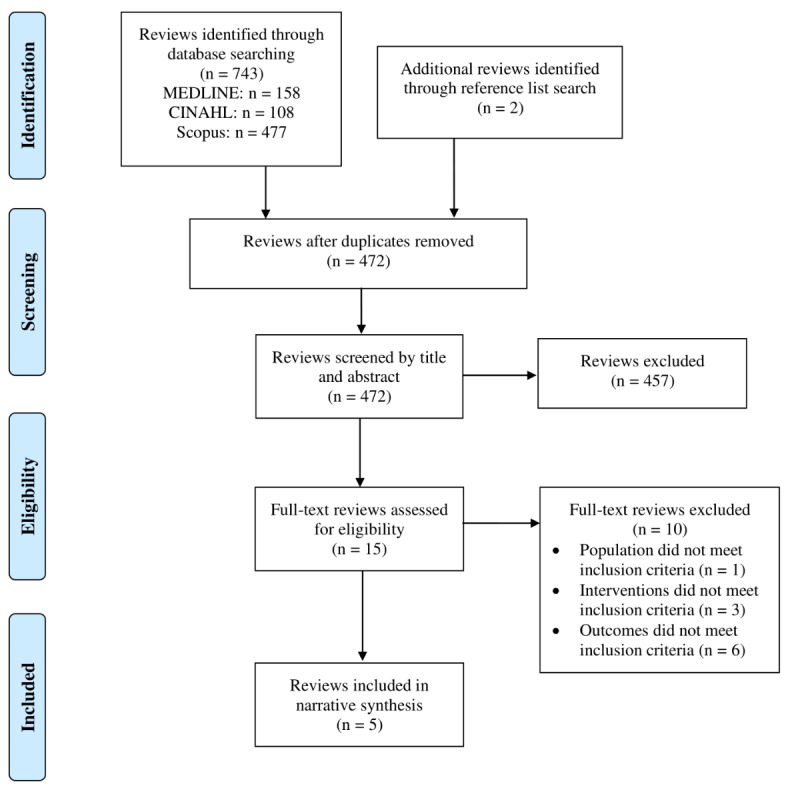
We conducted a rapid review of reviews using PRISMA (Preferred Reporting Items for Systematic Reviews and Meta-Analyses) guidelines. We searched for systematic reviews published in the English language in 3 electronic databases: MEDLINE, CINAHL Plus, and Scopus. Two reviewers used predefined inclusion criteria to select relevant reviews and extracted data on review characteristics and intervention effectiveness. Two independent raters assessed review quality using the AMSTAR-2 tool.
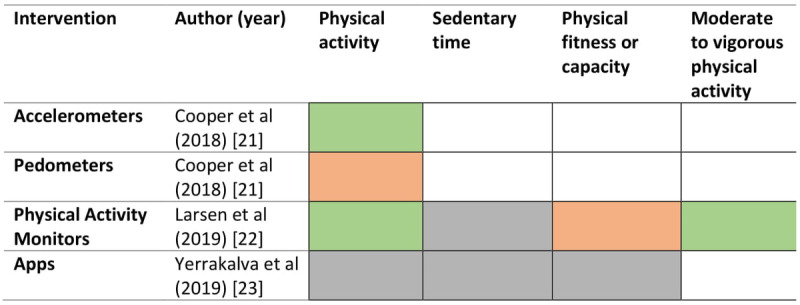
Titles and abstracts (n=472) were screened, and 14 full-text reviews were assessed for eligibility. Initially, we included 5 reviews but excluded 1 from the narrative as it was judged to be of critically low quality. Three reviews concluded that mHealth or eHealth interventions were effective in increasing physical activity. One review found that the evidence was inconclusive.
There is low to moderate evidence that interventions delivered via mHealth or eHealth approaches may be effective in increasing physical activity in older adults in the short term. Components of successful interventions include self-monitoring, incorporation of theory and behavior change techniques, and social and professional support.
由于身体活动减少,老年人面临更多不良健康事件的风险。由于许多老年人为了最大限度地减少传播而实行身体和社交隔离,人们担心在 COVID-19 大流行的背景下,活动水平会进一步降低。移动健康 (mHealth) 和电子健康 (eHealth) 技术可能为老年人在保持身体距离的同时进行身体活动提供了一种手段。
本研究旨在评估 mHealth 或 eHealth 技术在促进 50 岁及以上老年人身体活动方面的证据。
我们按照 PRISMA(系统评价和荟萃分析的首选报告项目)指南进行了快速综述。我们在 3 个电子数据库中搜索发表在英语中的系统评价:MEDLINE、CINAHL Plus 和 Scopus。两名审查员使用预定义的纳入标准选择相关的综述,并提取关于综述特征和干预效果的数据。两名独立评估员使用 AMSTAR-2 工具评估综述质量。
筛选了标题和摘要(n=472),并对 14 篇全文综述进行了资格评估。最初,我们纳入了 5 篇综述,但由于判断其质量极低,从叙述中排除了 1 篇综述。3 篇综述得出结论,mHealth 或 eHealth 干预措施在增加身体活动方面是有效的。1 篇综述发现证据不确定。
有低到中等证据表明,通过 mHealth 或 eHealth 方法提供的干预措施可能在短期内有效增加老年人的身体活动。成功干预的组成部分包括自我监测、纳入理论和行为改变技术,以及社会和专业支持。