Bian Zhiyuan, Gao Huanhuan, Wang Chongying
Ministry of Education Key Laboratory of Cell Activities and Stress Adaptations, School of Life Sciences, Lanzhou University, Lanzhou 730000, China.
Int J Mol Sci. 2020 Dec 23;22(1):81. doi: 10.3390/ijms22010081.
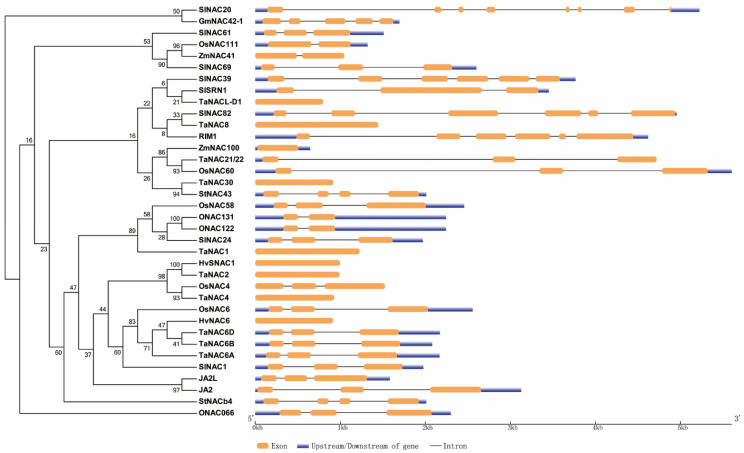
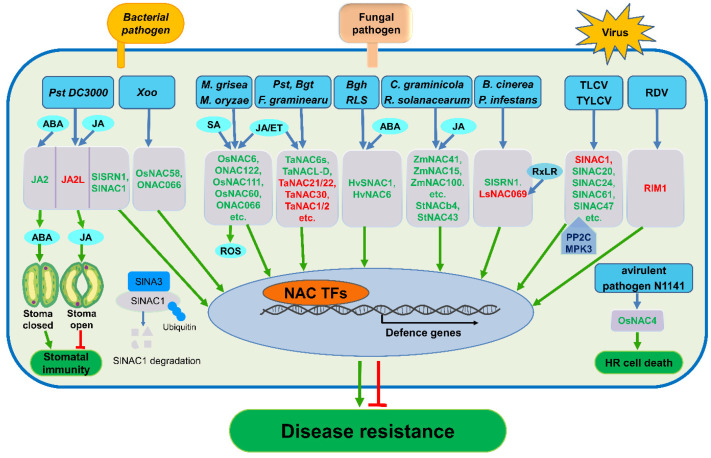
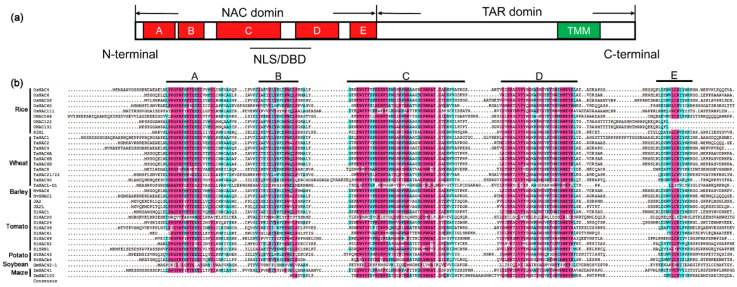
The NAC (NAM, ATAF1/2, and CUC2) family of proteins is one of the largest plant-specific transcription factor (TF) families and its members play varied roles in plant growth, development, and stress responses. In recent years, NAC TFs have been demonstrated to participate in crop-pathogen interactions, as positive or negative regulators of the downstream defense-related genes. NAC TFs link signaling pathways between plant hormones, including salicylic acid (SA), jasmonic acid (JA), ethylene (ET), and abscisic acid (ABA), or other signals, such as reactive oxygen species (ROS), to regulate the resistance against pathogens. Remarkably, NAC TFs can also contribute to hypersensitive response and stomatal immunity or can be hijacked as virulence targets of pathogen effectors. Here, we review recent progress in understanding the structure, biological functions and signaling networks of NAC TFs in response to pathogens in several main food crops, such as rice, wheat, barley, and tomato, and explore the directions needed to further elucidate the function and mechanisms of these key signaling molecules.
NAC(NAM、ATAF1/2和CUC2)蛋白家族是最大的植物特异性转录因子(TF)家族之一,其成员在植物生长、发育和应激反应中发挥着多种作用。近年来,NAC转录因子已被证明参与作物与病原体的相互作用,作为下游防御相关基因的正调控或负调控因子。NAC转录因子连接包括水杨酸(SA)、茉莉酸(JA)、乙烯(ET)和脱落酸(ABA)在内的植物激素之间的信号通路,或其他信号,如活性氧(ROS),以调节对病原体的抗性。值得注意的是,NAC转录因子也可促进过敏反应和气孔免疫,或被病原体效应子作为毒力靶点。在此,我们综述了在理解水稻、小麦、大麦和番茄等几种主要粮食作物中NAC转录因子响应病原体的结构、生物学功能和信号网络方面的最新进展,并探讨了进一步阐明这些关键信号分子的功能和机制所需的方向。