Bi Mengmeng, Li Xueying, Yan Xin, Liu Di, Gao Ge, Zhu Pengfang, Mao Hongyu
College of Forestry, Shenyang Agricultural University, Shenyang, 110866, China.
Key Laboratory of Forest Tree Genetics, Breeding and Cultivation of Liaoning Province, Shenyang, 110866, China.
Hortic Res. 2021 Jan 1;8(1):6. doi: 10.1038/s41438-020-00436-4.
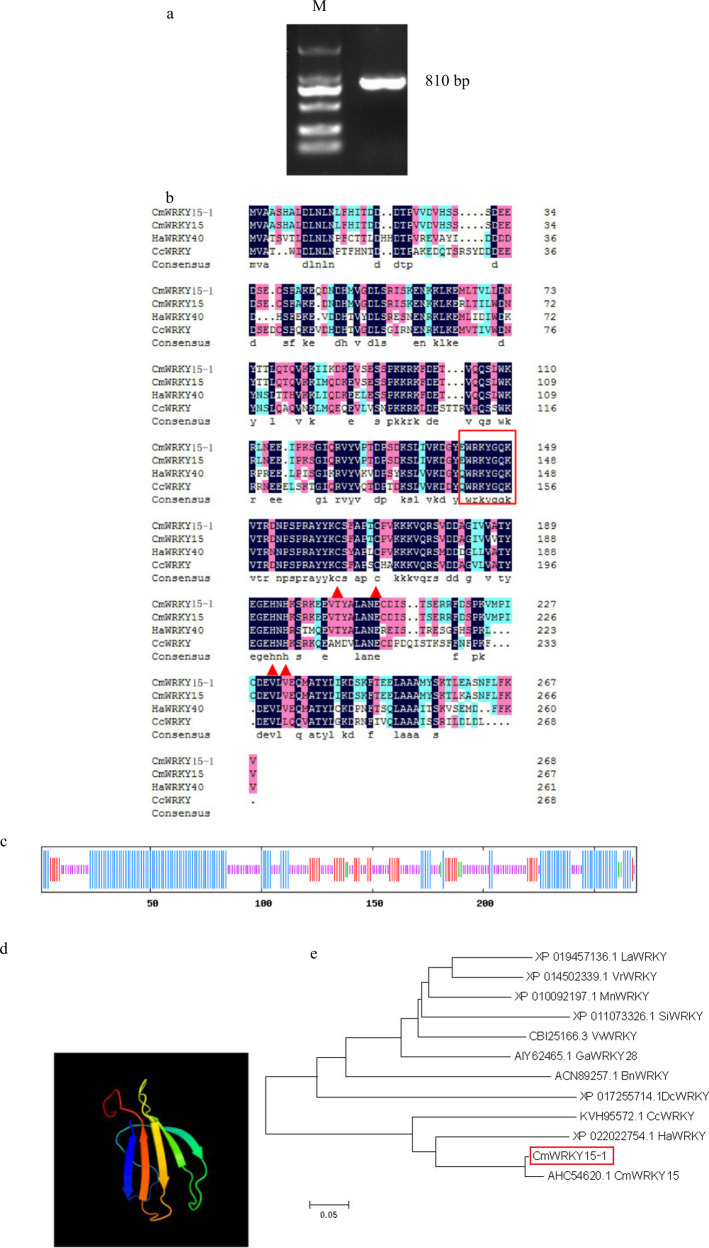
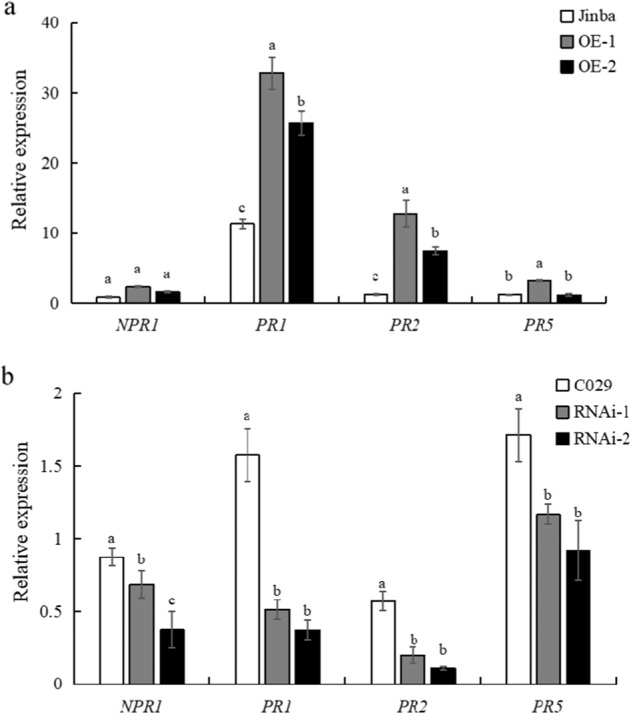
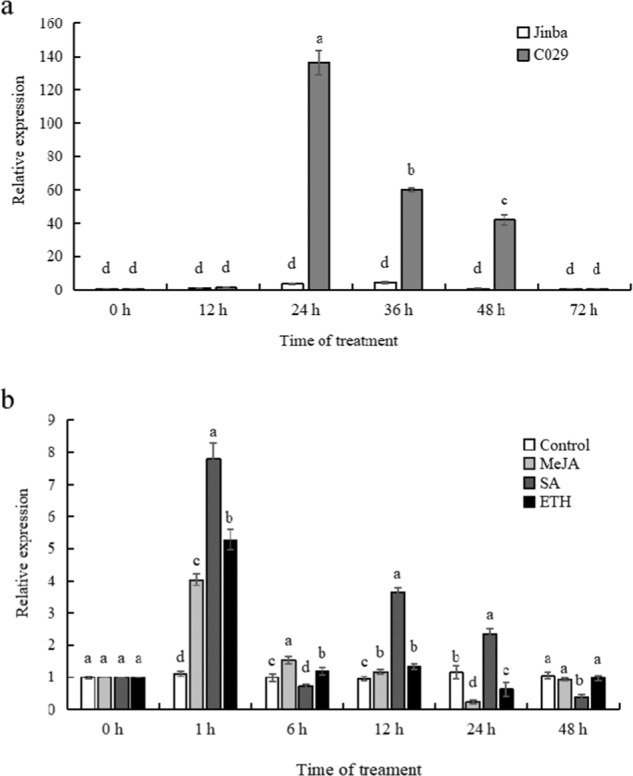
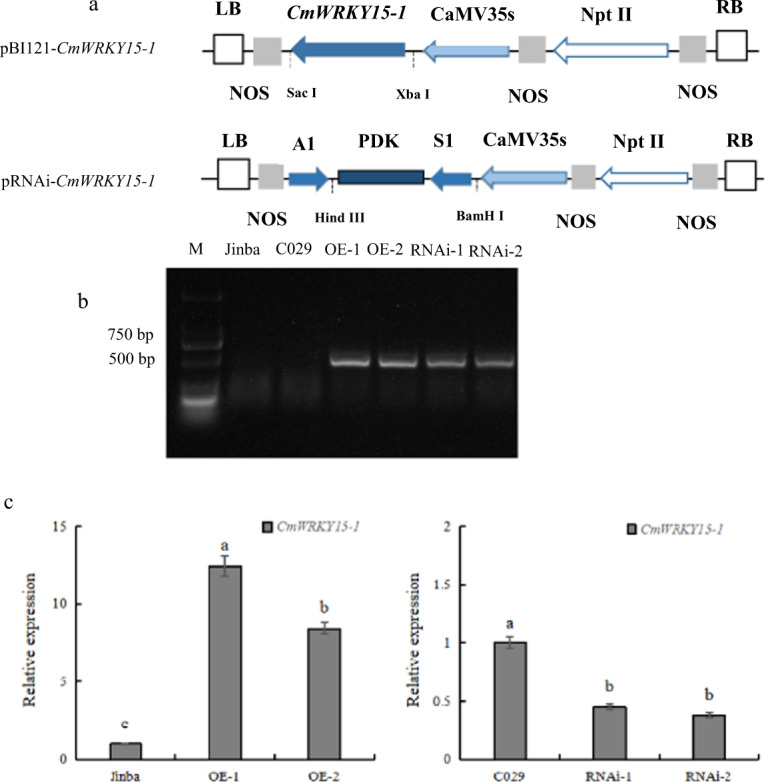
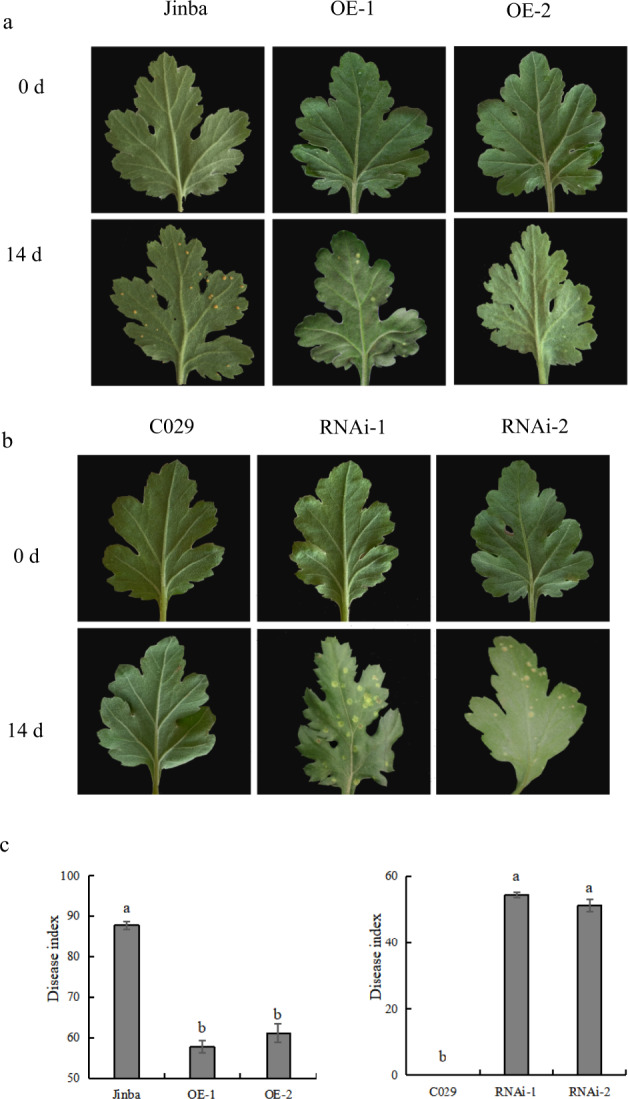
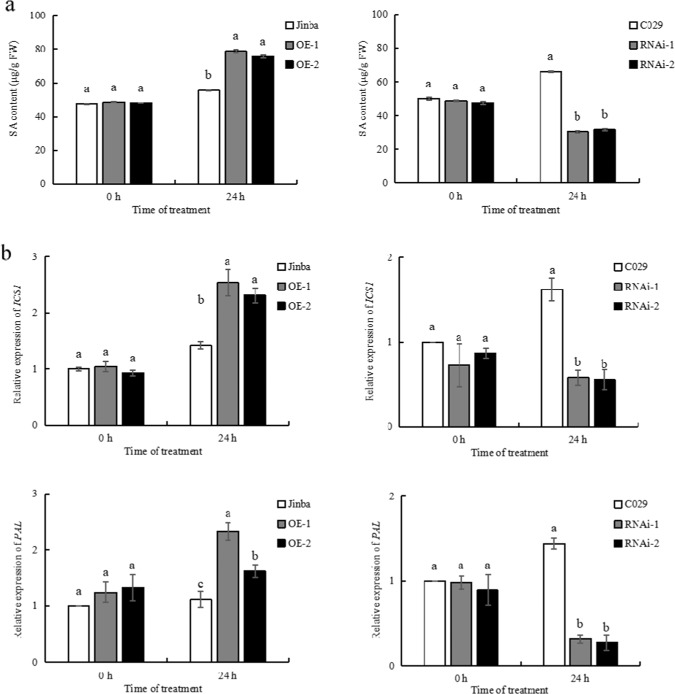
Chrysanthemum white rust disease, which is caused by the fungus Puccinia horiana Henn., severely reduces the ornamental quality and yield chrysanthemum. WRKY transcription factors function in the disease-resistance response in a variety of plants; however, it is unclear whether members of this family improve resistance to white rust disease in chrysanthemum. In this study, using PCR, we isolated a WRKY15 homologous gene, CmWRKY15-1, from the resistant chrysanthemum cultivar C029. Real-time quantitative PCR (RT-qPCR) revealed that CmWRKY15-1 exhibited differential expression patterns between the immune cultivar C029 and the susceptible cultivar Jinba upon P. horiana infection. In addition, salicylic acid (SA) treatment strongly induced CmWRKY15-1 expression. Overexpression of CmWRKY15-1 in the chrysanthemum-susceptible cultivar Jinba increased tolerance to P. horiana infection. Conversely, silencing CmWRKY15-1 via RNA interference (RNAi) in C029 increased sensitivity to P. horiana infection. We also determined that P. horiana infection increased both the endogenous SA content and the expression of salicylic acid biosynthesis genes in CmWRKY15-1-overexpressing plants, whereas CmWRKY15-1 RNAi plants exhibited the opposite effects under the same conditions. Finally, the transcript levels of pathogenesis-related (PR) genes involved in the SA pathway were positively associated with CmWRKY15-1 expression levels. Our results demonstrated that CmWRKY15-1 plays an important role in the resistance of chrysanthemum to P. horiana by influencing SA signaling.
菊花白锈病由真菌柄锈菌(Puccinia horiana Henn.)引起,会严重降低菊花的观赏品质和产量。WRKY转录因子在多种植物的抗病反应中发挥作用;然而,该家族成员是否能提高菊花对白锈病的抗性尚不清楚。在本研究中,我们通过PCR从抗性菊花品种C029中分离出一个WRKY15同源基因CmWRKY15-1。实时定量PCR(RT-qPCR)显示,在柄锈菌感染后,免疫品种C029和感病品种津巴布韦之间,CmWRKY15-1呈现出不同的表达模式。此外,水杨酸(SA)处理强烈诱导了CmWRKY15-1的表达。在菊花感病品种津巴布韦中过表达CmWRKY15-1可提高对柄锈菌感染的耐受性。相反,通过RNA干扰(RNAi)在C029中沉默CmWRKY15-1会增加对柄锈菌感染的敏感性。我们还确定,柄锈菌感染增加了过表达CmWRKY15-1的植物中的内源性SA含量和水杨酸生物合成基因的表达,而在相同条件下,CmWRKY15-1 RNAi植物表现出相反的效果。最后,参与SA途径的病程相关(PR)基因的转录水平与CmWRKY15-1表达水平呈正相关。我们的结果表明,CmWRKY15-1通过影响SA信号传导在菊花对柄锈菌的抗性中发挥重要作用。