Schumacher M, Habibovic P, van Rijt S
Department of Instructive Biomaterials Engineering, MERLN Institute for Technology-Inspired Regenerative Medicine, Maastricht University, the Netherlands.
Bioact Mater. 2020 Dec 21;6(7):1921-1931. doi: 10.1016/j.bioactmat.2020.12.007. eCollection 2021 Jul.
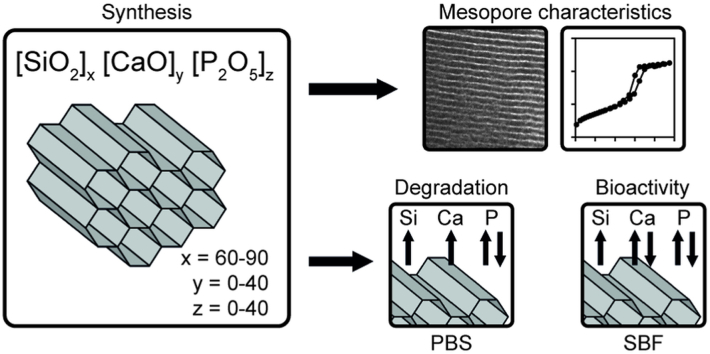
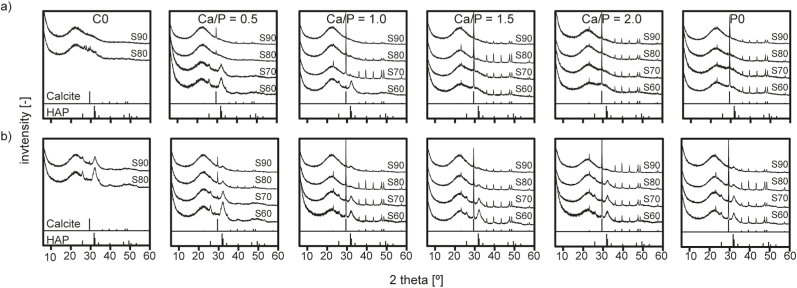
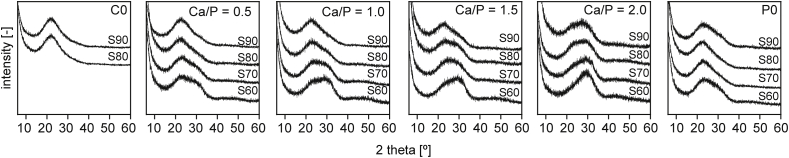
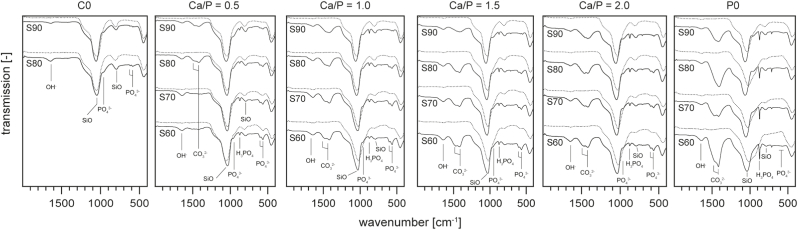
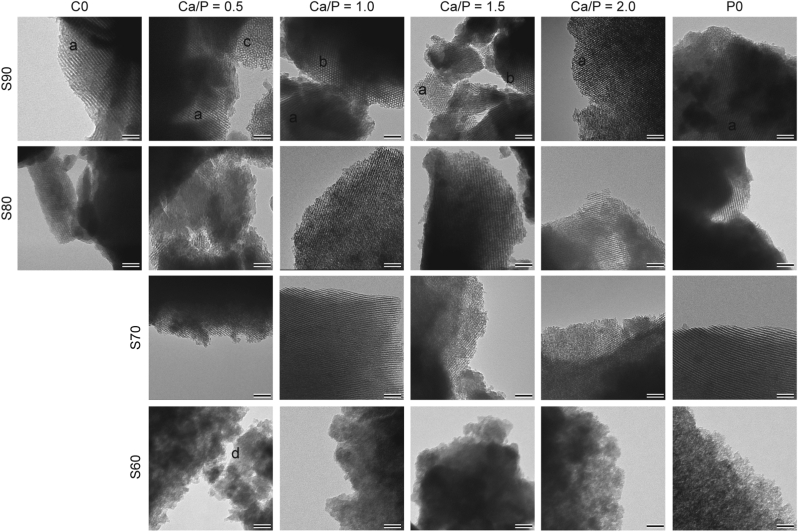
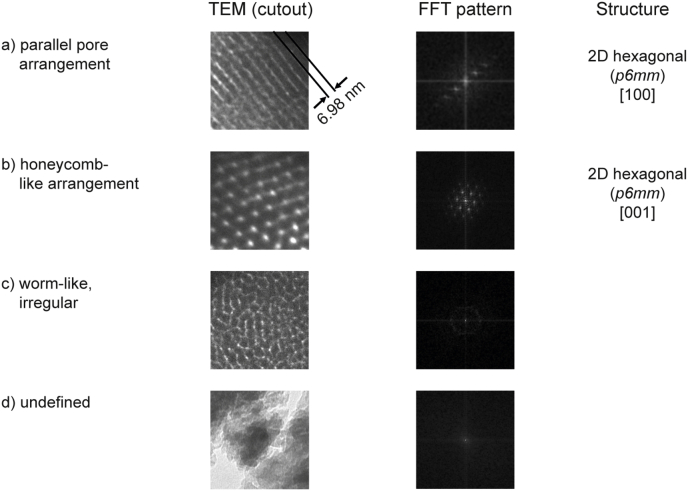
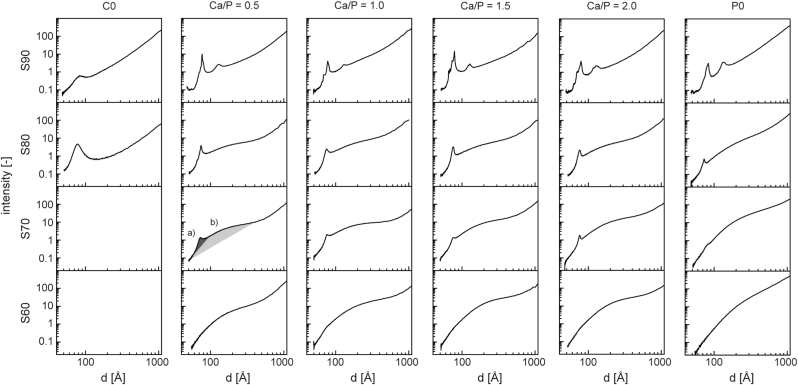
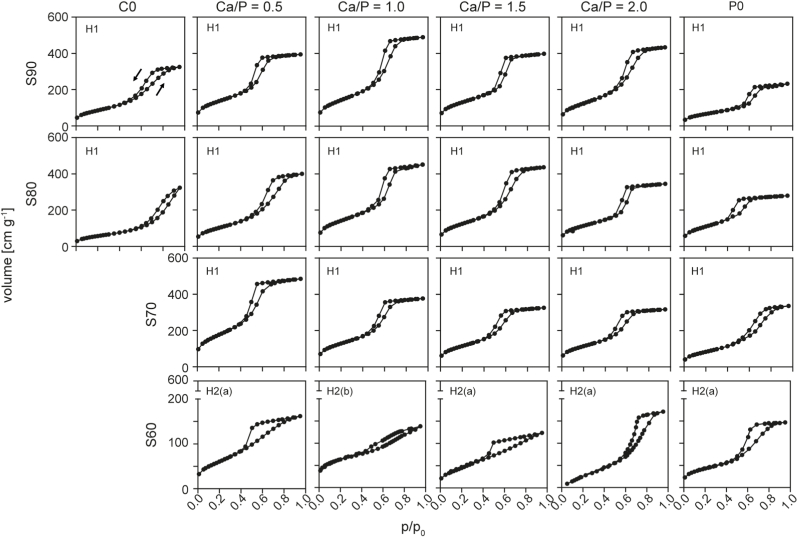
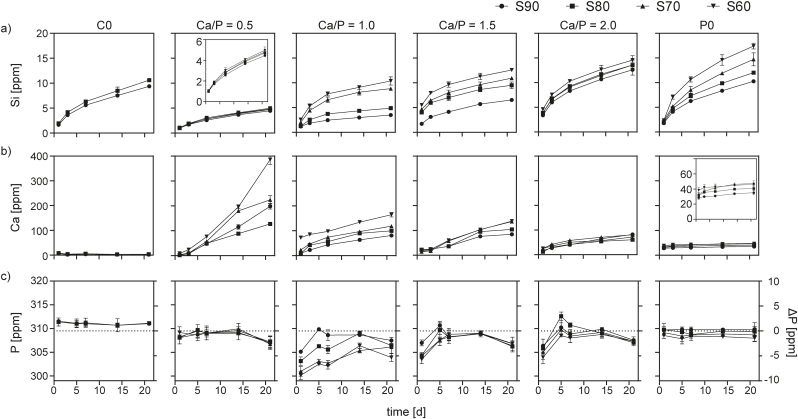
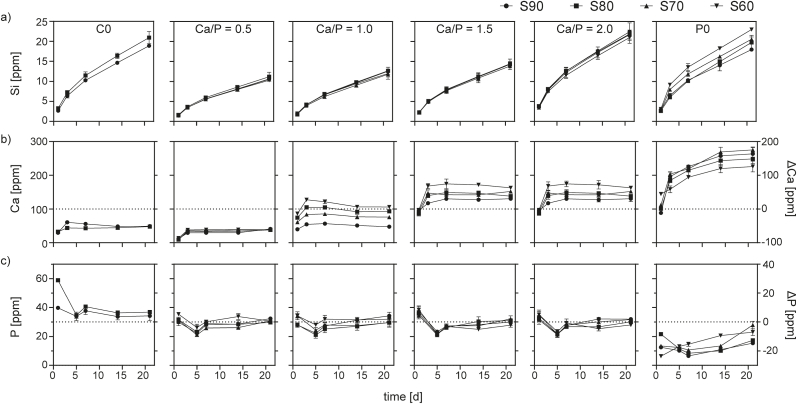
Mesoporous bioactive glasses (MBGs) are promising materials for regenerative medicine, due to their favorable properties including bioactivity and degradability. These key properties, but also their surface area, pore structure and pore volume are strongly dependent on synthesis parameters and glass stoichiometry. However, to date no systematic study on MBG properties covering a broad range of possible compositions exists. Here, 24 MBG compositions in the SiO-CaO-PO system were synthesized by varying SiO (60-90 mol %), CaO and PO content (both 0 to 40 mol-%), while other synthesis parameters were kept constant. Mesopore characteristics, degradability and bioactivity were analysed. The results showed that, within the tested range of compositions, mesopore formation required a molar SiO content above 60% but was independent of CaO and PO content. While mesopore size did not depend on glass stoichiometry, mesopore arrangement was influenced by the SiO content. Specific surface area and pore volume were slightly altered by the SiO content. All materials were degradable; however, degradation as well as bioactivity, i.e. the ability to form a CaP mineral on the surface, depended on stoichiometry. Major differences were found in early surface reactions in simulated body fluid: where some MBGs induced direct hydroxyapatite crystallization, high release of calcium in others resulted in calcite formation. In summary, degradation and bioactivity, both key parameters of MBGs, can be controlled by glass stoichiometry over a broad range while leaving the unique structural parameters of MBGs relatively unaffected. This allows targeted selection of material compositions for specific regenerative medicine applications.
介孔生物活性玻璃(MBGs)因其具有生物活性和可降解性等优良特性,是再生医学领域很有前景的材料。这些关键特性,以及它们的表面积、孔结构和孔体积,在很大程度上取决于合成参数和玻璃化学计量比。然而,迄今为止,尚未有关于涵盖广泛可能组成的MBG特性的系统研究。在此,通过改变SiO₂(60 - 90 mol%)、CaO和P₂O₅含量(均为0至40 mol-%),同时保持其他合成参数不变,合成了SiO₂-CaO-P₂O₅体系中的24种MBG组成。分析了介孔特性、可降解性和生物活性。结果表明,在测试的组成范围内,介孔形成需要摩尔SiO₂含量高于60%,但与CaO和P₂O₅含量无关。虽然介孔尺寸不依赖于玻璃化学计量比,但介孔排列受SiO₂含量影响。比表面积和孔体积随SiO₂含量略有变化。所有材料都具有可降解性;然而,降解以及生物活性,即在表面形成CaP矿物的能力,取决于化学计量比。在模拟体液中的早期表面反应中发现了主要差异:一些MBGs诱导直接羟基磷灰石结晶,而另一些中钙的高释放导致方解石形成。总之,降解和生物活性这两个MBGs的关键参数,可以通过玻璃化学计量比在很宽的范围内进行控制,同时MBGs独特的结构参数相对不受影响。这使得能够针对特定的再生医学应用有针对性地选择材料组成。