Department of Psychiatry and Behavioral Sciences, Duke University, 40 Duke Medicine Circle, Box 3620 DUMC, Durham, NC 27710, USA.
Department of Psychiatry and Behavioral Sciences, Duke University, 40 Duke Medicine Circle, Box 3620 DUMC, Durham, NC 27710, USA; Department of Electrical and Computer Engineering, Duke University, NC 27708, USA; Department of Neurosurgery, Duke University, NC 27710, USA; Department of Biomedical Engineering, Duke University, NC 27708, USA.
Neuroimage. 2021 Mar;228:117696. doi: 10.1016/j.neuroimage.2020.117696. Epub 2020 Dec 30.
During transcranial magnetic stimulation (TMS) a coil placed on the scalp is used to non-invasively modulate activity of targeted brain networks via a magnetically induced electric field (E-field). Ideally, the E-field induced during TMS is concentrated on a targeted cortical region of interest (ROI). Determination of the coil position and orientation that best achieve this objective presently requires a large computational effort.
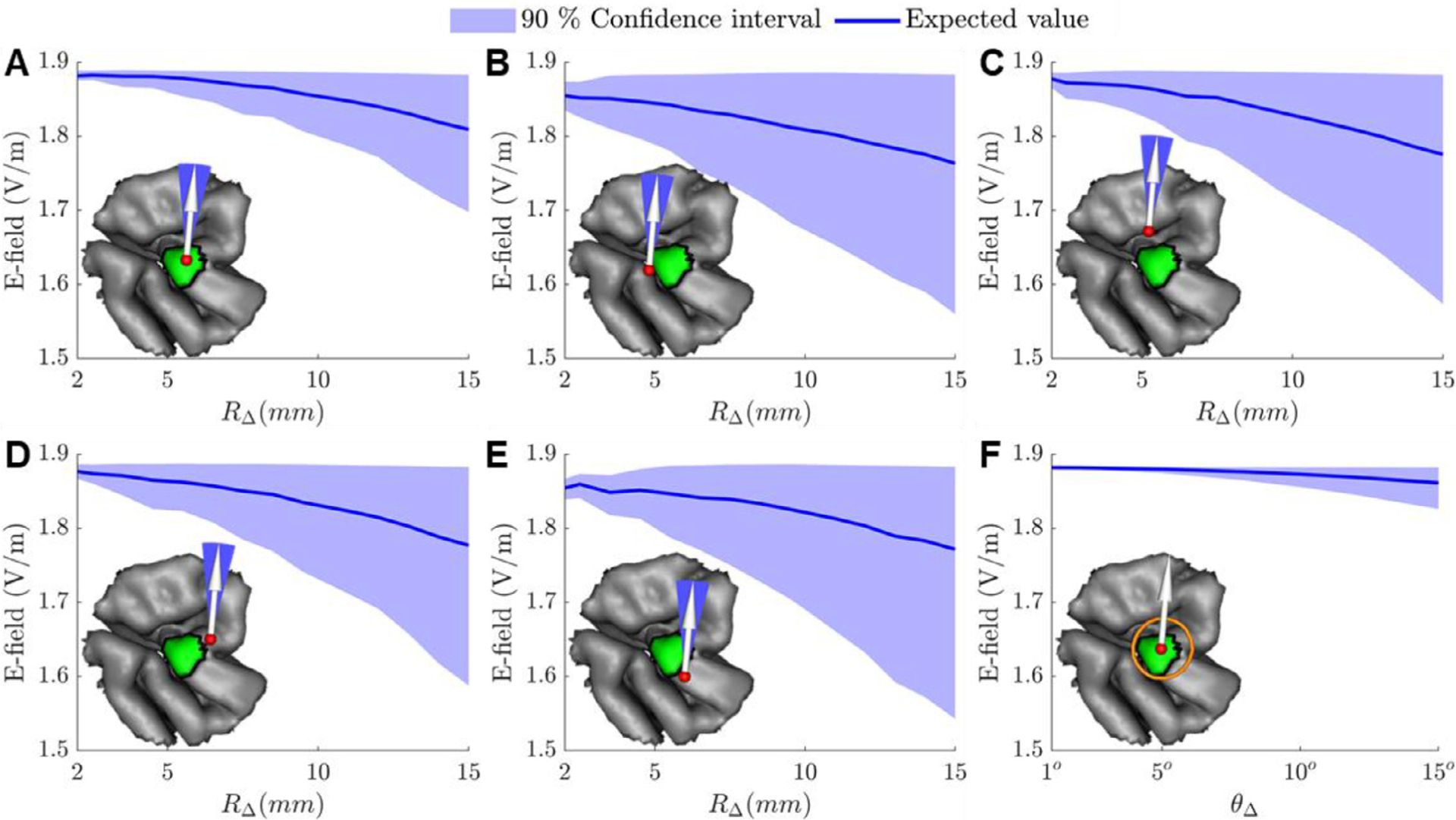
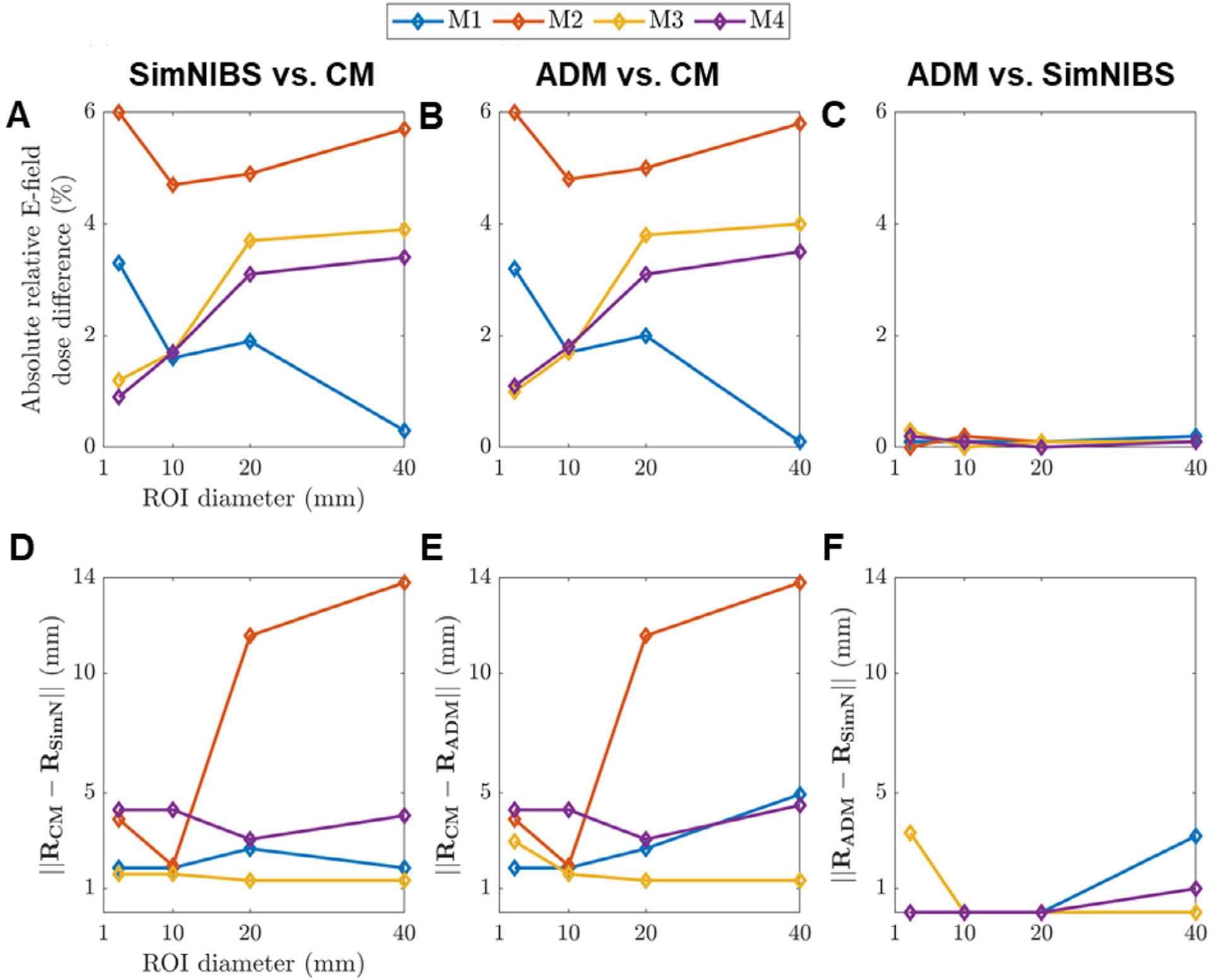
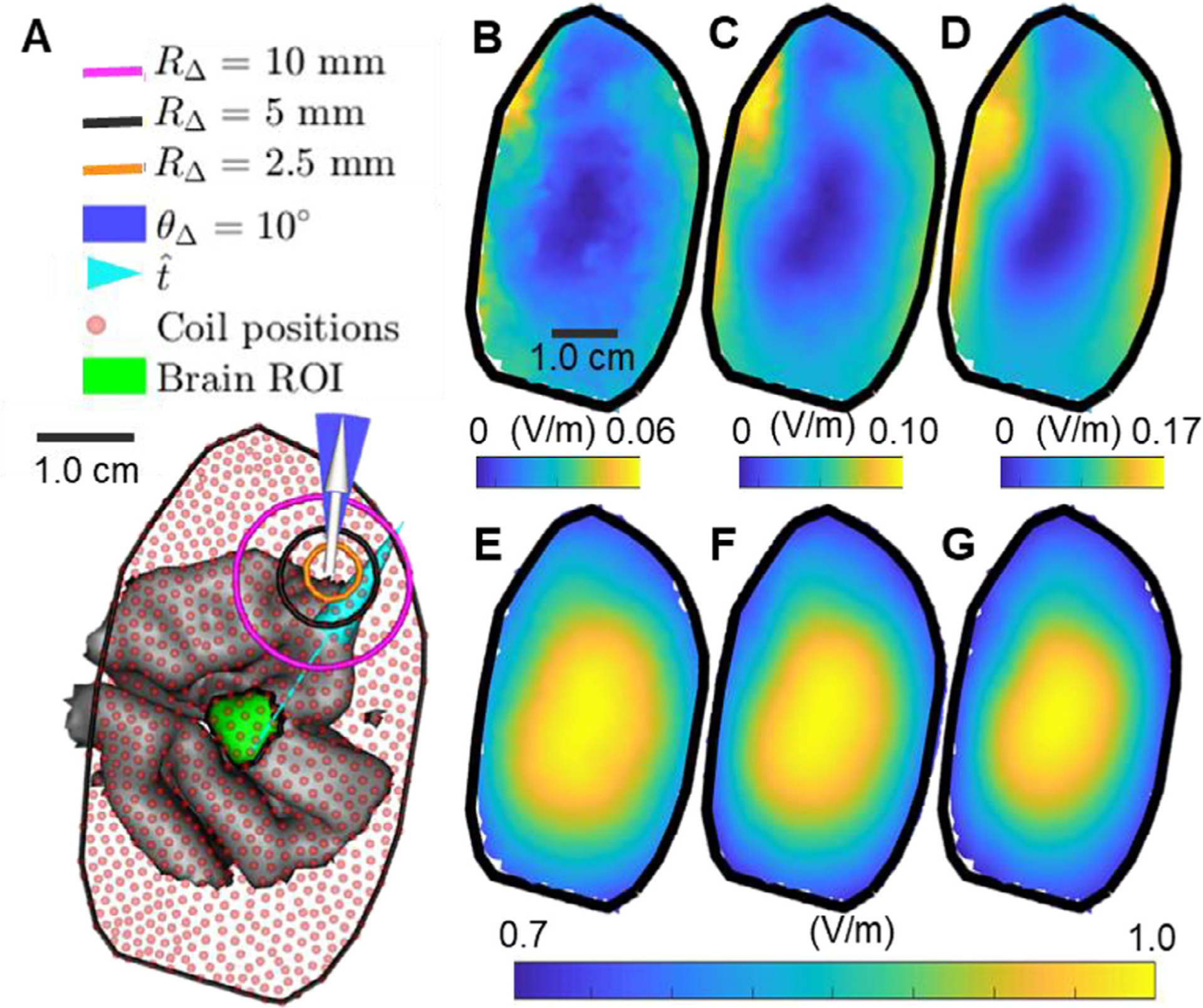
To improve the accuracy of TMS we have developed a fast computational auxiliary dipole method (ADM) for determining the optimum coil position and orientation. The optimum coil placement maximizes the E-field along a predetermined direction or, alternatively, the overall E-field magnitude in the targeted ROI. Furthermore, ADM can assess E-field uncertainty resulting from precision limitations of TMS coil placement protocols.
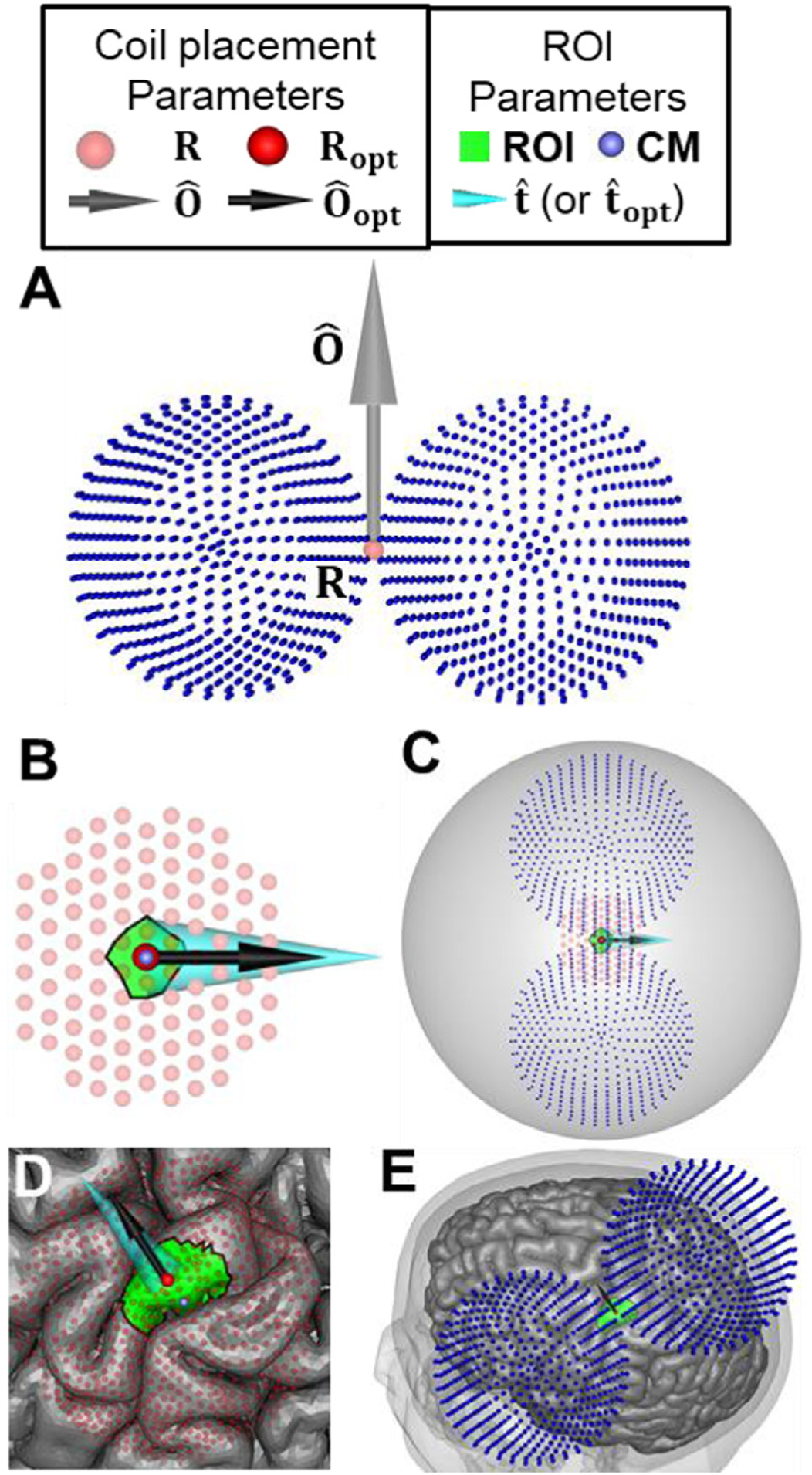
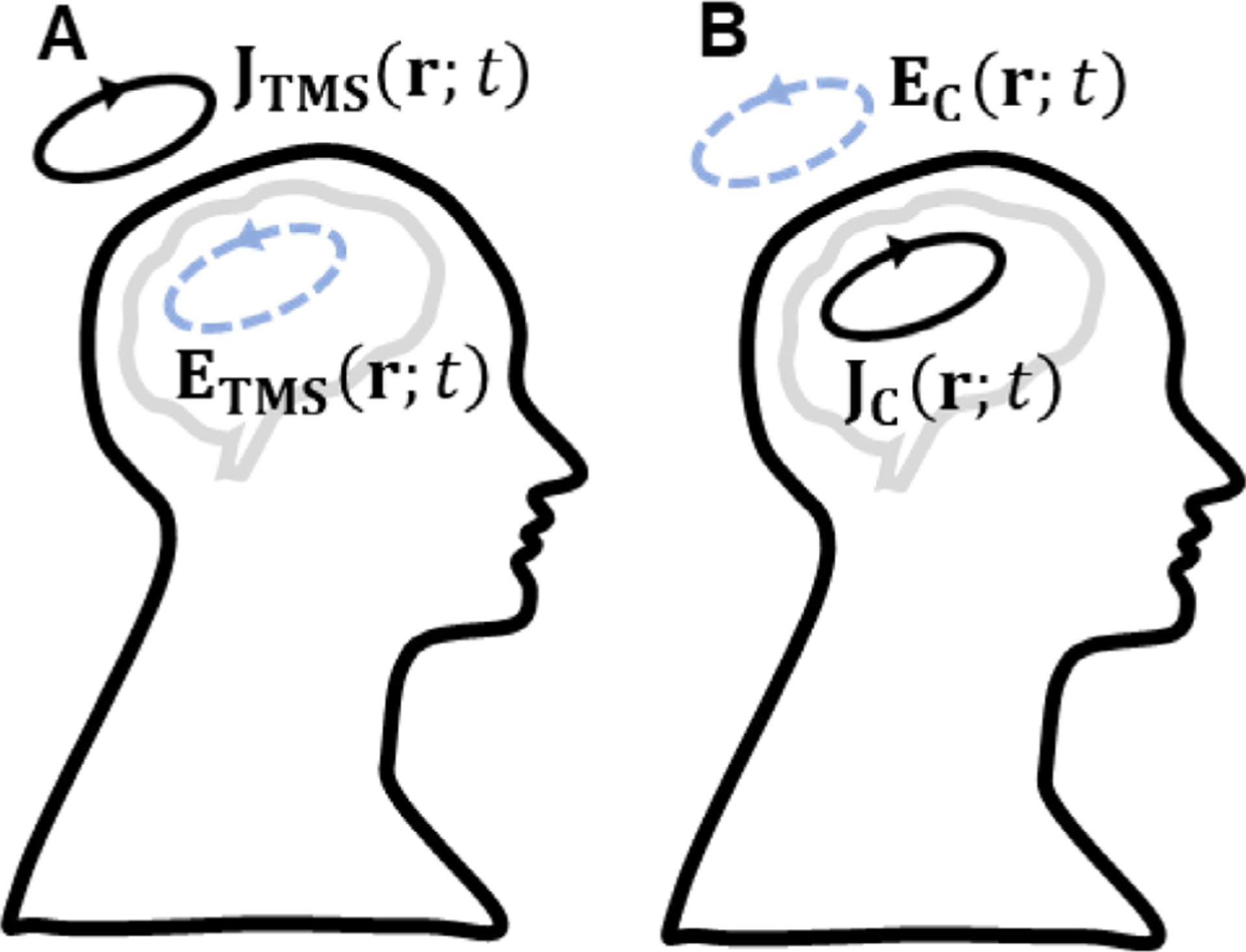
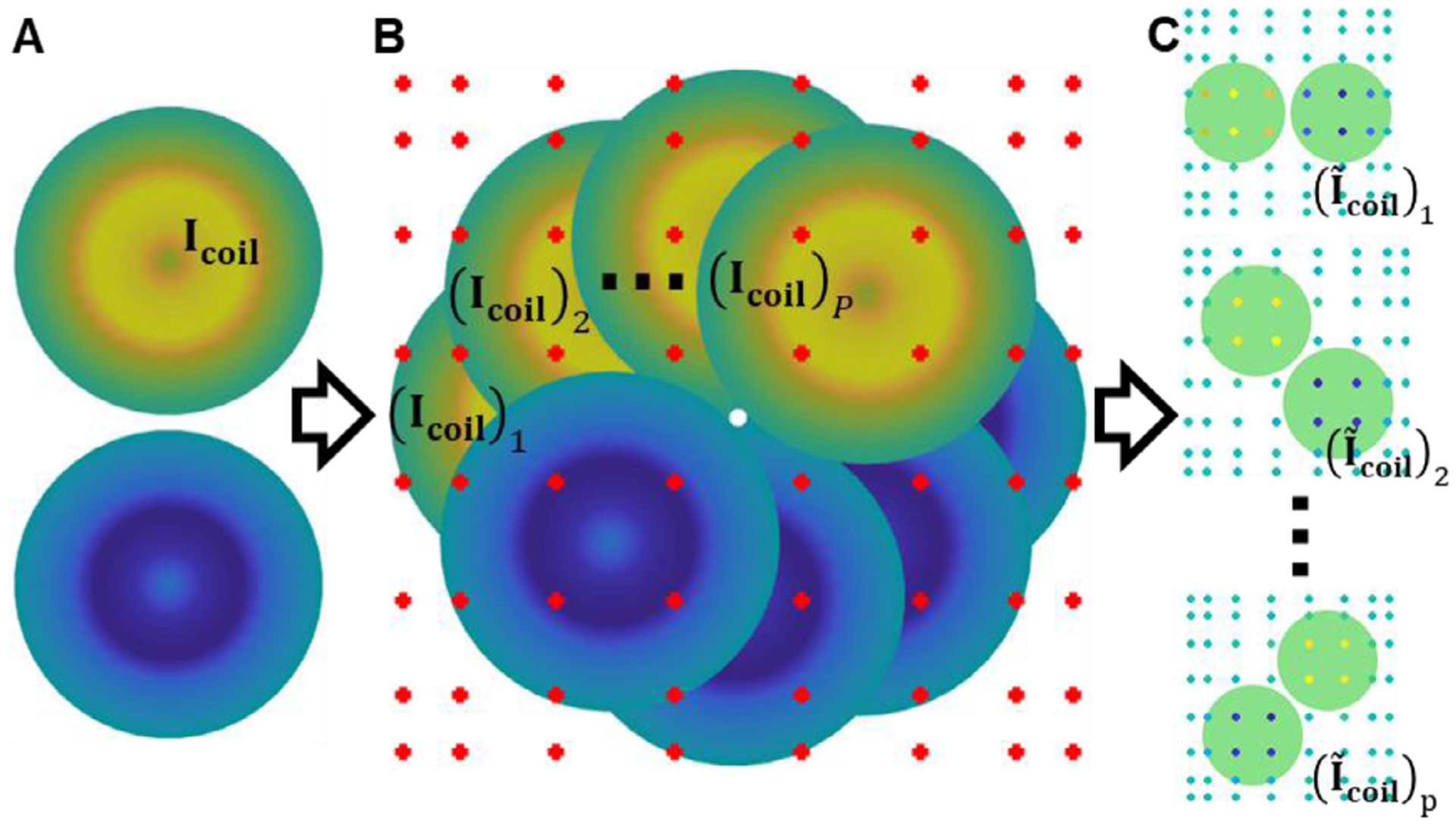
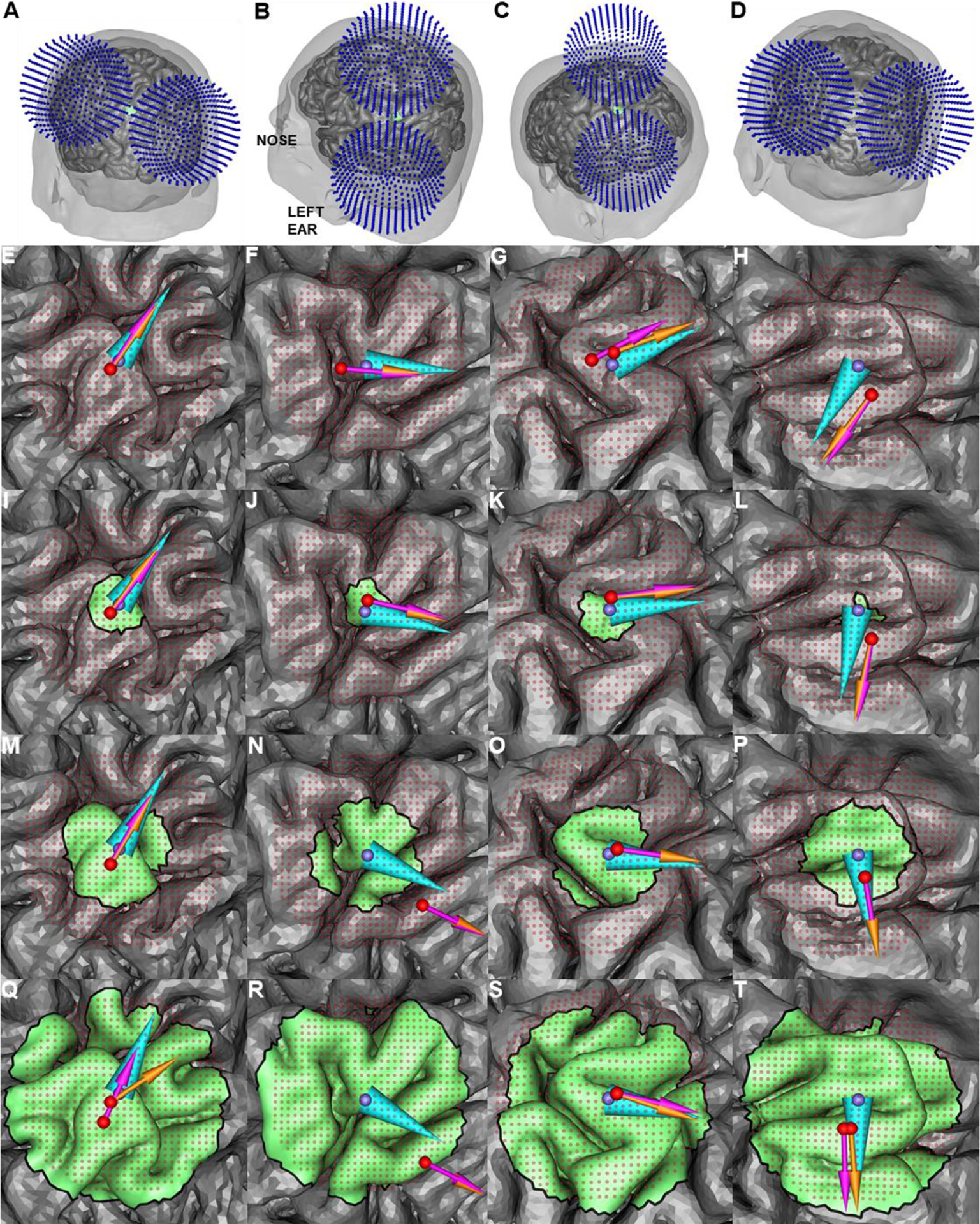
ADM leverages the electromagnetic reciprocity principle to compute rapidly the TMS induced E-field in the ROI by using the E-field generated by a virtual constant current source residing in the ROI. The framework starts by solving for the conduction currents resulting from this ROI current source. Then, it rapidly determines the average E-field induced in the ROI for each coil position by using the conduction currents and a fast-multipole method. To further speed-up the computations, the coil is approximated using auxiliary dipoles enabling it to represent all coil orientations for a given coil position with less than 600 dipoles.
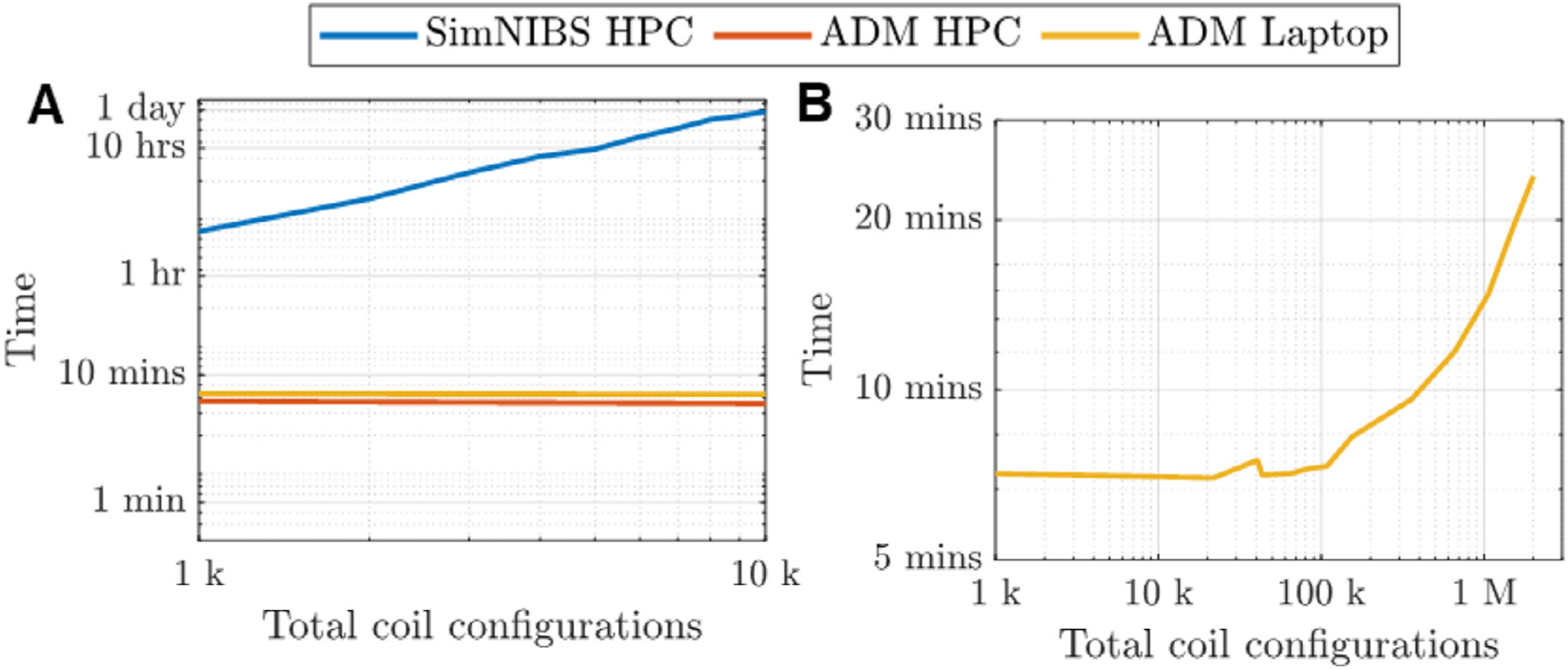
Using ADM, the E-fields generated in an MRI-derived head model when the coil is placed at 5900 different scalp positions and 360 coil orientations per position (over 2.1 million unique configurations) can be determined in under 15 min on a standard laptop computer. This enables rapid extraction of the optimum coil position and orientation as well as the E-field variation resulting from coil positioning uncertainty. ADM is implemented in SimNIBS 3.2.
ADM enables the rapid determination of coil placement that maximizes E-field delivery to a specific brain target. This method can find the optimum coil placement in under 15 min enabling its routine use for TMS. Furthermore, it enables the fast quantification of uncertainty in the induced E-field due to limited precision of TMS coil placement protocols, enabling minimization and statistical analysis of the E-field dose variability.
在经颅磁刺激(TMS)过程中,通过磁场感应产生的电场(E 场),将头皮上的线圈非侵入式地调节靶向脑网络的活动。理想情况下,TMS 过程中产生的 E 场应集中在靶向的皮质感兴趣区(ROI)。目前,确定能最好实现这一目标的线圈位置和方向需要大量的计算工作。
为了提高 TMS 的准确性,我们开发了一种快速计算辅助偶极子方法(ADM),用于确定最佳的线圈位置和方向。最佳的线圈放置方式使 E 场沿预定方向最大化,或者使靶向 ROI 中的整体 E 场幅度最大化。此外,ADM 可以评估由于 TMS 线圈放置协议的精度限制而导致的 E 场不确定性。
ADM 利用电磁场互易原理,通过在 ROI 中产生虚拟恒定电流源来快速计算 TMS 诱导的 E 场。该框架首先通过求解来自 ROI 电流源的传导电流来解决问题。然后,它通过使用传导电流和快速多极方法,快速确定每个线圈位置在 ROI 中产生的平均 E 场。为了进一步加快计算速度,使用辅助偶极子来近似线圈,从而可以用不到 600 个偶极子来表示给定线圈位置的所有线圈方向。
使用 ADM,在 MRI 衍生的头部模型中,当线圈放置在 5900 个不同的头皮位置和每个位置 360 个线圈方向(超过 210 万个独特配置)时,可在标准笔记本电脑上 15 分钟内确定产生的 E 场。这使得能够快速提取最佳线圈位置和方向,以及由于线圈定位不确定性导致的 E 场变化。ADM 已在 SimNIBS 3.2 中实现。
ADM 能够快速确定最大化特定脑目标 E 场输送的线圈位置。该方法可在 15 分钟内找到最佳线圈位置,从而可常规用于 TMS。此外,它能够快速量化由于 TMS 线圈放置协议的精度限制而导致的感应 E 场的不确定性,从而最小化和统计分析 E 场剂量的变异性。