
深度学习心电图算法检测心室功能障碍的外部验证。
External validation of a deep learning electrocardiogram algorithm to detect ventricular dysfunction.
机构信息
Department of Cardiovascular Medicine, Mayo Clinic, Rochester, MN, USA.
Department of Infection Biology, London School of Hygiene and Tropical Medicine, London WC1E 7HT, UK; Department of Experimental Cardiology, University Medical Center Utrecht, Netherlands.
出版信息
Int J Cardiol. 2021 Apr 15;329:130-135. doi: 10.1016/j.ijcard.2020.12.065. Epub 2021 Jan 2.
OBJECTIVE
To validate a novel artificial-intelligence electrocardiogram algorithm (AI-ECG) to detect left ventricular systolic dysfunction (LVSD) in an external population.
BACKGROUND
LVSD, even when asymptomatic, confers increased morbidity and mortality. We recently derived AI-ECG to detect LVSD using ECGs based on a large sample of patients treated at the Mayo Clinic.
METHODS
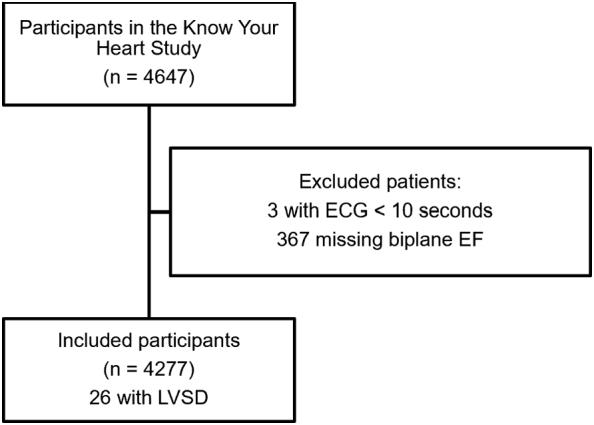
We performed an external validation study with subjects from the Know Your Heart Study, a cross-sectional study of adults aged 35-69 years residing in two cities in Russia, who had undergone both ECG and transthoracic echocardiography. LVSD was defined as left ventricular ejection fraction ≤ 35%. We assessed the performance of the AI-ECG to identify LVSD in this distinct patient population.
RESULTS
Among 4277 subjects in this external population-based validation study, 0.6% had LVSD (compared to 7.8% of the original clinical derivation study). The overall performance of the AI-ECG to detect LVSD was robust with an area under the receiver operating curve of 0.82. When using the LVSD probability cut-off of 0.256 from the original derivation study, the sensitivity, specificity, and accuracy in this population were 26.9%, 97.4%, 97.0%, respectively. Other probability cut-offs were analysed for different sensitivity values.
CONCLUSIONS
The AI-ECG detected LVSD with robust test performance in a population that was very different from that used to develop the algorithm. Population-specific cut-offs may be necessary for clinical implementation. Differences in population characteristics, ECG and echocardiographic data quality may affect test performance.
目的
验证一种新的人工智能心电图算法(AI-ECG)在外部人群中检测左心室收缩功能障碍(LVSD)的能力。
背景
LVSD 即使没有症状,也会增加发病率和死亡率。我们最近开发了一种 AI-ECG 算法,通过基于在 Mayo 诊所接受治疗的大量患者的心电图来检测 LVSD。
方法
我们进行了一项外部验证研究,研究对象来自俄罗斯两个城市的 Know Your Heart 研究,这是一项横断面研究,研究对象为年龄在 35-69 岁的成年人,他们都接受了心电图和经胸超声心动图检查。LVSD 的定义为左心室射血分数≤35%。我们评估了 AI-ECG 在这个独特的患者群体中识别 LVSD 的性能。
结果
在这项基于外部人群的验证研究中,4277 名受试者中,有 0.6%(相比之下,原始临床推导研究中有 7.8%)患有 LVSD。AI-ECG 检测 LVSD 的整体性能稳健,接受者操作特征曲线下面积为 0.82。当使用原始推导研究中的 LVSD 概率截断值 0.256 时,该算法在该人群中的敏感性、特异性和准确性分别为 26.9%、97.4%和 97.0%。还分析了其他概率截断值,以获得不同的敏感性值。
结论
AI-ECG 在与开发算法非常不同的人群中检测 LVSD 的性能稳健。可能需要针对特定人群的截断值来进行临床实施。人群特征、心电图和超声心动图数据质量的差异可能会影响测试性能。

 Zotero 插件