Respiratory Physiology Laboratory, Medical School, University of Cyprus, Nicosia, Cyprus.
Shiakolas Educational Center of Clinical Medicine, Palaios Dromos Lefkosias-Lemesou 215/6, 2029, Aglantzia, Nicosia, Cyprus.
BMC Pediatr. 2021 Jan 6;21(1):13. doi: 10.1186/s12887-020-02472-4.
Desert dust events in Mediterranean countries, originating mostly from the Sahara and Arabian deserts, have been linked to climate change and are associated with significant increase in mortality and hospital admissions from respiratory causes. The MEDEA clinical intervention study in children with asthma is funded by EU LIFE+ program to evaluate the efficacy of recommendations aiming to reduce exposure to desert dust and related health effects.
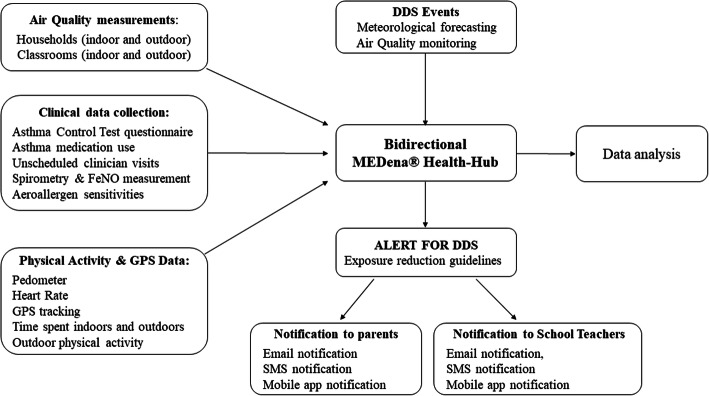
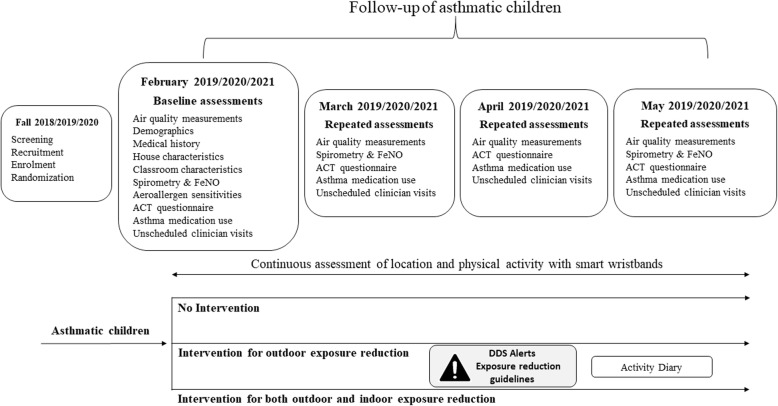
This paper describes the design, methods, and challenges of the MEDEA childhood asthma study, which is performed in two highly exposed regions of the Eastern Mediterranean: Cyprus and Greece-Crete. Eligible children are recruited using screening surveys performed at primary schools and are randomized to three parallel intervention groups: a) no intervention for desert dust events, b) interventions for outdoor exposure reduction, and c) interventions for both outdoor and indoor exposure reduction. At baseline visits, participants are enrolled on MEDena® Health-Hub, which communicates, alerts and provides exposure reduction recommendations in anticipation of desert dust events. MEDEA employs novel environmental epidemiology and telemedicine methods including wearable GPS, actigraphy, health parameters sensors as well as indoor and outdoor air pollution samplers to assess study participants' compliance to recommendations, air pollutant exposures in homes and schools, and disease related clinical outcomes.
The MEDEA study evaluates, for the first time, interventions aiming to reduce desert dust exposure and implement novel telemedicine methods in assessing clinical outcomes and personal compliance to recommendations. In Cyprus and Crete, during the first study period (February-May 2019), a total of 91 children participated in the trial while for the second study period (February-May 2020), another 120 children completed data collection. Recruitment for the third study period (February-May 2021) is underway. In this paper, we also present the unique challenges faced during the implementation of novel methodologies to reduce air pollution exposure in children. Engagement of families of asthmatic children, schools and local communities, is critical. Successful study completion will provide the knowledge for informed decision-making both at national and international level for mitigating the health effects of desert dust events in South-Eastern Europe.
ClinicalTrials.gov: NCT03503812 , April 20, 2018.
源自撒哈拉沙漠和阿拉伯沙漠的地中海国家的沙尘事件与气候变化有关,并且与呼吸道疾病导致的死亡率和住院人数的显著增加有关。MEDEA 儿童哮喘临床干预研究由欧盟 LIFE+ 计划资助,旨在评估旨在减少接触沙尘和相关健康影响的建议的疗效。
本文介绍了 MEDEA 儿童哮喘研究的设计、方法和挑战,该研究在东地中海的两个高度暴露地区进行:塞浦路斯和希腊克里特岛。通过在小学进行筛查调查来招募符合条件的儿童,并将其随机分为三组平行干预组:a)不对沙尘事件进行干预,b)减少户外暴露的干预,c)减少户外和室内暴露的干预。在基线访问时,参与者将在 MEDena® Health-Hub 上注册,该系统会进行通信、警报并提供沙尘事件发生前的减少暴露建议。MEDEA 采用了新型环境流行病学和远程医疗方法,包括可穿戴 GPS、运动计、健康参数传感器以及室内和室外空气污染物采样器,以评估研究参与者对建议的遵守情况、家庭和学校的空气污染物暴露情况以及与疾病相关的临床结果。
MEDEA 研究首次评估了旨在减少沙尘暴露并实施新型远程医疗方法来评估临床结果和个人对建议的遵守情况的干预措施。在塞浦路斯和克里特岛,在第一个研究期间(2019 年 2 月至 5 月),共有 91 名儿童参加了试验,而在第二个研究期间(2020 年 2 月至 5 月),又有 120 名儿童完成了数据收集。第三个研究期间(2021 年 2 月至 5 月)的招募工作正在进行中。本文还介绍了在实施新型减少儿童空气污染暴露的方法时面临的独特挑战。哮喘儿童的家庭、学校和当地社区的参与至关重要。成功完成研究将为在东南欧制定减轻沙尘事件健康影响的知情决策提供知识。
ClinicalTrials.gov:NCT03503812,2018 年 4 月 20 日。