You Leiming, Zhang Shen, Li Ting'an, Sang Xiaopu, Li Kunyu, Wang Wei, Gao Xinhui, Wu Jiarui, Huang Guangrui, Wang Ting, Xu Anlong
School of Life Sciences, Beijing University of Chinese Medicine, Beijing, 100029, China.
School of Chinese Materia Medica, Beijing University of Chinese Medicine, Beijing, 100029, China.
Chin Med. 2021 Jan 6;16(1):4. doi: 10.1186/s13020-020-00416-9.
To investigate the microRNA (miRNA)-gene interactions underlying leukocyte functions and characteristics, especially the potential serum biomarkers, implicated in the traditional Chinese medicine (TCM)-defined Pi-qi-deficiency syndrome (PQDS) and Pi-wei damp-heat syndrome (PDHS) resulting from chronic atrophic gastritis (CAG).
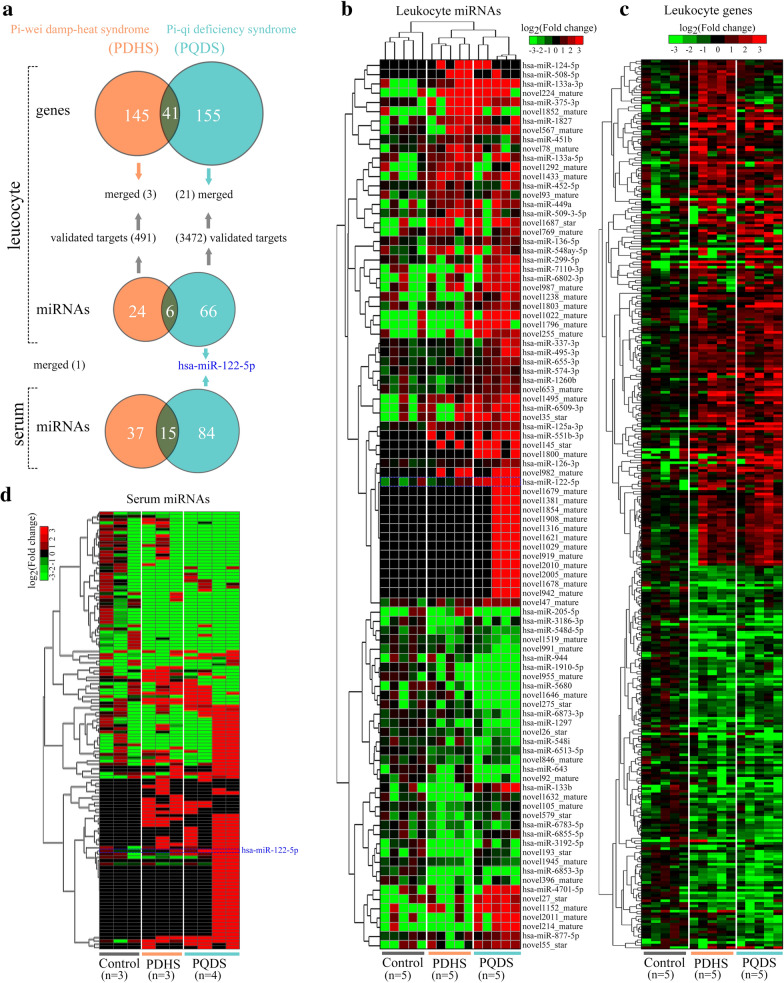
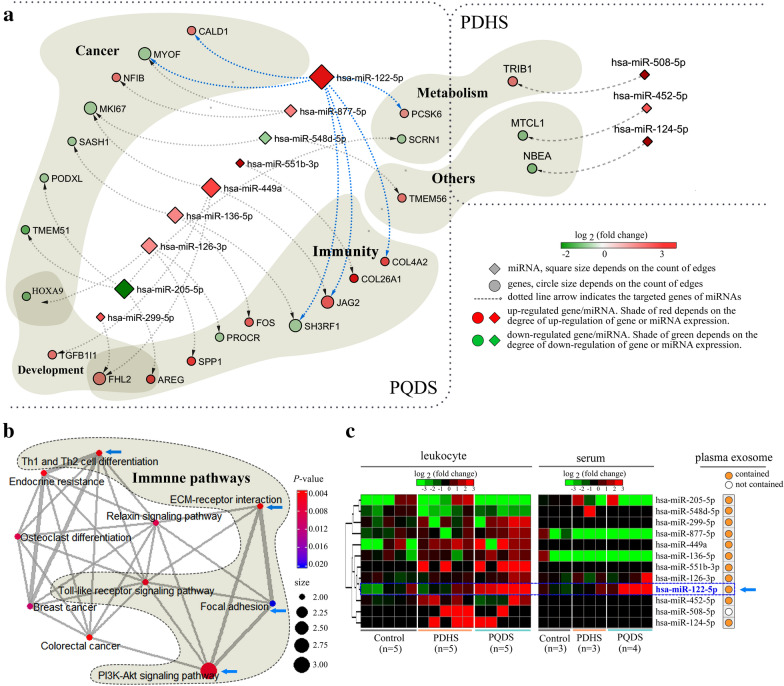
Using RNA/miRNA-sequencing approach, compared with healthy control population, we identified the PDHS- or PQDS-specific miRNAs and genes in leukocytes or serums, especially the Zheng (syndrome)-specific miRNA-gene interactions, and further decoded their functions and pathways.
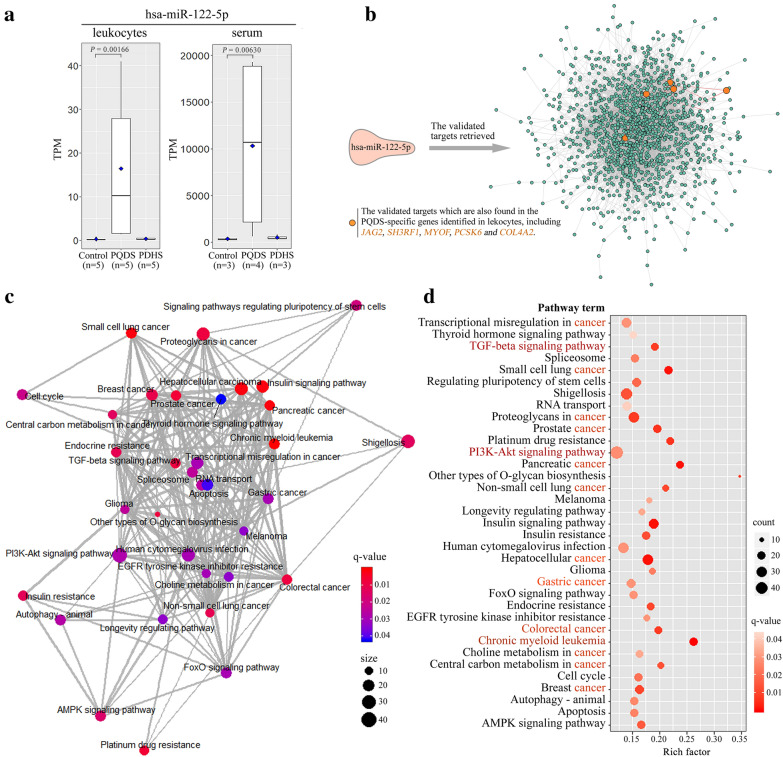
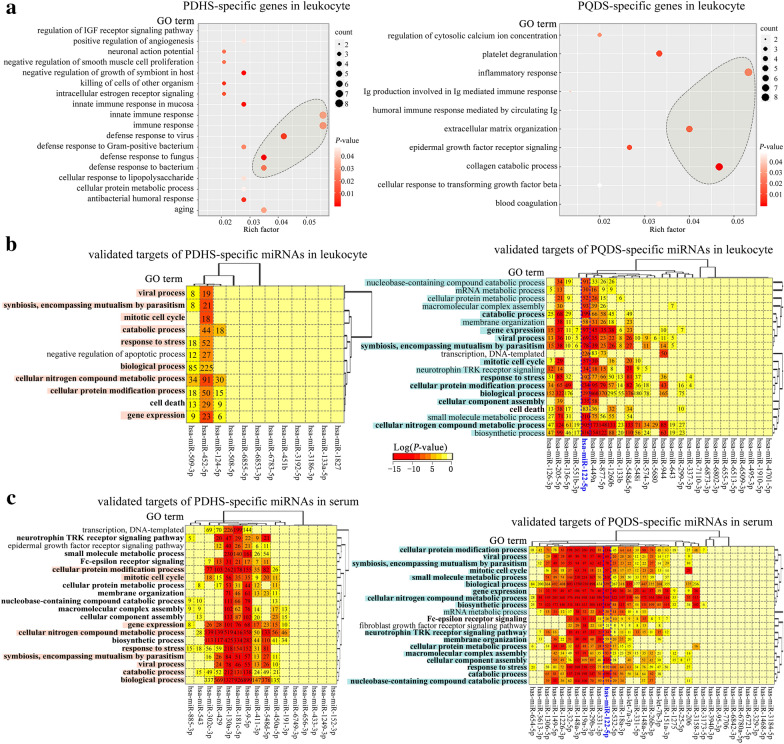
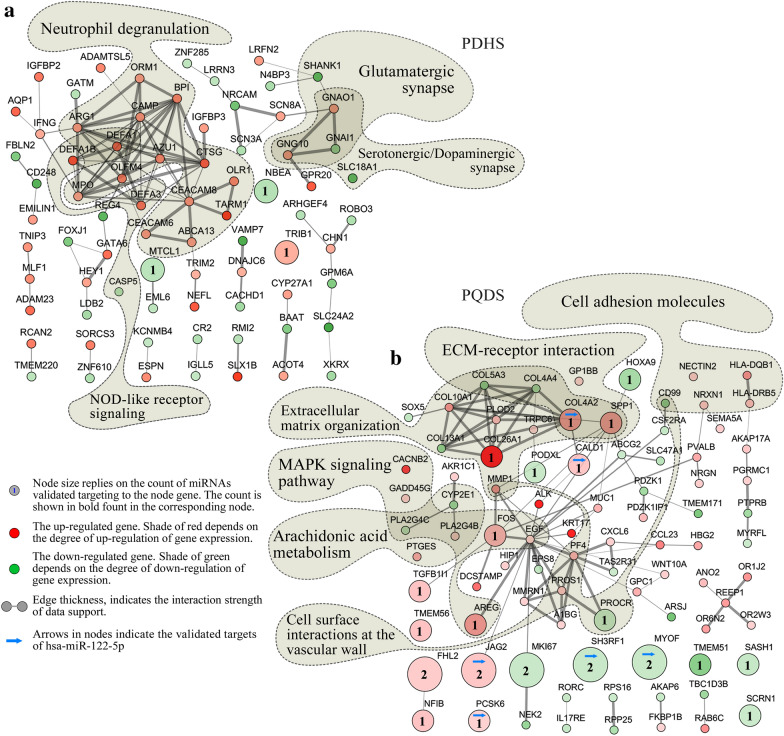
Despite being the TCM-defined Zhengs resulting from the same disease of CAG, the Zheng-specific genes and miRNAs were not same. The PDHS-specific leukocyte genes were mainly involved in defense and immune responses, including NOD-like receptor signaling and several synapses-related pathways. The expression upregulation of PDHS-specific genes enriched in the neutrophil degranulation pathway, indicated the enhanced leukocyte degranulation activation. The PQDS-specific genes in leukocytes were implicated in inflammatory response, extracellular matrix (ECM) organization and collagen catabolism. They could be enriched in MAPK and IL17 signaling and helper T cell differentiation pathways, especially the pathways associated with cell-to-cell adhesion/junction and communication such as cell adhesion molecules, ECM organization and ECM-receptor interaction, probably contributing to the characteristics and functions of leukocytes. Also, the experimentally-supported miRNA-gene interactions, concerned with COL4A2, COL26A1, SPP1 and PROCR, were implicated in the regulation of pathways related to cell-to-cell adhesion/junction and communication, suggesting the potential roles of the PQDS-specific miRNA-gene interactions for the characteristic and functional changes of leukocytes. Interestingly, the PQDS-specific miRNAs in the serums and the corresponding leukocytes, seemed to have the common roles in contributing to the characteristics and functions of leukocytes. Importantly, the hsa-miR-122-5p could be a potential biomarker, capable of being contained and carried in plasma exosomes and much higher expression in both the leukocytes and corresponding serums in the CAG patients with PQDS rather than PDHS.
These results may provide new insights into the characteristic and functional changes of leukocytes in the two Zhengs, PDHS and PQDS, especially the miRNA-mediated gene regulation underlying leukocyte characteristics and functions, with potential leukocyte and serum biomarkers for future application in integrative medicine. Trial registration ClinicalTrials.gov, NCT02915393. Registered on September 17, 2016.
研究白细胞功能和特性背后的微小RNA(miRNA)-基因相互作用,尤其是与慢性萎缩性胃炎(CAG)所致中医脾虚证(PQDS)和脾胃湿热证(PDHS)相关的潜在血清生物标志物。
采用RNA/miRNA测序方法,与健康对照人群相比,我们在白细胞或血清中鉴定出PDHS或PQDS特异性的miRNA和基因,尤其是证特异性的miRNA-基因相互作用,并进一步解析其功能和通路。
尽管PDHS和PQDS是由同一疾病CAG所致的中医证型,但证特异性基因和miRNA并不相同。PDHS特异性白细胞基因主要参与防御和免疫反应,包括NOD样受体信号通路和几个与突触相关的通路。在嗜中性粒细胞脱颗粒途径中富集的PDHS特异性基因的表达上调,表明白细胞脱颗粒激活增强。白细胞中的PQDS特异性基因与炎症反应、细胞外基质(ECM)组织和胶原分解代谢有关。它们可在MAPK和IL17信号通路以及辅助性T细胞分化途径中富集,尤其是与细胞间粘附/连接和通讯相关的途径,如细胞粘附分子、ECM组织和ECM-受体相互作用,这可能有助于白细胞的特性和功能。此外,与COL4A2、COL26A1、SPP1和PROCR相关的实验支持的miRNA-基因相互作用,参与了与细胞间粘附/连接和通讯相关途径的调控,提示PQDS特异性miRNA-基因相互作用对白细胞特性和功能变化的潜在作用。有趣的是,血清和相应白细胞中的PQDS特异性miRNA似乎在影响白细胞特性和功能方面具有共同作用。重要的是,hsa-miR-122-5p可能是一种潜在的生物标志物,能够存在于血浆外泌体中并被携带,在患有PQDS而非PDHS的CAG患者的白细胞和相应血清中表达更高。
这些结果可能为PDHS和PQDS这两种证型中白细胞的特性和功能变化提供新的见解,尤其是miRNA介导的白细胞特性和功能的基因调控,以及具有潜在应用于中西医结合医学的白细胞和血清生物标志物。试验注册ClinicalTrials.gov,NCT02915393。于2016年9月17日注册。