Mostafazadeh Mostafa, Samadi Nasser, Kahroba Houman, Baradaran Behzad, Haiaty Sanya, Nouri Mohammad
Drug Applied Research Center, Tabriz University of Medical Sciences, Tabriz, Iran.
Department of Biochemistry and Clinical Laboratories, Faculty of Medicine, Tabriz University of Medical Sciences, Tabriz, Iran.
Cell Biosci. 2021 Jan 6;11(1):1. doi: 10.1186/s13578-020-00515-y.
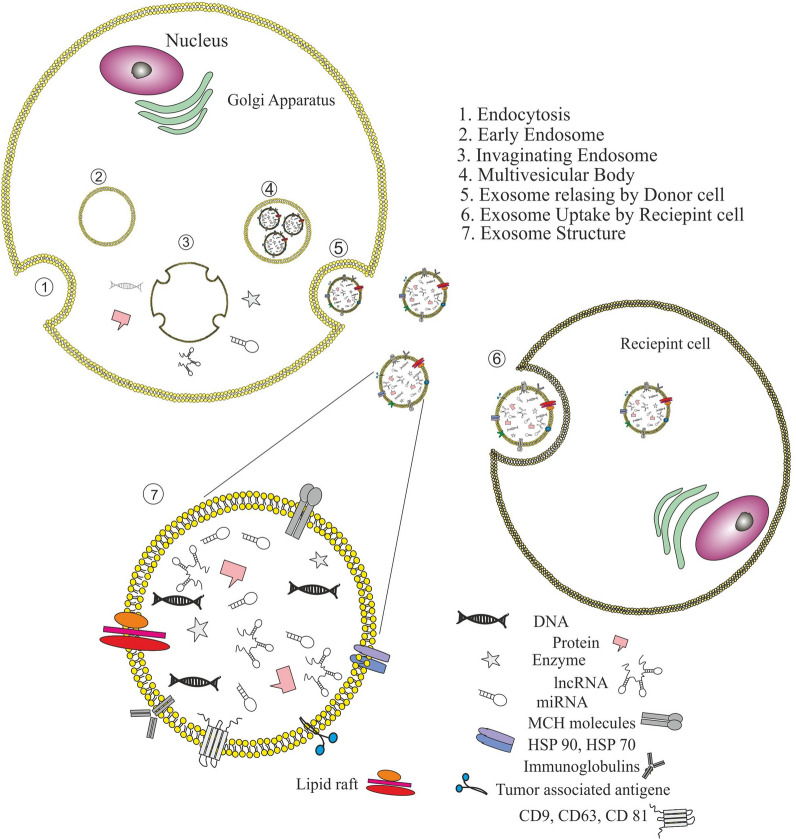
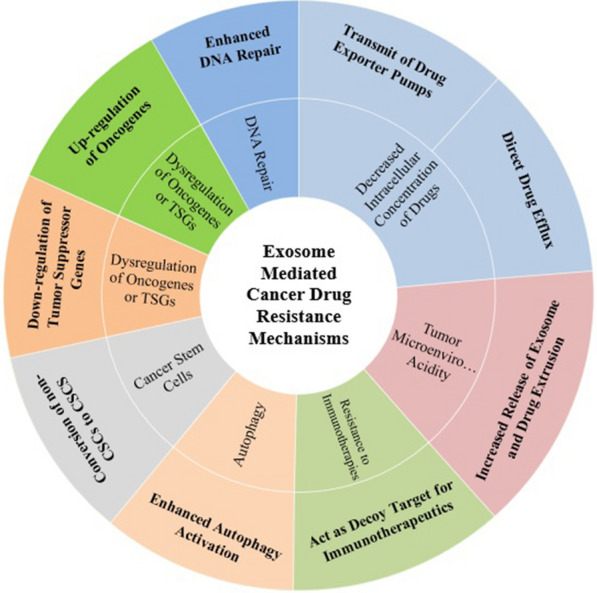
Drug resistance is a major impediment in cancer therapy which strongly reduces the efficiency of anti-cancer drugs. Exosomes are extracellular vesicles with cup or spherical shape with a size range of 40-150 nm released by eukaryotic cells that contain genetic materials, proteins, and lipids which mediate a specific cell-to-cell communication. The potential roles of exosomes in intrinsic and acquired drug resistance have been reported in several studies. Furthermore, a line of evidence suggested that the content of exosomes released from tumor cells in biological samples may be associated with the clinical outcomes of cancer patients. In this review, we highlighted the recent studies regarding the potential roles of exosomes in tumor initiation, progression, and chemoresistance. This study suggests the possible role of exosomes for drug delivery and their contents in prognosis and resistance to chemotherapy in cancer patients.
耐药性是癌症治疗中的一个主要障碍,它会大大降低抗癌药物的疗效。外泌体是真核细胞释放的杯状或球形细胞外囊泡,大小在40-150纳米之间,含有介导特定细胞间通讯的遗传物质、蛋白质和脂质。多项研究报道了外泌体在内在和获得性耐药中的潜在作用。此外,一系列证据表明,生物样本中肿瘤细胞释放的外泌体内容物可能与癌症患者的临床结局相关。在本综述中,我们重点介绍了关于外泌体在肿瘤发生、发展和化疗耐药中的潜在作用的最新研究。这项研究表明外泌体在药物递送中的可能作用及其内容物在癌症患者预后和化疗耐药中的作用。