Allicock Orchid M, Sahadeo Nikita, Lemey Philippe, Auguste Albert J, Suchard Marc A, Rambaut Andrew, Carrington Christine V F
Department of Preclinical Sciences, Faculty of Medical Sciences, University of the West Indies, St. Augustine, Trinidad and Tobago.
KU Leuven, Department of Microbiology, Immunology and Transplantation, Rega Institute for Medical Research, Laboratory for Clinical and Epidemiological Virology, Leuven, Belgium.
Virus Evol. 2020 Dec 2;6(2):veaa074. doi: 10.1093/ve/veaa074. eCollection 2020 Jul.
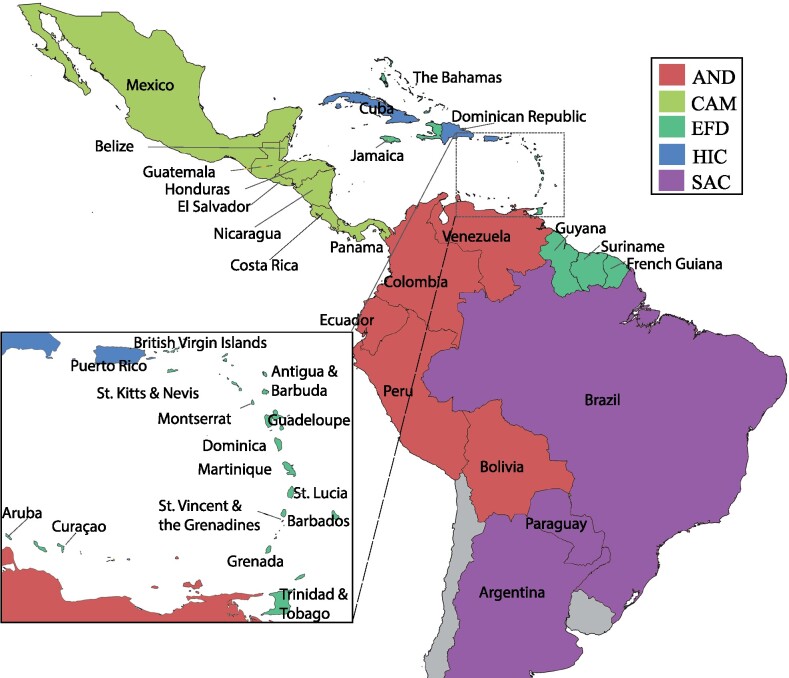
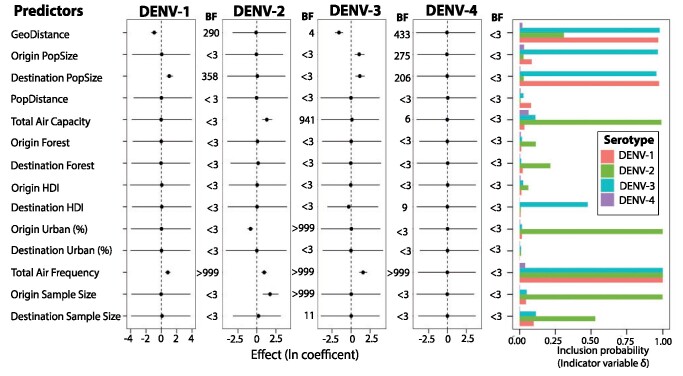
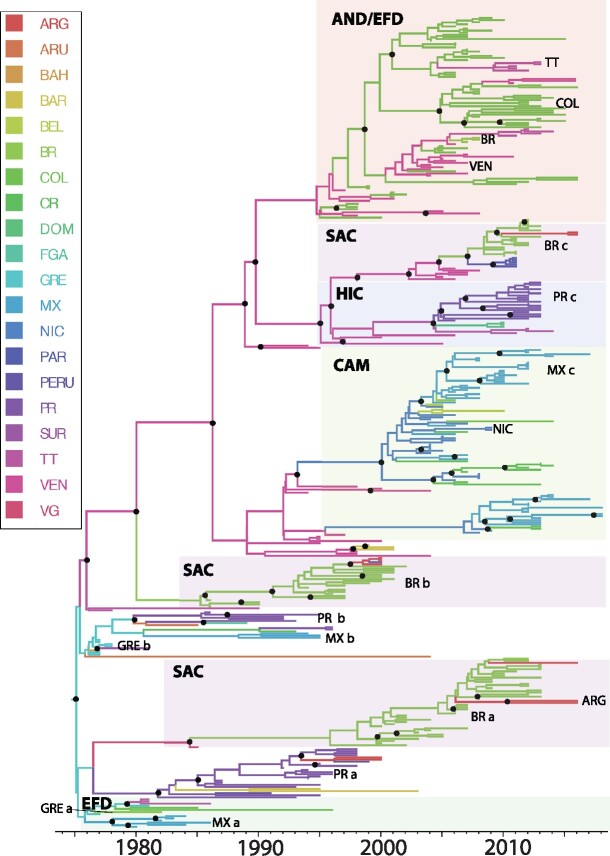
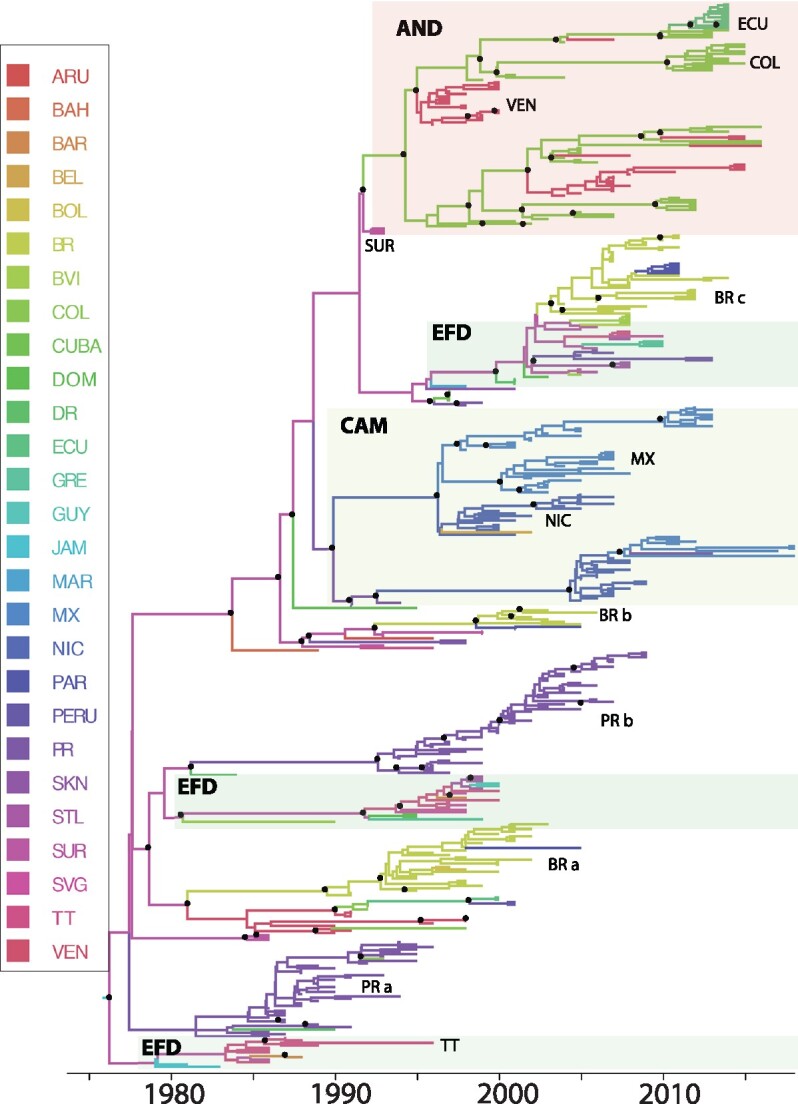
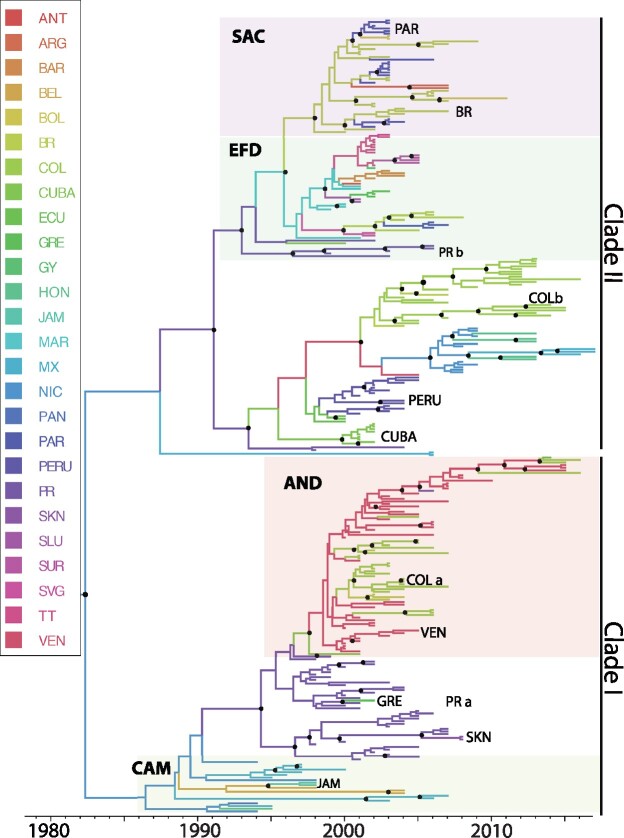
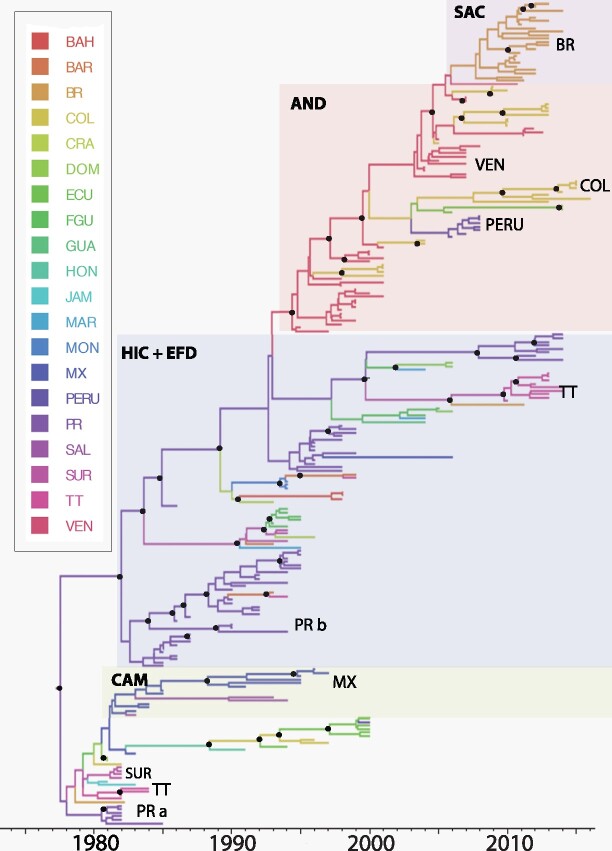
Dengue viruses (DENVs) are classified into four serotypes, each of which contains multiple genotypes. DENV genotypes introduced into the Americas over the past five decades have exhibited different rates and patterns of spatial dispersal. In order to understand factors underlying these patterns, we utilized a statistical framework that allows for the integration of ecological, socioeconomic, and air transport mobility data as predictors of viral diffusion while inferring the phylogeographic history. Predictors describing spatial diffusion based on several covariates were compared using a generalized linear model approach, where the support for each scenario and its contribution is estimated simultaneously from the data set. Although different predictors were identified for different serotypes, our analysis suggests that overall diffusion of DENV-1, -2, and -3 in the Americas was associated with airline traffic. The other significant predictors included human population size, the geographical distance between countries and between urban centers and the density of people living in urban environments.
登革病毒(DENVs)分为四种血清型,每种血清型包含多个基因型。过去五十年来引入美洲的登革病毒基因型呈现出不同的空间扩散速率和模式。为了了解这些模式背后的因素,我们采用了一个统计框架,该框架允许整合生态、社会经济和航空运输流动性数据作为病毒扩散的预测因子,同时推断系统发育地理学历史。使用广义线性模型方法比较基于多个协变量描述空间扩散的预测因子,其中从数据集中同时估计每种情况的支持度及其贡献。尽管针对不同血清型确定了不同的预测因子,但我们的分析表明,美洲地区登革病毒1型、2型和3型的总体扩散与航空交通有关。其他重要的预测因子包括人口规模、国家之间以及城市中心之间的地理距离,以及城市环境中的人口密度。