Emerg Infect Dis. 2023 May;29(5):888-897. doi: 10.3201/eid2905.221226.
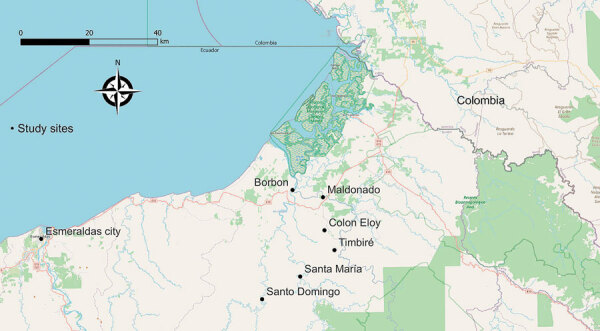
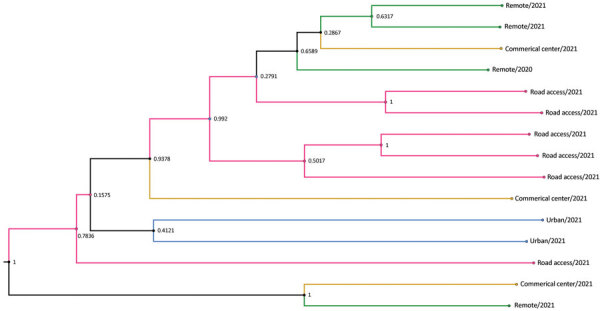
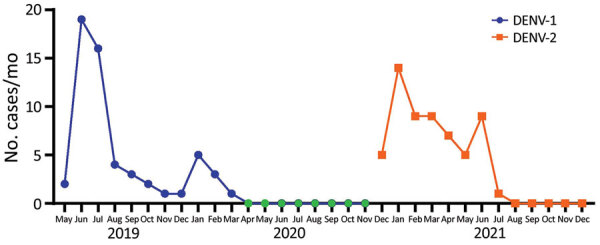
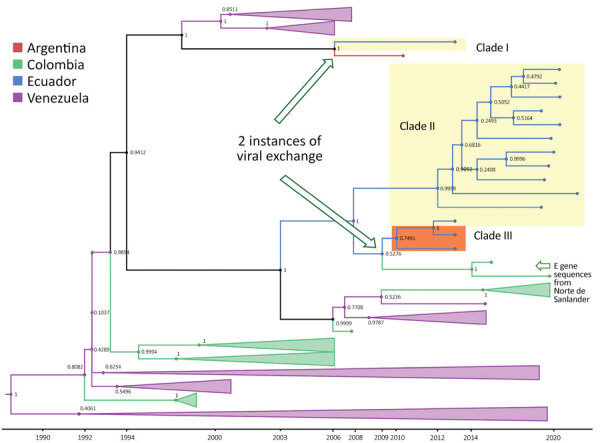
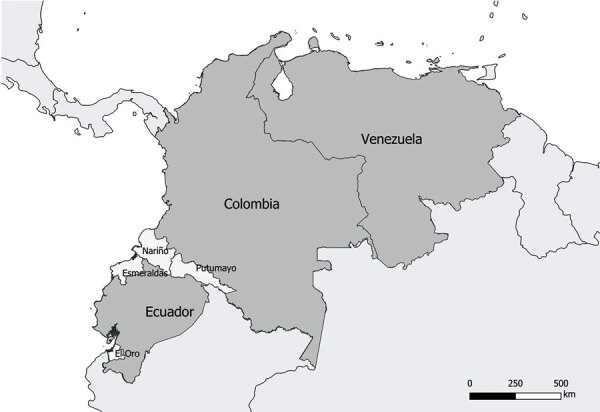
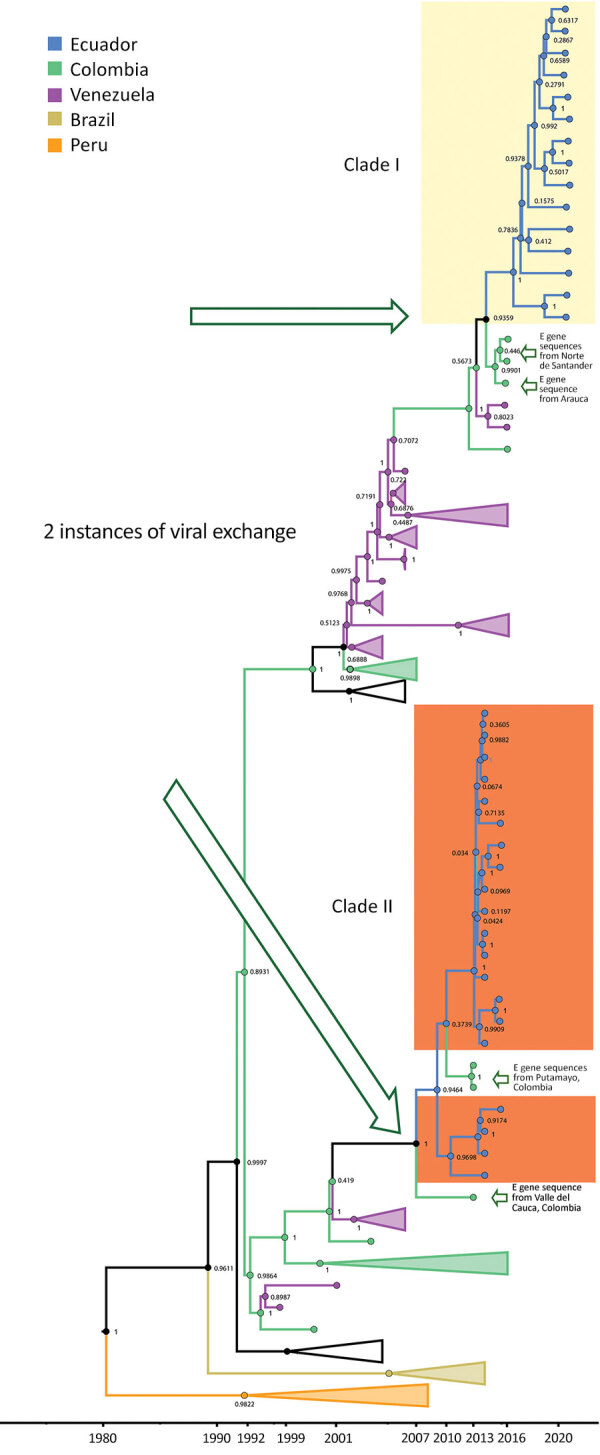
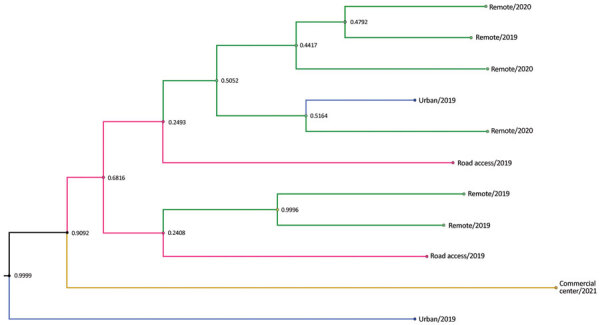
Although dengue is typically considered an urban disease, rural communities are also at high risk. To clarify dynamics of dengue virus (DENV) transmission in settings with characteristics generally considered rural (e.g., lower population density, remoteness), we conducted a phylogenetic analysis in 6 communities in northwestern Ecuador. DENV RNA was detected by PCR in 121/488 serum samples collected from febrile case-patients during 2019-2021. Phylogenetic analysis of 27 samples from Ecuador and other countries in South America confirmed that DENV-1 circulated during May 2019-March 2020 and DENV-2 circulated during December 2020-July 2021. Combining locality and isolation dates, we found strong evidence that DENV entered Ecuador through the northern province of Esmeraldas. Phylogenetic patterns suggest that, within this province, communities with larger populations and commercial centers were more often the source of DENV but that smaller, remote communities also play a role in regional transmission dynamics.
虽然登革热通常被认为是一种城市疾病,但农村社区也面临着高风险。为了阐明在通常被认为是农村的环境中(例如,人口密度较低、偏远)登革热病毒(DENV)传播的动态,我们在厄瓜多尔西北部的 6 个社区进行了一项系统发育分析。在 2019 年至 2021 年期间,从发热病例患者的 488 份血清样本中通过 PCR 检测到了 121/488 份血清样本中的 DENV RNA。对来自厄瓜多尔和南美洲其他国家的 27 个样本的系统发育分析证实,DENV-1 在 2019 年 5 月至 2020 年 3 月期间传播,DENV-2 在 2020 年 12 月至 2021 年 7 月期间传播。结合地理位置和分离日期,我们发现有强有力的证据表明,DENV 通过厄瓜多尔北部的埃斯梅拉达斯省进入该国。系统发育模式表明,在该省,人口较多和商业中心的社区更常成为 DENV 的来源,但较小、偏远的社区也在区域传播动态中发挥作用。