Department of Epidemiology and Health Statistics, School of Public Health, Fujian Medical University, Fuzhou, China.
Department of Preventive Medicine, School of Public Health, Fujian Medical University, Fuzhou, China.
J Med Internet Res. 2021 Jan 20;23(1):e21825. doi: 10.2196/21825.
Internet hospitals in China are being rapidly developed as an innovative approach to providing health services. The ongoing COVID-19 pandemic has triggered the development of internet hospitals that promote outpatient service delivery to the public via internet technologies. To date, no studies have assessed China's internet hospitals during the COVID-19 pandemic.
This study aimed to elucidate the characteristics of China's internet hospitals and assess the health service capacity of these hospitals.
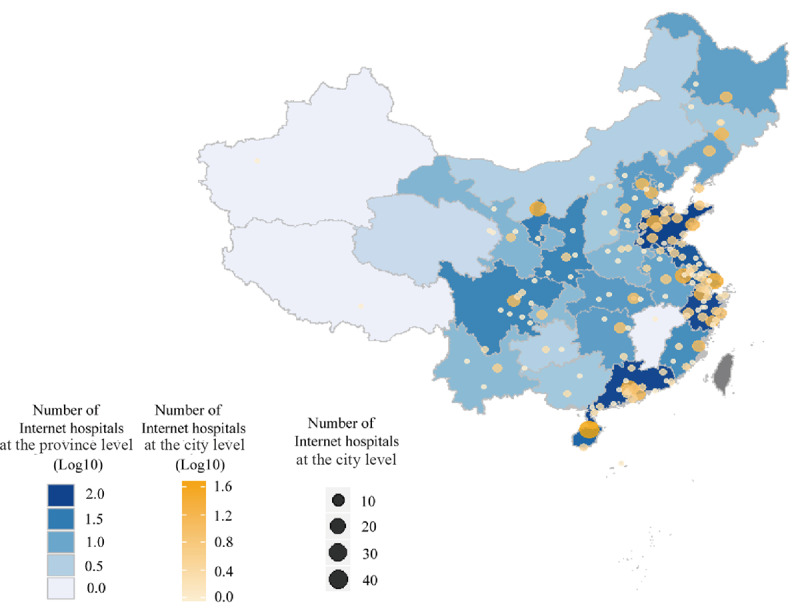
Data on 711 internet hospitals were collected from official websites, the WeChat (Tencent Inc) platform, smartphone apps, and the Baidu search engine until July 16, 2020.
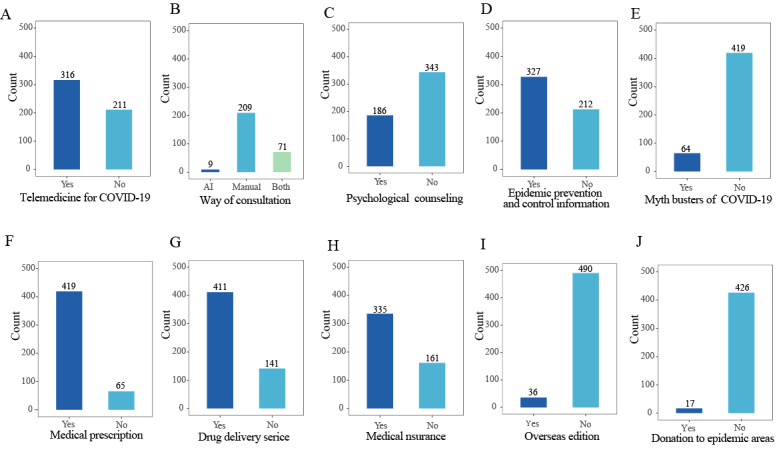
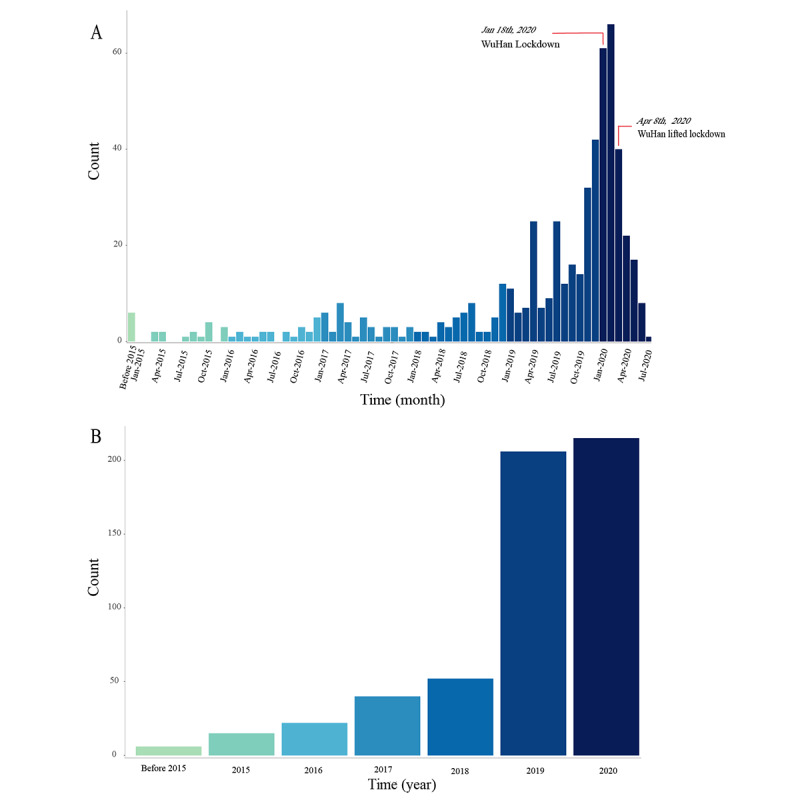
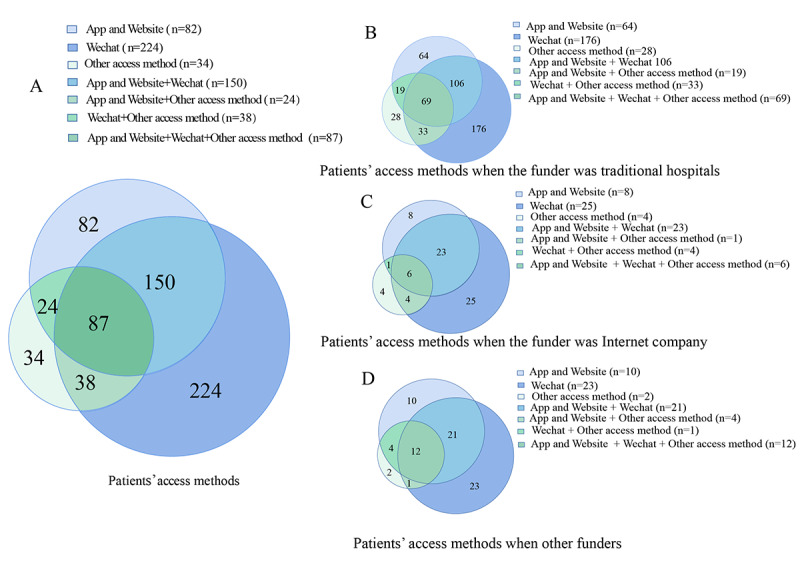
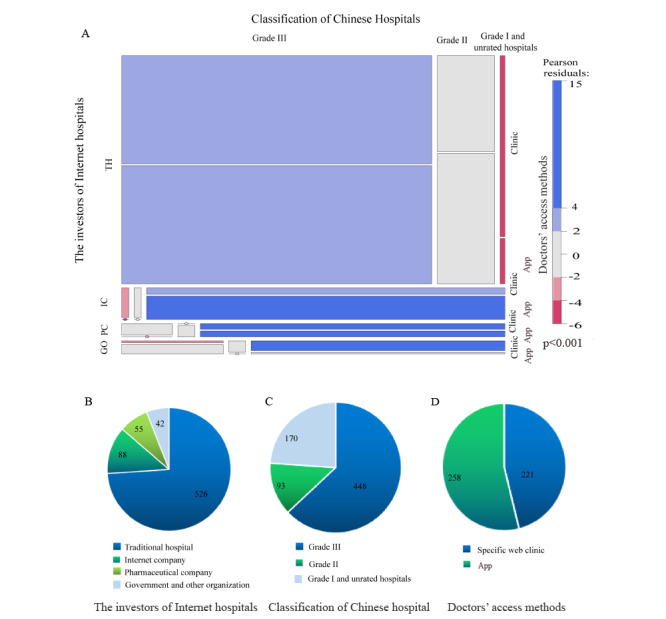
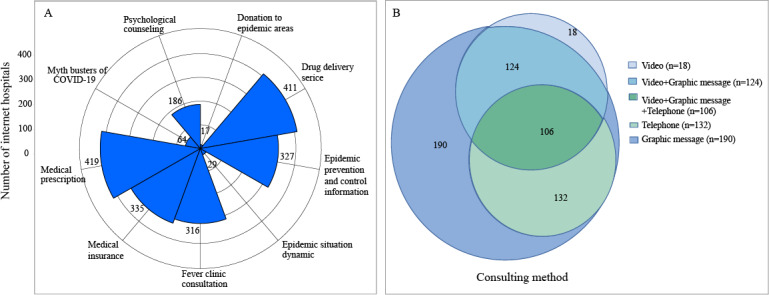
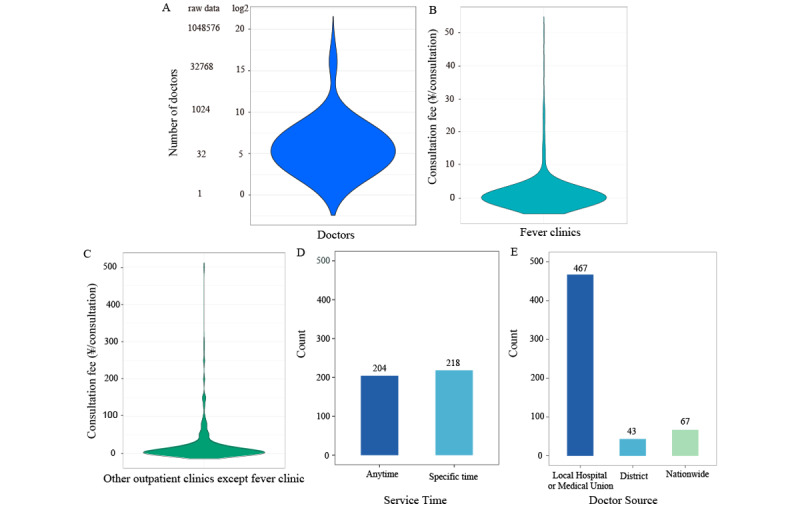
As of July 16, 2020, 711 internet hospitals were developed in mainland China. More than half of these internet hospitals (421/711, 59.2%) were established during 2019 (206/711, 29%) and 2020 (215/711, 30.2%). Furthermore, about one-third (215/711, 30.2%) of internet hospitals were established at the beginning of 2020 as an emergency response to the COVID-19 epidemic. The 711 internet hospitals consisted of the following 3 types of hospitals: government-oriented (42/711, 5.91%), hospital-oriented (143/711, 20.11%), and enterprise-oriented internet hospitals (526/711, 73.98%). The vast majority of internet hospitals were traditional hospitals (526/711, 74%). Nearly 46.1% (221/711) of internet hospitals requested doctors to provide health services at a specific web clinic. Most patients (224/639, 35.1%) accessed outpatient services via WeChat. Internet hospitals' consulting methods included SMS text messaging consultations involving the use of graphics (552/570, 96.8%), video consultations (248/570, 43.5%), and telephone consultations (238/570, 41.8%). The median number of available web-based doctors was 43, and the median consultation fees of fever clinics and other outpatient clinics were ¥0 (US $0) per consultation and ¥6 (US $0.93) per consultation, respectively. Internet hospitals have provided various services during the COVID-19 pandemic, including medical prescription, drug delivery, and medical insurance services.
The dramatic increase of internet hospitals in China has played an important role in the prevention and control of COVID-19. Internet hospitals provide different and convenient medical services for people in need.
中国的互联网医院作为提供医疗服务的创新方式正在迅速发展。持续的 COVID-19 大流行促使互联网医院的发展,通过互联网技术向公众提供门诊服务。迄今为止,尚无研究评估 COVID-19 大流行期间中国的互联网医院。
本研究旨在阐明中国互联网医院的特点,并评估这些医院的医疗服务能力。
截至 2020 年 7 月 16 日,从官方网站、微信(腾讯公司)平台、智能手机应用程序和百度搜索引擎收集了 711 家互联网医院的数据。
截至 2020 年 7 月 16 日,中国大陆共建立了 711 家互联网医院。其中,超过一半(421/711,59.2%)是在 2019 年(206/711,29%)和 2020 年(215/711,30.2%)成立的。此外,约三分之一(215/711,30.2%)的互联网医院是作为对 COVID-19 疫情的应急响应而在 2020 年初成立的。这 711 家互联网医院由以下 3 种类型的医院组成:政府主导(42/711,5.91%)、医院主导(143/711,20.11%)和企业主导的互联网医院(526/711,73.98%)。绝大多数互联网医院为传统医院(526/711,74%)。近 46.1%(221/711)的互联网医院要求医生在特定的网络诊所提供医疗服务。大多数患者(224/639,35.1%)通过微信获得门诊服务。互联网医院的咨询方式包括使用图形的短信咨询(552/570,96.8%)、视频咨询(248/570,43.5%)和电话咨询(238/570,41.8%)。在线医生的中位数数量为 43 人,发热门诊和其他门诊的中位数咨询费分别为人民币 0 元(0 美元)/次和人民币 6 元(0.93 美元)/次。在 COVID-19 大流行期间,互联网医院提供了各种服务,包括医疗处方、药品配送和医疗保险服务。
中国互联网医院的大量增加在 COVID-19 的防控中发挥了重要作用。互联网医院为有需要的人提供了不同且便捷的医疗服务。