Department of Gastroenterology, Beijing Friendship Hospital, Capital Medical University, Beijing 100050, China.
Genes (Basel). 2021 Jan 8;12(1):73. doi: 10.3390/genes12010073.
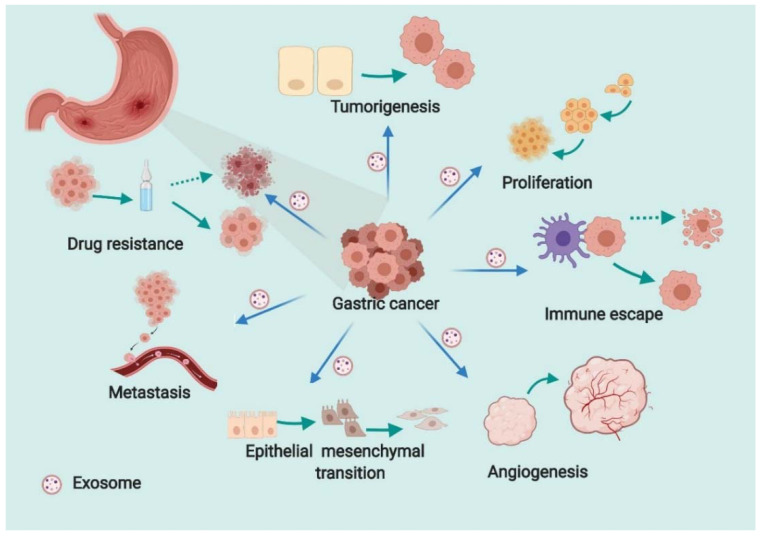
Gastric cancer (GC) is one of the most common malignancies in the world. Exosomes, a subset of extracellular vesicles with an average diameter of 100 nm, contain and transfer a variety of functional macromolecules such as proteins, lipids, and nucleic acids. A large number of studies indicated that exosomes can play a significant role in the initiation and development of GC via facilitating intercellular communication between gastric cancer cells and microenvironment. Exosomal RNAs, one of the key functional cargos, are involved in the pathogenesis, development, and metastasis of GC. In addition, recent studies elucidated that exosomal RNAs may serve as diagnostic and prognostic biomarkers or therapeutic targets for GC. In this review, we summarized the function of exosomal RNA in the tumorigenesis, progression, diagnosis, and treatment of GC, which may further unveil the functions of exosome and promote the potentially diagnostic and therapeutic application of exosomes in GC.
胃癌(GC)是世界上最常见的恶性肿瘤之一。外泌体是一类具有平均直径 100nm 的细胞外囊泡亚群,其中包含并转运多种功能大分子,如蛋白质、脂质和核酸。大量研究表明,外泌体可通过促进胃癌细胞与微环境之间的细胞间通讯,在 GC 的发生和发展中发挥重要作用。外泌体 RNA 是关键功能货物之一,参与 GC 的发病机制、发展和转移。此外,最近的研究阐明,外泌体 RNA 可能作为 GC 的诊断和预后生物标志物或治疗靶点。在本综述中,我们总结了外泌体 RNA 在 GC 发生、进展、诊断和治疗中的作用,这可能进一步揭示外泌体的功能,并促进外泌体在 GC 中潜在的诊断和治疗应用。