Departamento de Nutrição e Saúde, Universidade Federal de Viçosa, Viçosa, MG 36570-900, Brazil.
Department of Food Science & Human Nutrition, University of Illinois at Urbana-Champaign, Urbana, IL 61801, USA.
Nutrients. 2021 Jan 8;13(1):176. doi: 10.3390/nu13010176.
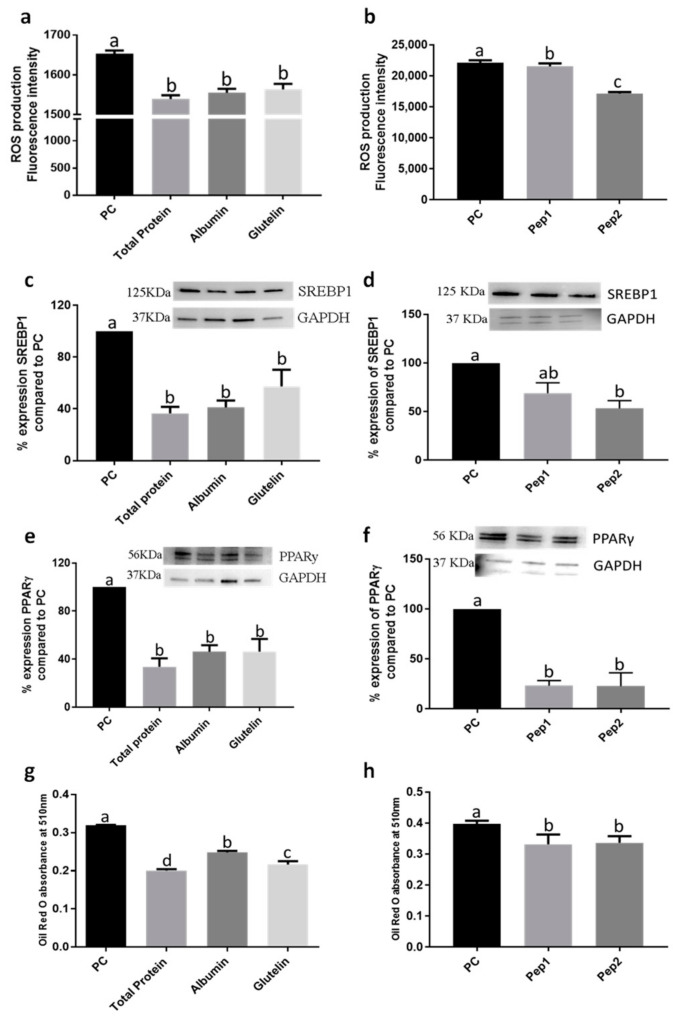
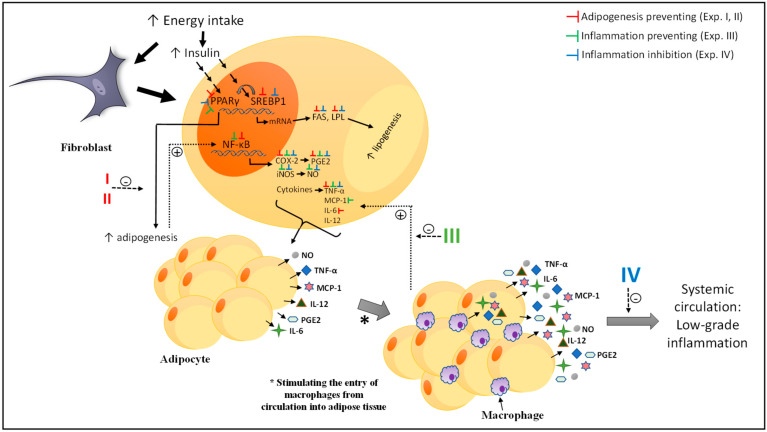
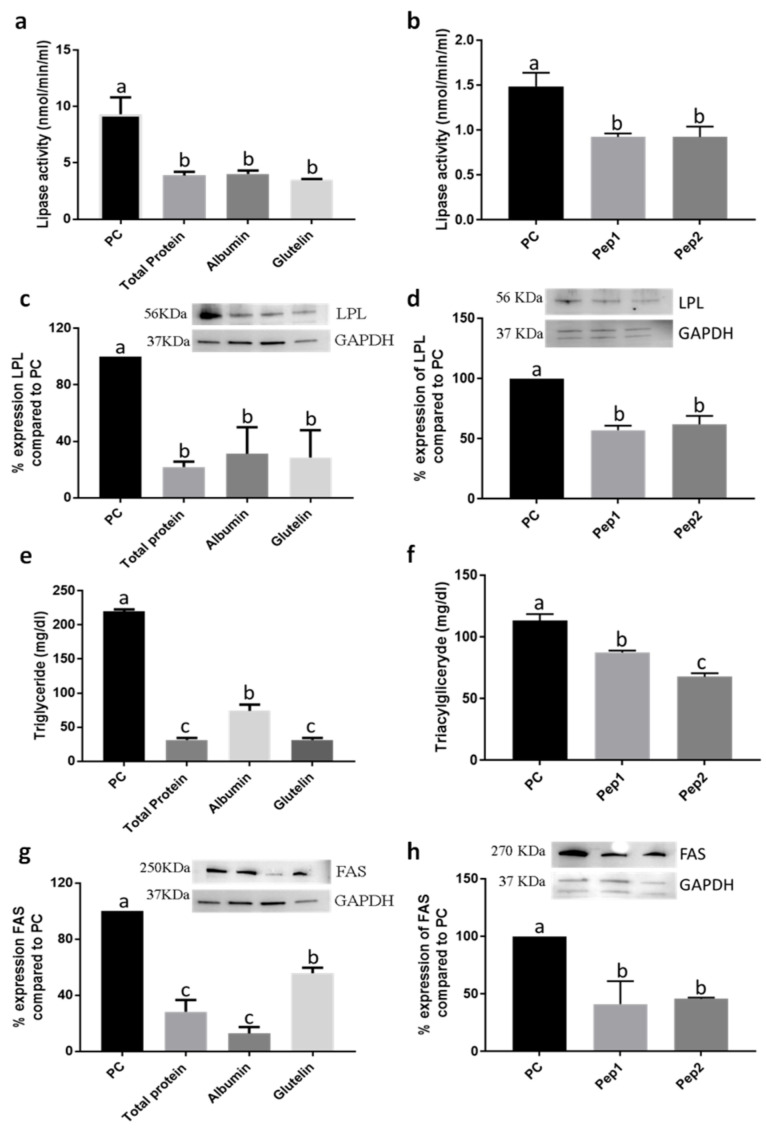
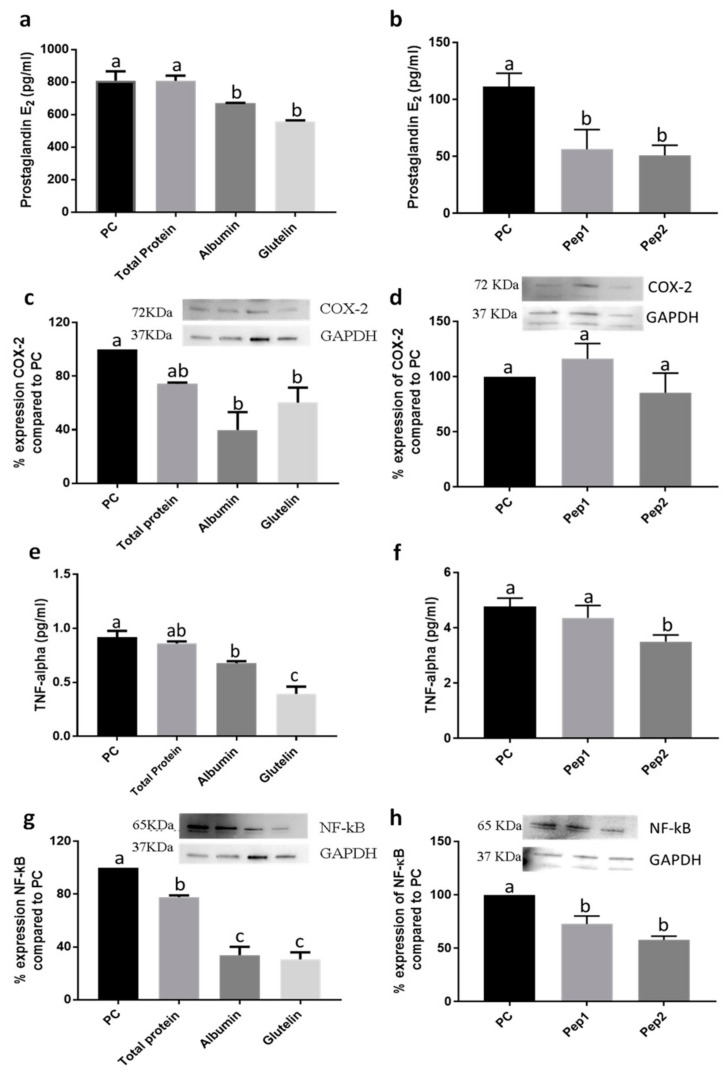
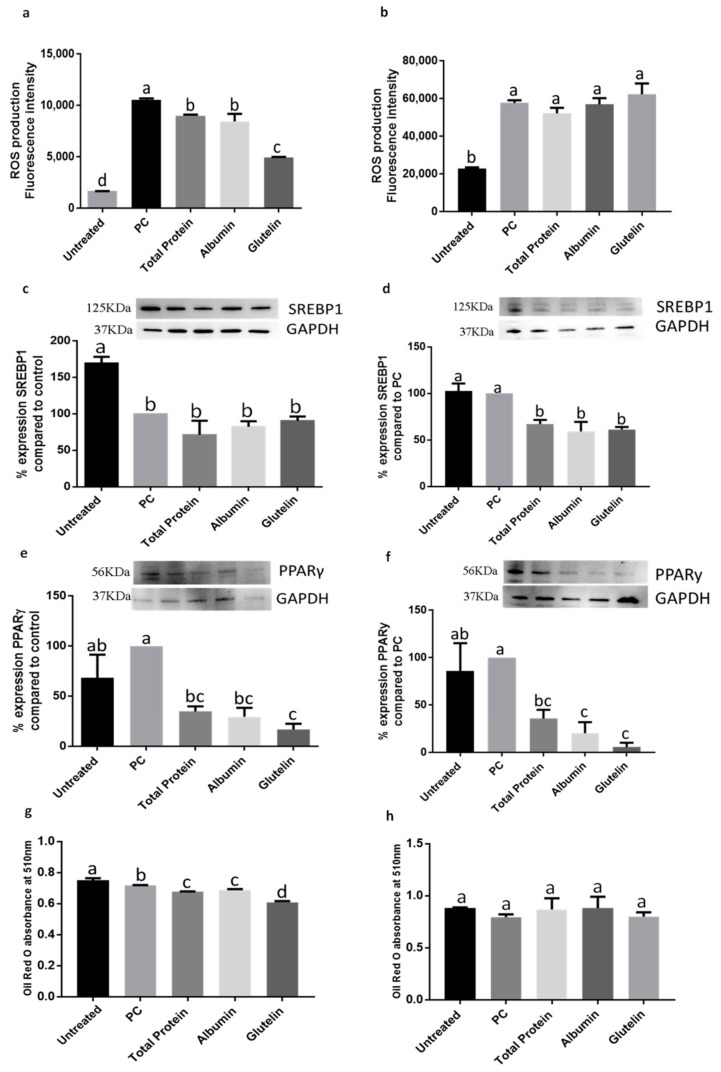
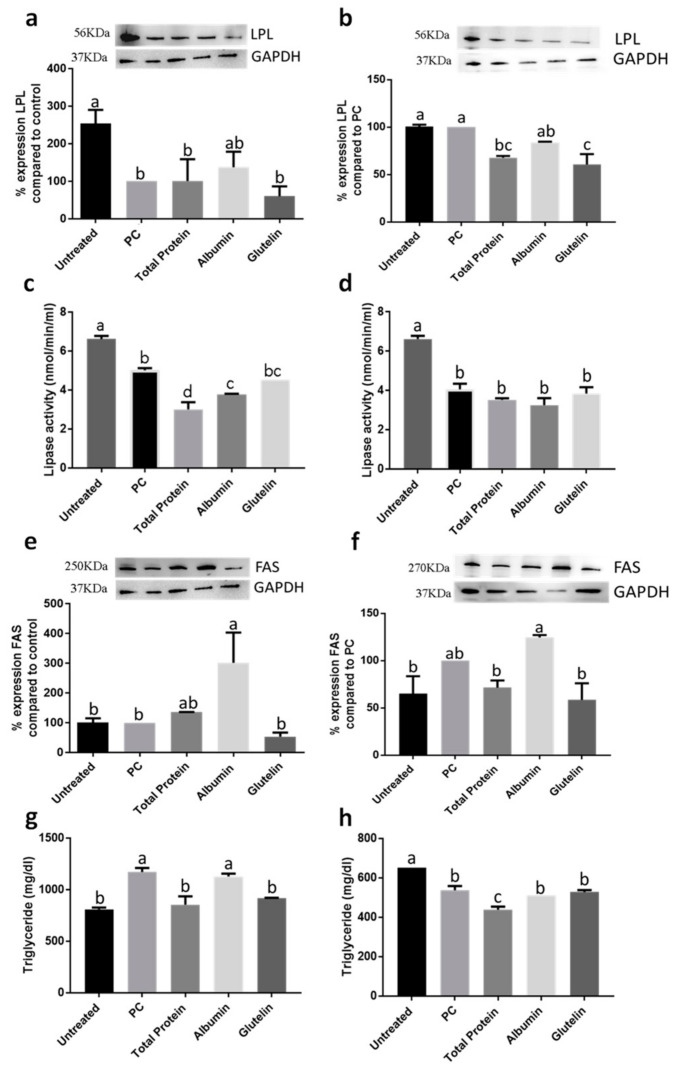
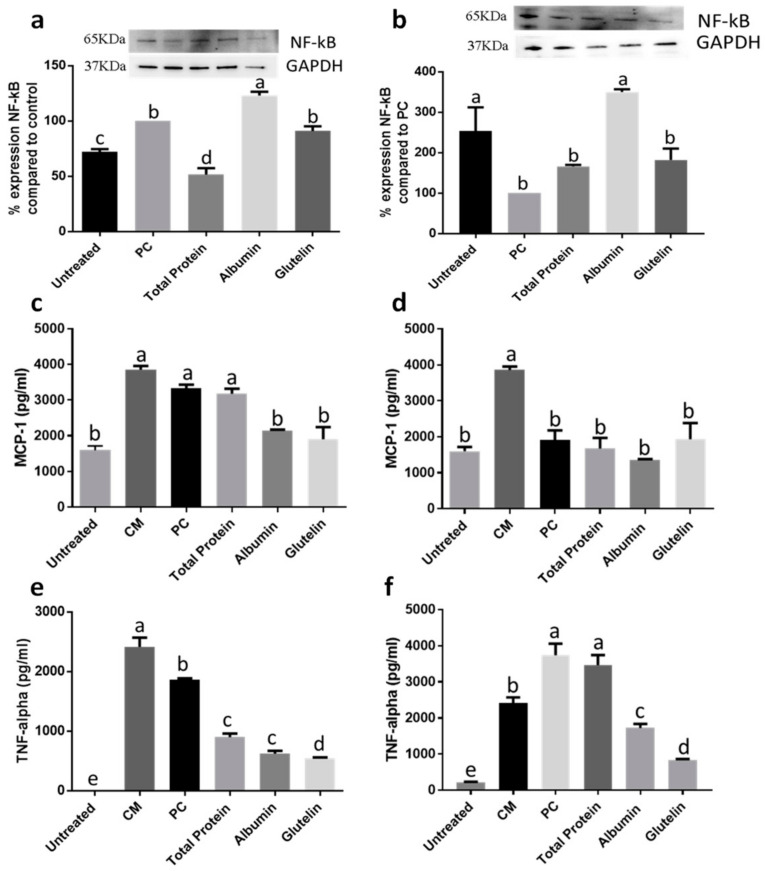
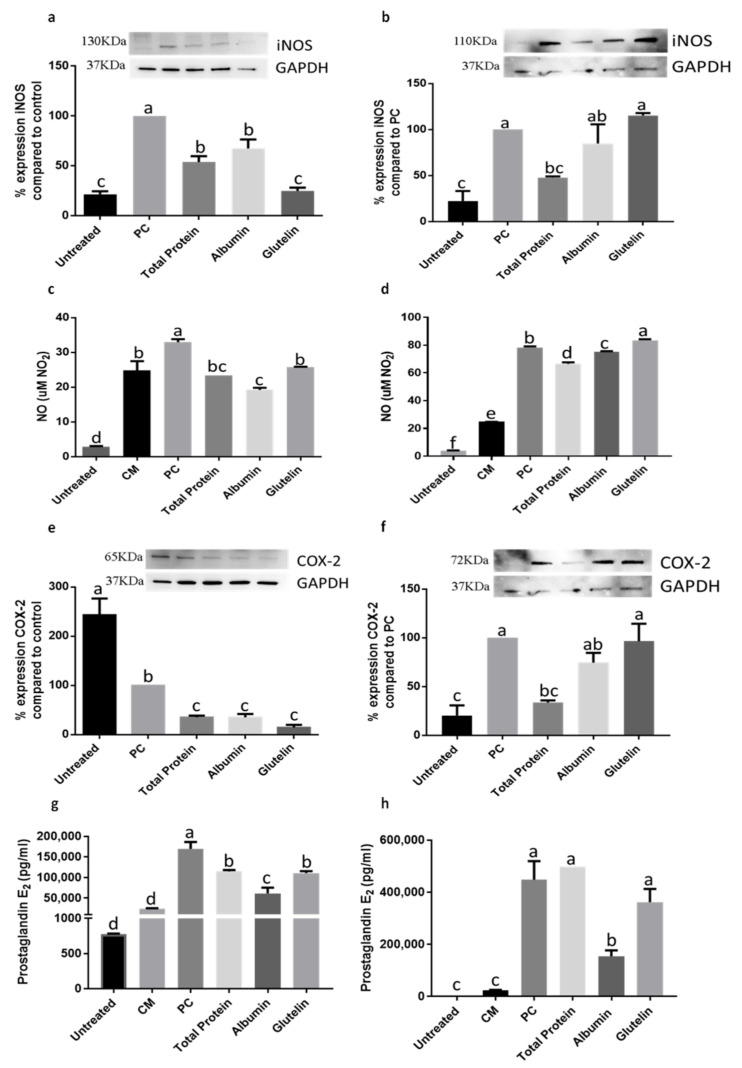
The objective was to evaluate the mechanisms of digested total proteins (DTP), albumin, glutelin, and pure peptides from chia seed ( L.) to prevent adipogenesis and its associated inflammation in 3T3-L1 adipocytes. Preadipocytes (3T3-L1) were treated during differentiation with either DTP or digested albumin or glutelin (1 mg/mL) or pure peptides NSPGPHDVALDQ and RMVLPEYELLYE (100 µM). Differentiated adipocytes also received DTP, digested albumin or glutelin (1 mg/mL), before (prevention) or after (inhibition) induced inflammation by addition of conditioned medium (CM) from inflamed macrophages. All treatments prevented adipogenesis, reducing more than 50% the expression of PPARγ and to a lesser extent lipoprotein lipase (LPL), fatty acid synthase (FAS), sterol regulatory element-binding protein 1 (SREBP1), lipase activity and triglycerides. Inflammation induced by CM was reduced mainly during prevention, while DTP decreased expression of NF-κB (-48.4%), inducible nitric oxide synthase (iNOS) (-46.2%) and COX-2 (-64.5%), < 0.05. Secretions of nitric oxide, PGE2 and TNFα were reduced by all treatments, < 0.05. DTP reduced expressions of iNOS (-52.1%) and COX-2 (-66.4%). Furthermore, digested samples and pure peptides prevented adipogenesis by modulating PPARγ and additionally, preventing and even inhibiting inflammation in adipocytes by inhibition of PPARγ and NF-κB expression. These results highlight the effectiveness of digested total proteins and peptides from chia seed against adipogenesis complications in vitro.
目的在于评估消化后的总蛋白(DTP)、白蛋白、谷蛋白以及奇亚籽( Salvia hispanica L.)的纯肽预防 3T3-L1 脂肪细胞脂肪生成及其相关炎症的机制。在用 DTP 或消化后的白蛋白或谷蛋白(1mg/ml)或纯肽 NSPGPHDVALDQ 和 RMVLPEYELLYE(100μM)处理分化中的前脂肪细胞(3T3-L1)期间,进行分化。在用来自炎症巨噬细胞的条件培养基(CM)诱导炎症后,也将分化的脂肪细胞用 DTP、消化后的白蛋白或谷蛋白(1mg/ml)进行预处理(预防)或后处理(抑制)。所有处理均阻止了脂肪生成,使 PPARγ的表达降低了 50%以上,对脂蛋白脂肪酶(LPL)的影响较小,脂肪酸合酶(FAS)、固醇调节元件结合蛋白 1(SREBP1)、脂肪酶活性和甘油三酯也有所降低。CM 诱导的炎症主要在预防期间减少,而 DTP 使 NF-κB 的表达减少了 48.4%(P<0.05)、诱导型一氧化氮合酶(iNOS)减少了 46.2%(P<0.05)和 COX-2 减少了 64.5%(P<0.05)。所有处理均降低了一氧化氮、PGE2 和 TNFα的分泌,P<0.05。DTP 使 iNOS 的表达减少了 52.1%(P<0.05)和 COX-2 减少了 66.4%(P<0.05)。此外,消化后的样品和纯肽通过调节 PPARγ 来预防脂肪生成,此外,通过抑制 PPARγ 和 NF-κB 的表达来预防甚至抑制脂肪细胞的炎症。这些结果突出了消化后的总蛋白和奇亚籽肽对体外脂肪生成并发症的有效性。