Pam Pedram, Asemani Sanaz, Azizi Mohammad Hesam, Jamilian Parmida
Student Research Committee, Tabriz University of Medical Sciences, Tabriz, Iran.
Faculty of Nutrition and Food Sciences, Tabriz University of Medical Sciences, Tabriz, Iran.
J Nutr Sci. 2024 Dec 11;13:e91. doi: 10.1017/jns.2024.70. eCollection 2024.
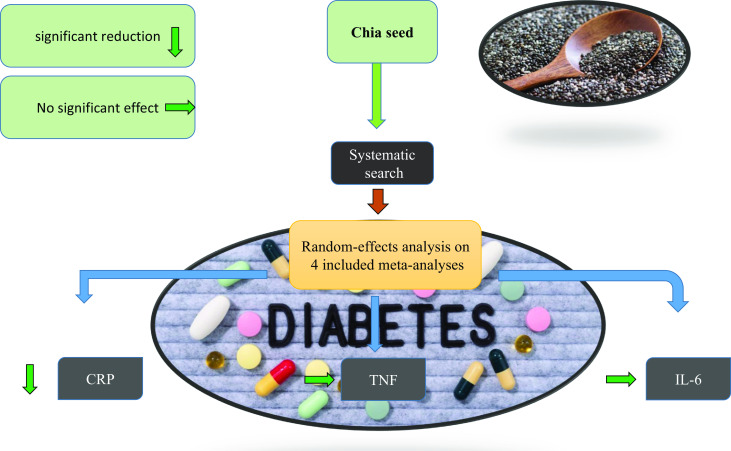
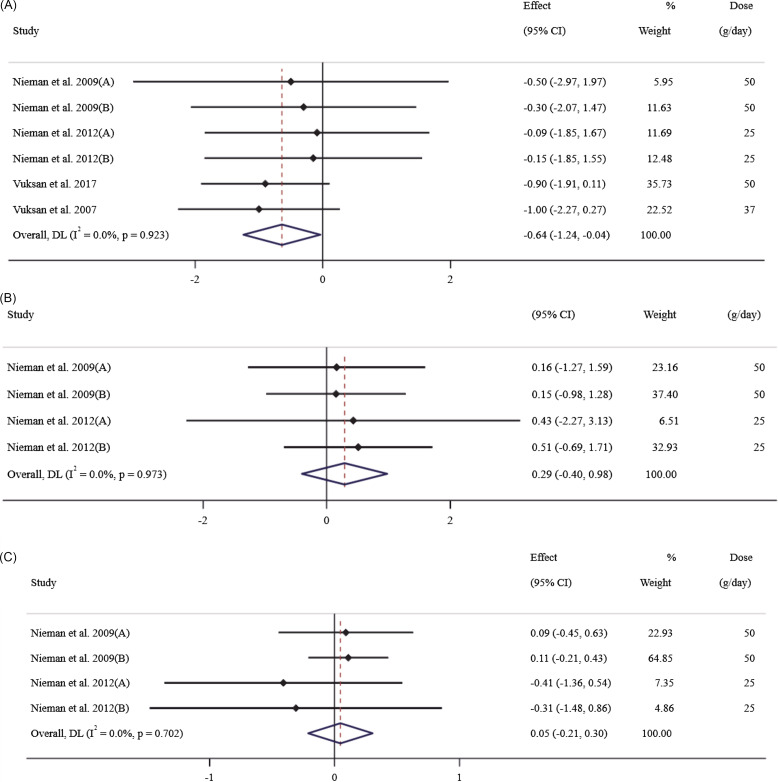
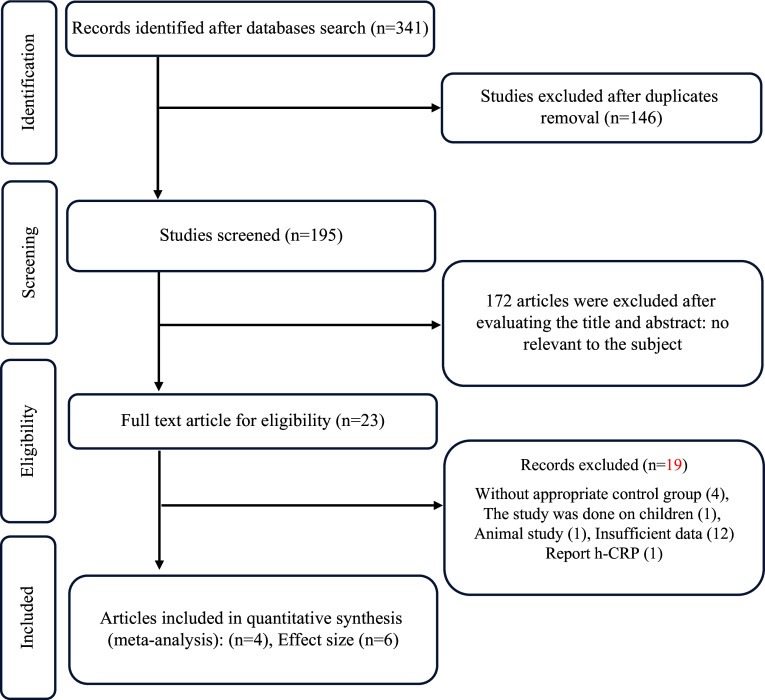
Chia seeds have gained attention for their potential anti-inflammatory properties, which may be attributed to their high content of omega-3 fatty acids, dietary fibre, and antioxidants. This study aims to provide an overview of the current understanding regarding the effects of chia seeds on inflammatory markers, specifically C-reactive protein (CRP), interleukin-6 (IL-6), and tumour necrosis factor-alpha (TNF-α). A comprehensive literature search was conducted on PubMed, Scopus, Web of Science, Cochrane, and Google Scholar up to June 2024. Randomized controlled trials (RCTs) assessing the effect of chia seed on CRP or/and IL-6 or/and TNF-α. Data were extracted and analysed using a random-effects model, and reported as weighted mean differences (WMD) with 95% confidence intervals (CI). Subgroup and sensitivity analyses were also performed. Four RCTs involving 210 participants were included in the meta-analysis. The results showed that chia consumption significantly decreased CRP (WMD: -0.64 mg/dl; 95% CI: -1.24, -0.04; P = 0.03). But it had no significant effect on IL-6 (WMD: 0.29 pg/dl; 95% CI: -0.40, 0.98; P = 0.41), and TNF-α (WMD: 0.05%; 95% CI: -0.21 to 0.30; P = 0.72). Chia consumption can significantly decrease CRP, but no significant effect was observed on IL-6 and TNF-α. To prove our findings, more studies with a larger sample size are needed.
奇亚籽因其潜在的抗炎特性而受到关注,这可能归因于其富含的omega-3脂肪酸、膳食纤维和抗氧化剂。本研究旨在概述目前对奇亚籽对炎症标志物影响的理解,特别是C反应蛋白(CRP)、白细胞介素-6(IL-6)和肿瘤坏死因子-α(TNF-α)。截至2024年6月,在PubMed、Scopus、科学网、考科蓝图书馆和谷歌学术上进行了全面的文献检索。评估奇亚籽对CRP或/和IL-6或/和TNF-α影响的随机对照试验(RCT)。使用随机效应模型提取和分析数据,并报告为加权平均差(WMD)及95%置信区间(CI)。还进行了亚组分析和敏感性分析。荟萃分析纳入了4项涉及210名参与者的RCT。结果显示,食用奇亚籽显著降低了CRP(WMD:-0.64mg/dl;95%CI:-1.24,-0.04;P=0.03)。但对IL-6(WMD:0.29pg/dl;95%CI:-0.40,0.98;P=0.41)和TNF-α(WMD:0.05%;95%CI:-0.21至0.30;P=0.72)没有显著影响。食用奇亚籽可显著降低CRP,但对IL-6和TNF-α未观察到显著影响。为了证实我们的发现,需要更多样本量更大的研究。