Inorganic Chemistry Laboratory, Department of Chemistry, University of Oxford, Oxford, OX13QR, UK.
Nat Commun. 2021 Jan 12;12(1):340. doi: 10.1038/s41467-020-20403-w.
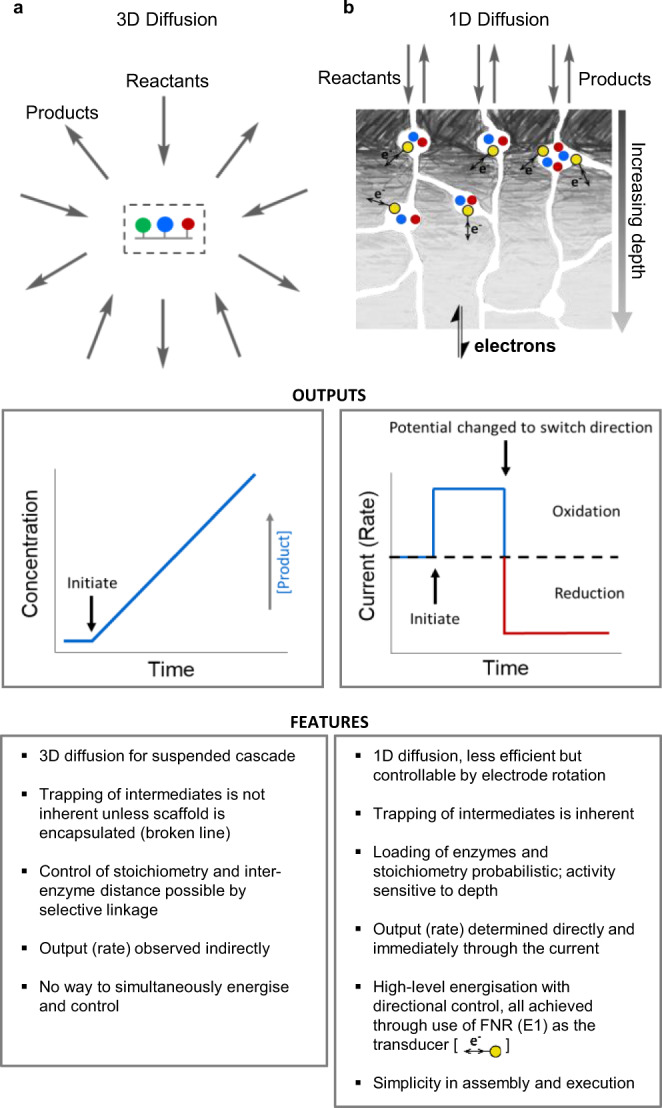
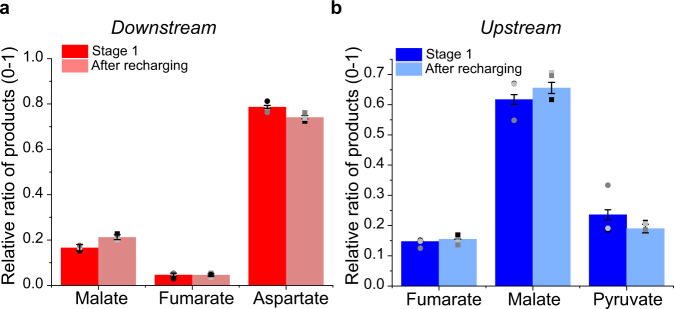
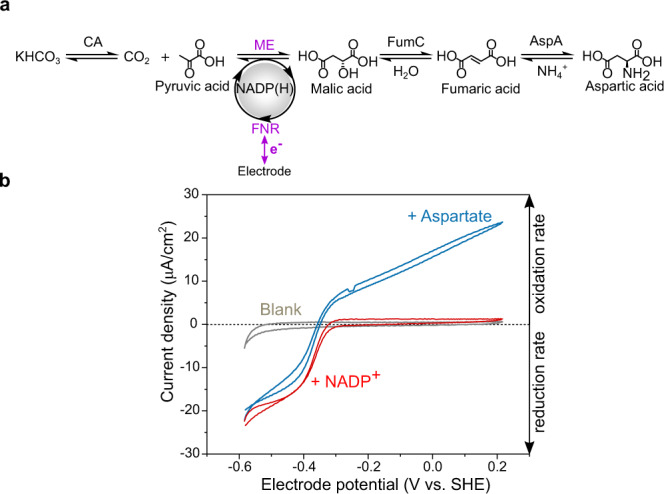
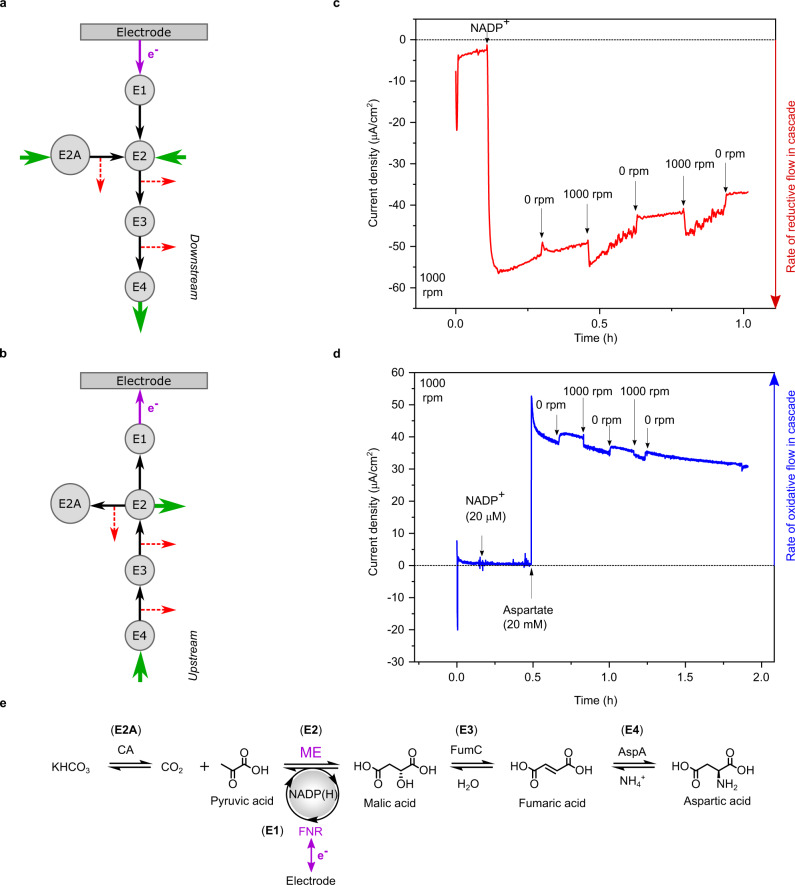
Multistep enzyme-catalyzed cascade reactions are highly efficient in nature due to the confinement and concentration of the enzymes within nanocompartments. In this way, rates are exceptionally high, and loss of intermediates minimised. Similarly, extended enzyme cascades trapped and crowded within the nanoconfined environment of a porous conducting metal oxide electrode material form the basis of a powerful way to study and exploit myriad complex biocatalytic reactions and pathways. One of the confined enzymes, ferredoxin-NADP reductase, serves as a transducer, rapidly and reversibly recycling nicotinamide cofactors electrochemically for immediate delivery to the next enzyme along the chain, thereby making it possible to energize, control and observe extended cascade reactions driven in either direction depending on the electrode potential that is applied. Here we show as proof of concept the synthesis of aspartic acid from pyruvic acid or its reverse oxidative decarboxylation/deamination, involving five nanoconfined enzymes.
多步酶催化级联反应在自然界中效率很高,因为酶被限制在纳米隔室内并得到浓缩。这样一来,反应速率极高,中间产物的损失最小化。同样,在多孔导电金属氧化物电极材料的纳米受限环境中捕获和拥挤的扩展酶级联反应为研究和利用无数复杂的生物催化反应和途径提供了一种强大的方法。被限制的酶之一铁氧还蛋白-NADP 还原酶充当传感器,快速且可逆地电化学循环再生烟酰胺辅酶,以便立即递送到链中的下一个酶,从而使能够根据施加的电极电势来为沿链驱动的扩展级联反应供能、控制和观察,无论该反应是正向还是反向进行。在这里,我们展示了从丙酮酸或其反向氧化脱羧/脱氨合成天冬氨酸的概念验证,涉及 5 种纳米受限酶。