Department of Technology and Natural Resources, Faculty of Applied Sciences and Technology, Universiti Tun Hussein Onn Malaysia, 86400, Pagoh, Johor, Malaysia.
Department of Biomedical Sciences, Faculty of Medicine and Health Sciences, Universiti Putra Malaysia, 43400 UPM, Serdang, Selangor, Malaysia.
BMC Complement Med Ther. 2021 Jan 14;21(1):30. doi: 10.1186/s12906-020-03170-5.
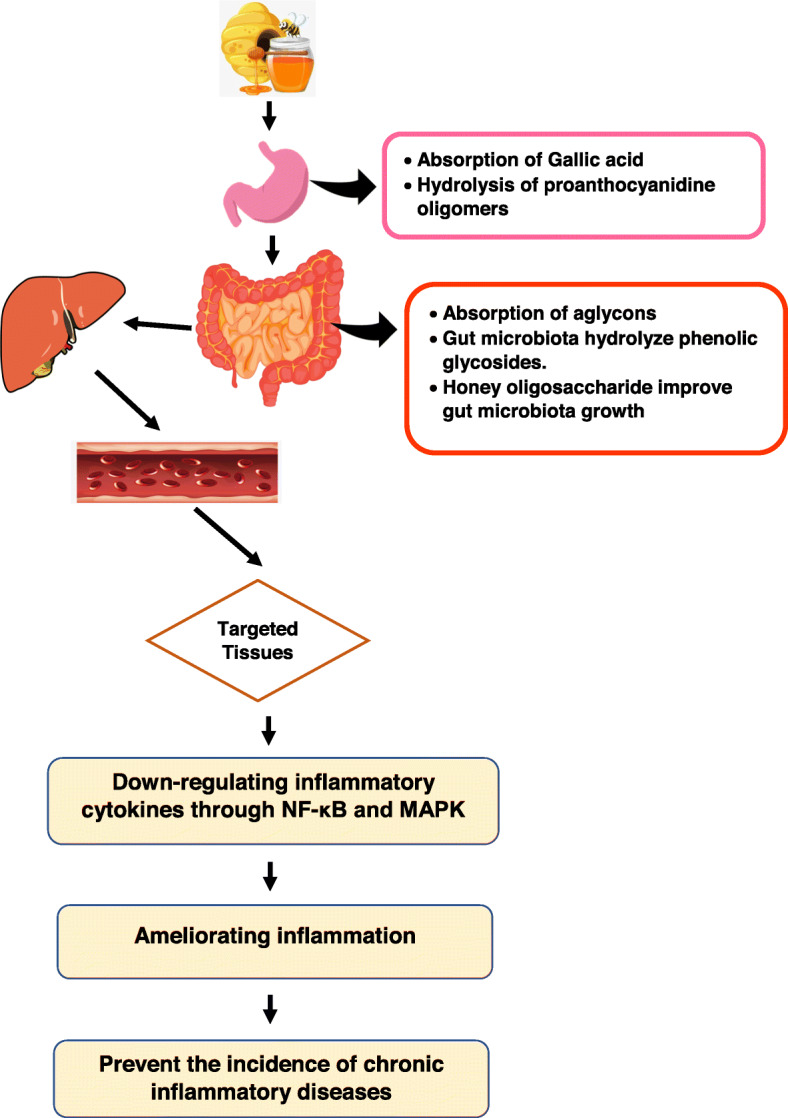
Inflammation is the main key role in developing chronic diseases including cancer, cardiovascular diseases, diabetes, arthritis, and neurodegenerative diseases which possess a huge challenge for treatment. With massively compelling evidence of the role played by nutritional modulation in preventing inflammation-related diseases, there is a growing interest into the search for natural functional foods with therapeutic and preventive actions. Honey, a nutritional healthy product, is produced mainly by two types of bees: honeybee and stingless bee. Since both types of honey possess distinctive phenolic and flavonoid compounds, there is recently an intensive interest in their biological and clinical actions against inflammation-mediated chronic diseases. This review shed the light specifically on the bioavailability and bioaccessibility of honey polyphenols and highlight their roles in targeting inflammatory pathways in gastrointestinal tract disorders, edema, cancer, metabolic and cardiovascular diseases and gut microbiota.
炎症是导致包括癌症、心血管疾病、糖尿病、关节炎和神经退行性疾病在内的慢性疾病的主要关键因素,这些疾病的治疗极具挑战性。由于大量证据表明营养调节在预防炎症相关疾病方面发挥着重要作用,因此人们越来越关注寻找具有治疗和预防作用的天然功能性食品。蜂蜜是一种营养保健品,主要由两种蜜蜂生产:蜜蜂和无刺蜜蜂。由于这两种蜂蜜都含有独特的酚类和类黄酮化合物,因此最近人们对它们在对抗炎症介导的慢性疾病方面的生物学和临床作用产生了浓厚的兴趣。本文特别综述了蜂蜜多酚的生物利用度和生物可及性,并强调了它们在靶向胃肠道疾病、水肿、癌症、代谢和心血管疾病以及肠道微生物群中炎症途径的作用。