Shanghai Obstetrics and Gynecology Hospital, Fudan University, Shanghai, 200011, China.
Shanghai Key Laboratory of Female Reproductive Endocrine-Related Diseases, Fudan University, Shanghai, China.
Sci Rep. 2021 Jan 14;11(1):1345. doi: 10.1038/s41598-020-79750-9.
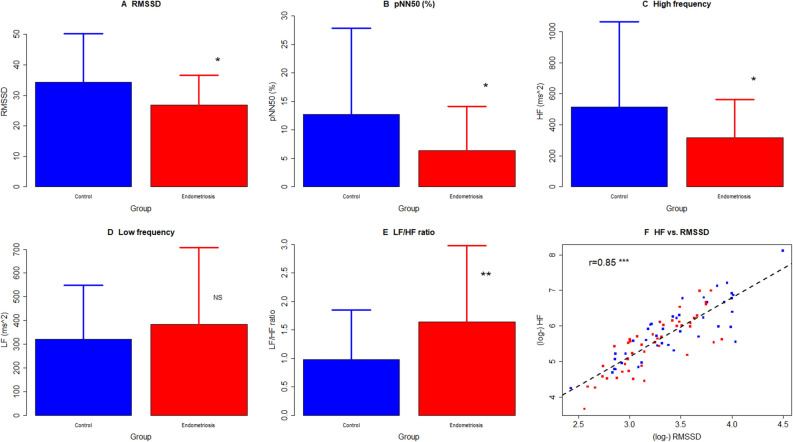
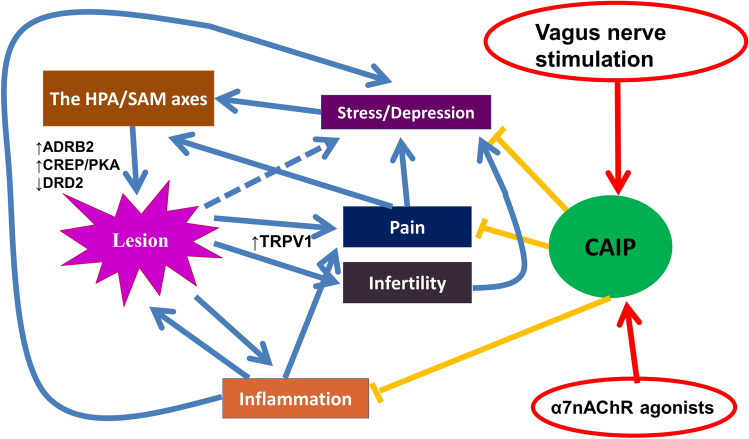
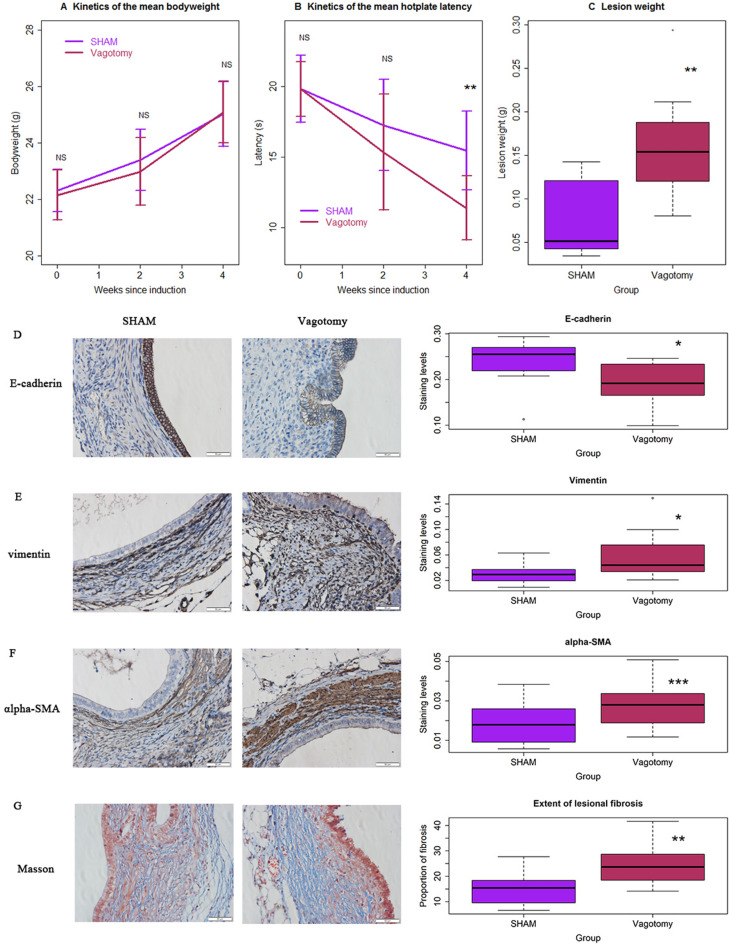
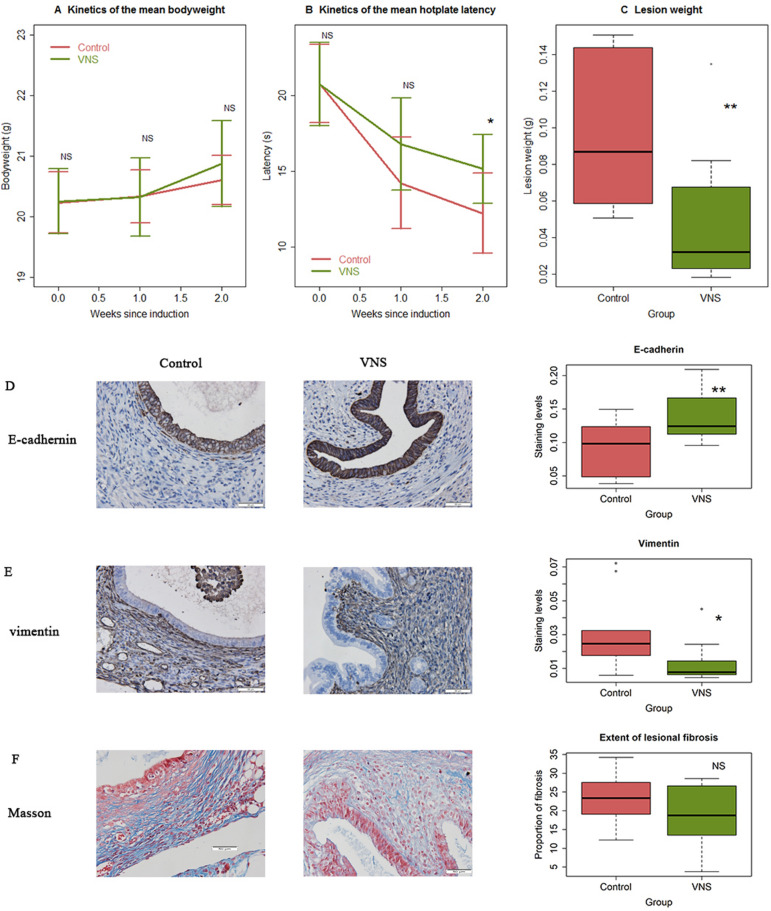
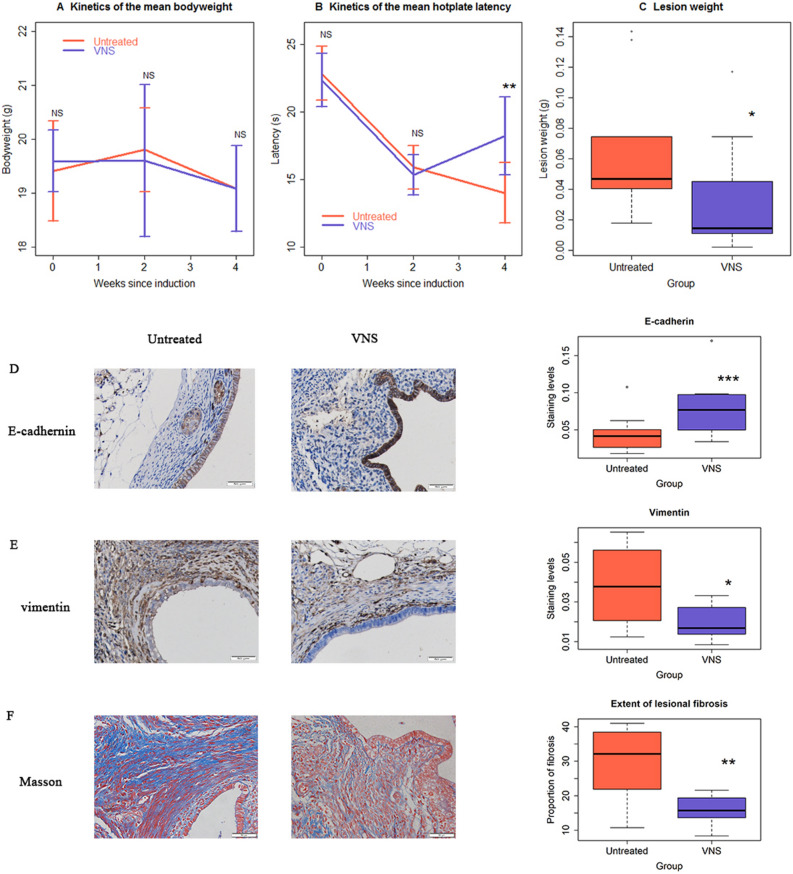
Sensory and sympathetic nerves have been shown to promote the progression of endometriosis through the release of neuromediators and the lesional activation of respective receptors. The role of vagus nerves (VN) in lesional progression, however, is completely unclear, despite the signs suggestive of increased sympathetic tone in women with endometriosis. This study was undertaken to investigate whether VN plays any role in the progression of endometriosis. We recruited 45 patients with endometriosis and 42 healthy women, who were given electrocardiogram test and their heart rate variability was evaluated. In addition, three prospective, and randomized mouse experiments were conducted that evaluated, respectively, the effect of vagotomy, the effect of VN stimulation (VNS), and the therapeutic potential of VNS after the endometriosis was well established. All lesions were excised, weighed, and processed for immunohistochemistry and histochemistry analysis of select markers for lesional progression and fibrosis. We found that endometriosis patients exhibited reduced vagal activity as compared with controls, indicative of disrupted autonomic balance. Vagotomy increased while VNS decreased the lesion weight as compared with control mice, concomitant with more progressive and retarded lesion development and fibrogenesis, respectively. In addition, VNS demonstrated promising therapeutic effect, as evidenced by significantly reduced lesion weight, more attenuated lesional progression concomitant with improved hyperalgesia. Taken together, our data indicate that VN activity may play a dampening role in the progression of endometriosis. Consequently, boosting the VN activity may have therapeutic potentials for patients with endometriosis.
感觉和交感神经已被证明通过释放神经递质和病变激活相应受体来促进子宫内膜异位症的进展。然而,尽管子宫内膜异位症患者的交感神经张力增加迹象明显,但迷走神经(VN)在病变进展中的作用仍完全不清楚。本研究旨在探讨 VN 是否在子宫内膜异位症的进展中起作用。我们招募了 45 名子宫内膜异位症患者和 42 名健康女性,对她们进行心电图检查并评估其心率变异性。此外,还进行了三项前瞻性、随机的小鼠实验,分别评估了迷走神经切断术、VN 刺激(VNS)的作用以及在子宫内膜异位症形成后 VNS 的治疗潜力。所有病变均被切除、称重,并进行免疫组织化学和组织化学分析,以选择用于病变进展和纤维化的标志物。我们发现与对照组相比,子宫内膜异位症患者的迷走神经活性降低,表明自主平衡失调。与对照组小鼠相比,迷走神经切断术增加而 VNS 减少了病变的重量,分别伴随着更具侵袭性和更具退行性的病变发展和纤维化。此外,VNS 表现出有希望的治疗效果,表现为病变重量明显减轻,病变进展明显减弱,同时疼痛加剧得到改善。总之,我们的数据表明 VN 活性可能在子宫内膜异位症的进展中起抑制作用。因此,增强 VN 活性可能对子宫内膜异位症患者具有治疗潜力。