Experimental Rheumatology, Department of Rheumatology, Radboud University Medical Centre, Nijmegen, The Netherlands.
Laboratory for Experimental Orthopedics, Department of Orthopedic Surgery, Maastricht University, Maastricht, The Netherlands.
Sci Rep. 2021 Jan 14;11(1):1359. doi: 10.1038/s41598-020-80451-6.
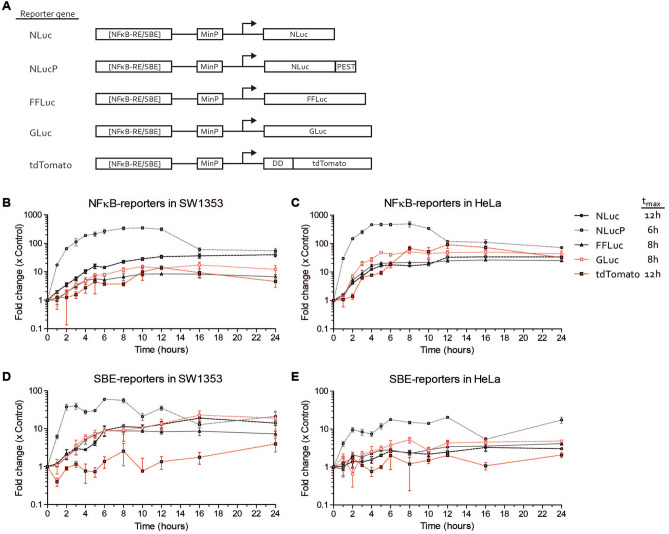
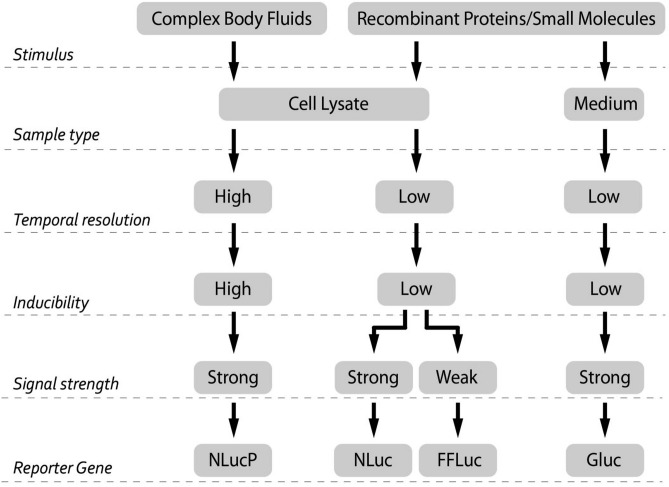
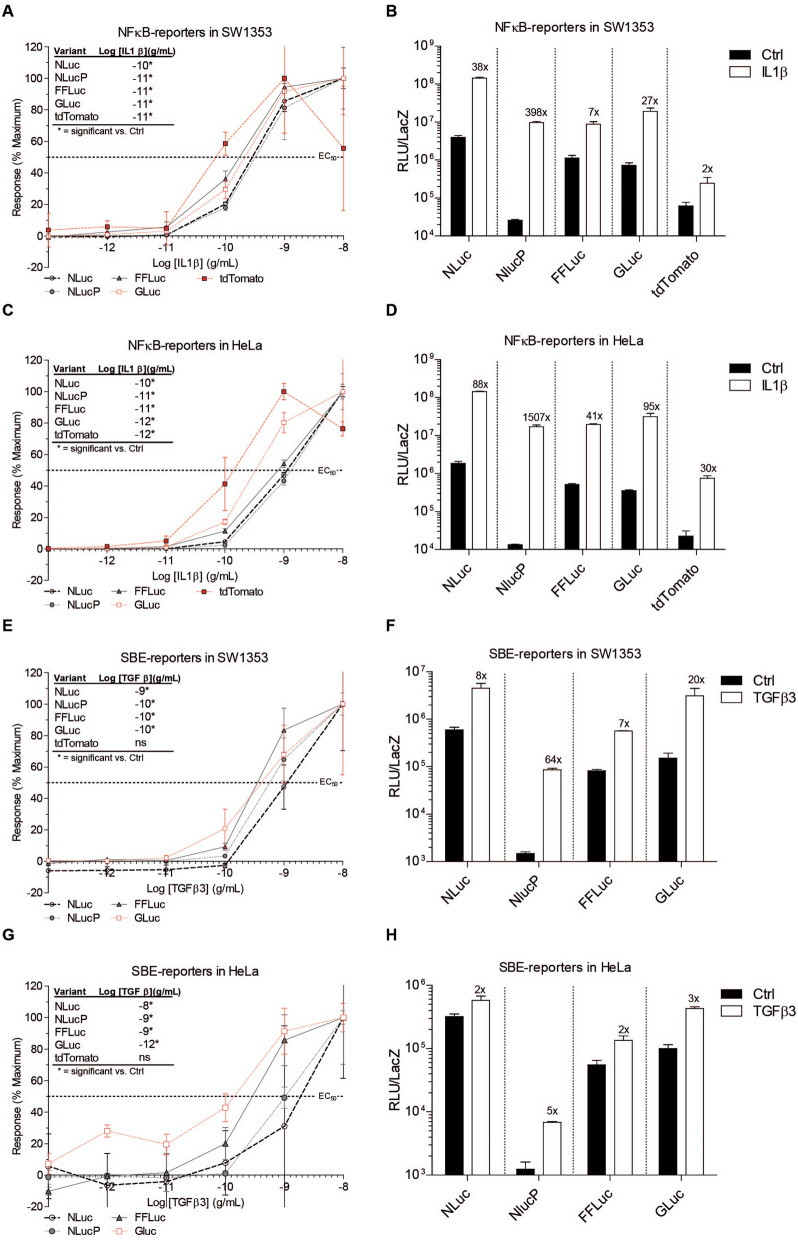
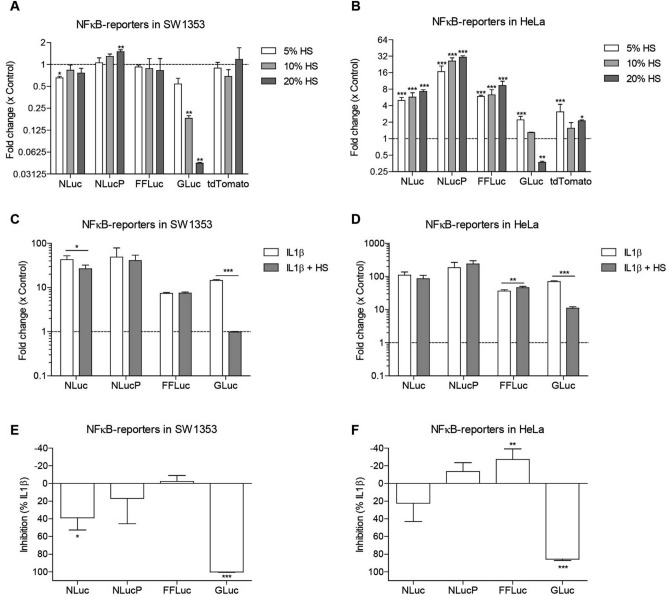
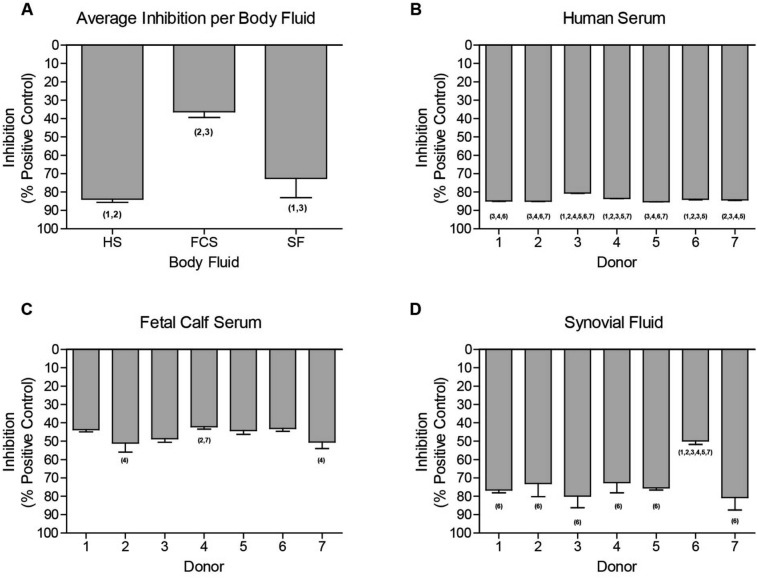
Reporter gene assays are widely used to study cellular signaling and transcriptional activity. Few studies describe the use of reporter genes for studying cellular responses on complex body fluids, such as urine and blood. Selection of the optimal reporter gene is crucial for study outcome. Here, we compared the characteristics of five reporter genes (Firefly luciferase, stable- and unstable Nano luciferase, secretable Gaussia luciferase and Red Fluorescent Protein) to study complex body fluids. For this comparison, the NFκB Response Element (NFκB-RE) and Smad Binding Element (SBE) were identically cloned into the five different reporter vectors. Reporter characteristics were evaluated by kinetic and concentration-response measurements in SW1353 and HeLa cell lines. Finally, reporter compatibility with complex body fluids (fetal calf serum, knee joint synovial fluid and human serum) and inter-donor variation were evaluated. Red Fluorescent Protein demonstrated poor inducibility as a reporter gene and slow kinetics compared to luciferases. Intracellularly measured luciferases, such as Firefly luciferase and Nano luciferase, revealed good compatibility with complex body fluids. Secreted Gaussia luciferase appeared to be incompatible with complex body fluids, due to variability in inter-donor signal interference. Unstable Nano luciferase demonstrated clear inducibility, high sensitivity and compatibility with complex body fluids and therefore can be recommended for cellular signaling studies using complex body fluids.
报告基因检测广泛用于研究细胞信号和转录活性。很少有研究描述使用报告基因来研究尿液和血液等复杂体液中的细胞反应。选择最佳的报告基因对于研究结果至关重要。在这里,我们比较了五种报告基因(萤火虫荧光素酶、稳定和不稳定的纳米荧光素酶、分泌型高斯荧光素酶和红色荧光蛋白)在研究复杂体液中的特征。为了进行比较,将 NFκB 反应元件 (NFκB-RE) 和 Smad 结合元件 (SBE) 相同地克隆到五个不同的报告载体中。通过在 SW1353 和 HeLa 细胞系中进行动力学和浓度反应测量来评估报告基因的特征。最后,评估了报告基因与复杂体液(胎牛血清、膝关节滑液和人血清)的兼容性和供体间的变异性。与荧光素酶相比,红色荧光蛋白作为报告基因的诱导能力差,动力学也较慢。细胞内测量的荧光素酶,如萤火虫荧光素酶和纳米荧光素酶,与复杂体液有很好的兼容性。由于供体间信号干扰的可变性,分泌型高斯荧光素酶似乎与复杂体液不兼容。不稳定的纳米荧光素酶表现出明显的诱导能力、高灵敏度和与复杂体液的兼容性,因此可推荐用于使用复杂体液的细胞信号研究。