Weiss Maud, Fan Jiahui, Claudel Mickaël, Lebeau Luc, Pons Françoise, Ronzani Carole
Laboratoire de Conception et Application de Molécules Bioactives, Faculté de Pharmacie, UMR 7199, CNRS-Université de Strasbourg, 67400 Illkirch, France.
Nanomaterials (Basel). 2021 Jan 13;11(1):180. doi: 10.3390/nano11010180.
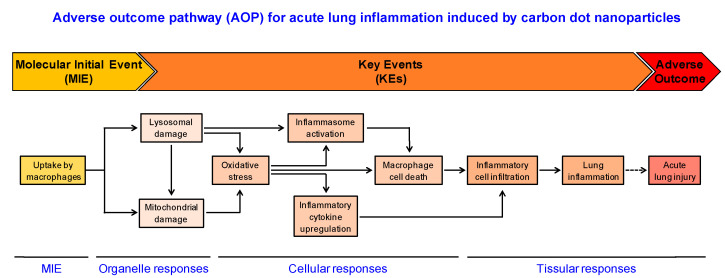
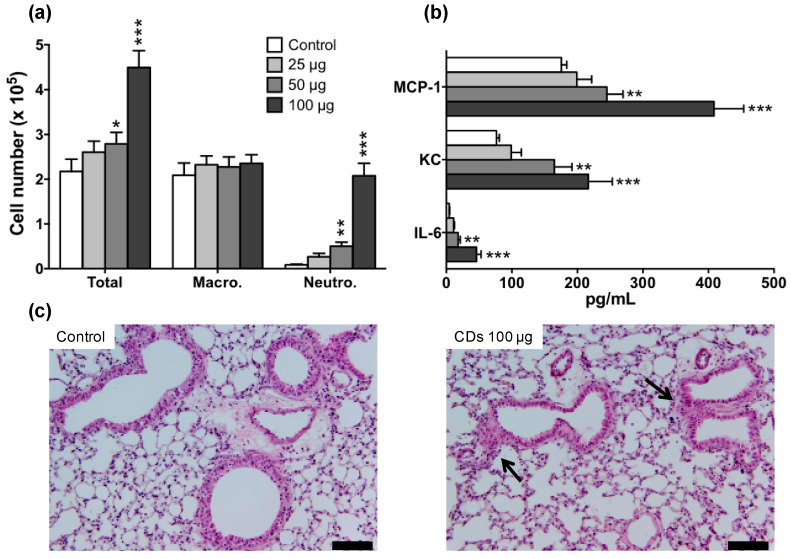
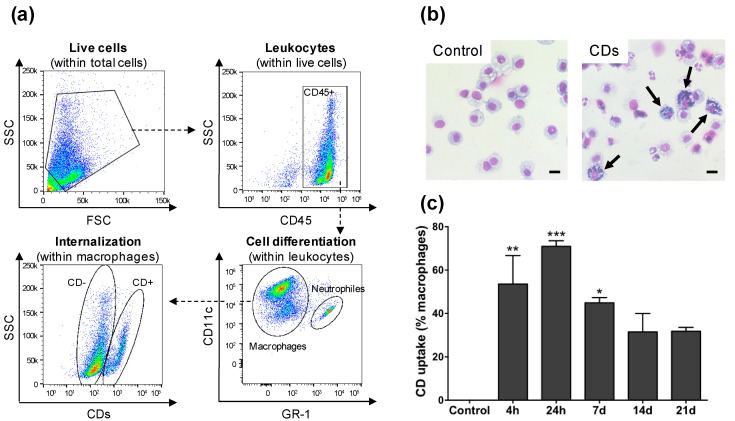
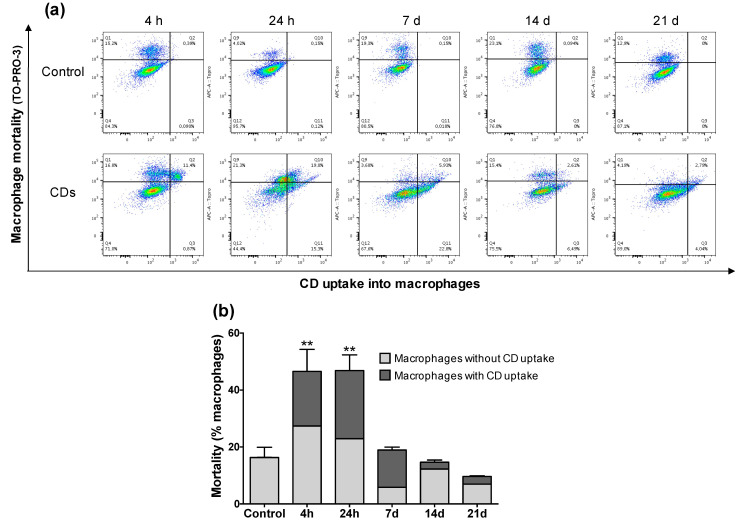
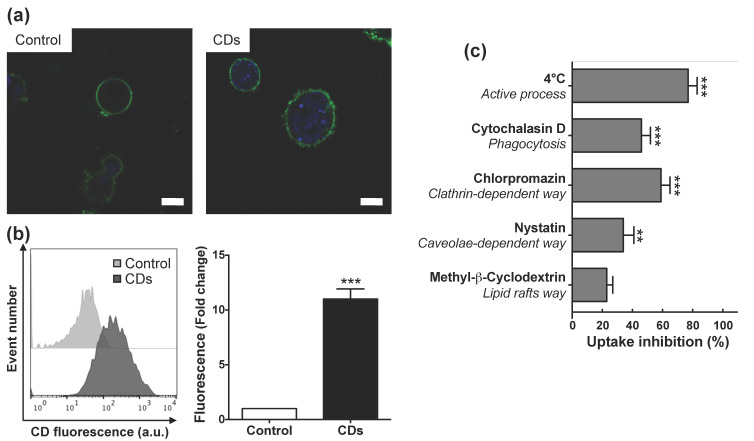
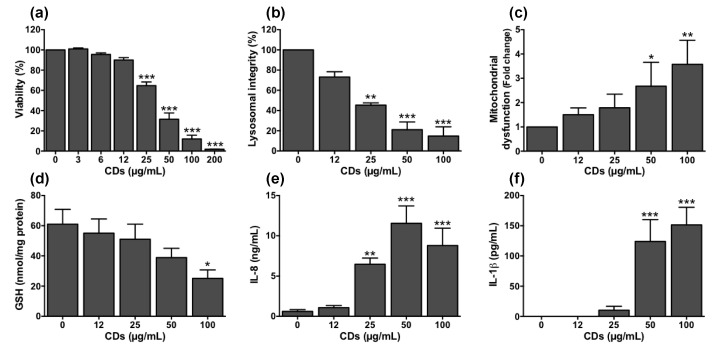
With the growth of nanotechnologies, concerns raised regarding the potential adverse effects of nanoparticles (NPs), especially on the respiratory tract. Adverse outcome pathways (AOP) have become recently the subject of intensive studies in order to get a better understanding of the mechanisms of NP toxicity, and hence hopefully predict the health risks associated with NP exposure. Herein, we propose a putative AOP for the lung toxicity of NPs using emerging nanomaterials called carbon dots (CDs), and in vivo and in vitro experimental approaches. We first investigated the effect of a single administration of CDs on mouse airways. We showed that CDs induce an acute lung inflammation and identified airway macrophages as target cells of CDs. Then, we studied the cellular responses induced by CDs in an in vitro model of macrophages. We observed that CDs are internalized by these cells (molecular initial event) and induce a series of key events, including loss of lysosomal integrity and mitochondrial disruption (organelle responses), as well as oxidative stress, inflammasome activation, inflammatory cytokine upregulation and macrophage death (cellular responses). All these effects triggering lung inflammation as tissular response may lead to acute lung injury.
随着纳米技术的发展,人们对纳米颗粒(NPs)的潜在不良影响,尤其是对呼吸道的潜在不良影响日益关注。为了更好地理解NP毒性机制,并有望预测与NP暴露相关的健康风险,不良结局途径(AOP)最近已成为深入研究的主题。在此,我们使用称为碳点(CDs)的新型纳米材料以及体内和体外实验方法,提出了一种关于NP肺毒性的假定AOP。我们首先研究了单次给予CDs对小鼠气道的影响。我们发现CDs可诱导急性肺部炎症,并确定气道巨噬细胞为CDs的靶细胞。然后,我们在巨噬细胞的体外模型中研究了CDs诱导的细胞反应。我们观察到CDs被这些细胞内化(分子起始事件),并引发一系列关键事件,包括溶酶体完整性丧失和线粒体破坏(细胞器反应),以及氧化应激、炎性小体激活、炎性细胞因子上调和巨噬细胞死亡(细胞反应)。所有这些引发肺部炎症作为组织反应的效应可能导致急性肺损伤。