Maggio Francesca, Rossi Chiara, Chaves-López Clemencia, Serio Annalisa, Valbonetti Luca, Pomilio Francesco, Chiavaroli Alessio Pio, Paparella Antonello
Faculty of Bioscience and Technology for Food, Agriculture and Environment, University of Teramo, Via R. Balzarini 1, 64100 Teramo, Italy.
Food Hygiene Unit, NRL for L. monocytogenes, Istituto Zooprofilattico Sperimentale dell'Abruzzo e del Molise "G. Caporale", 64100 Teramo, Italy.
Foods. 2021 Jan 16;10(1):176. doi: 10.3390/foods10010176.
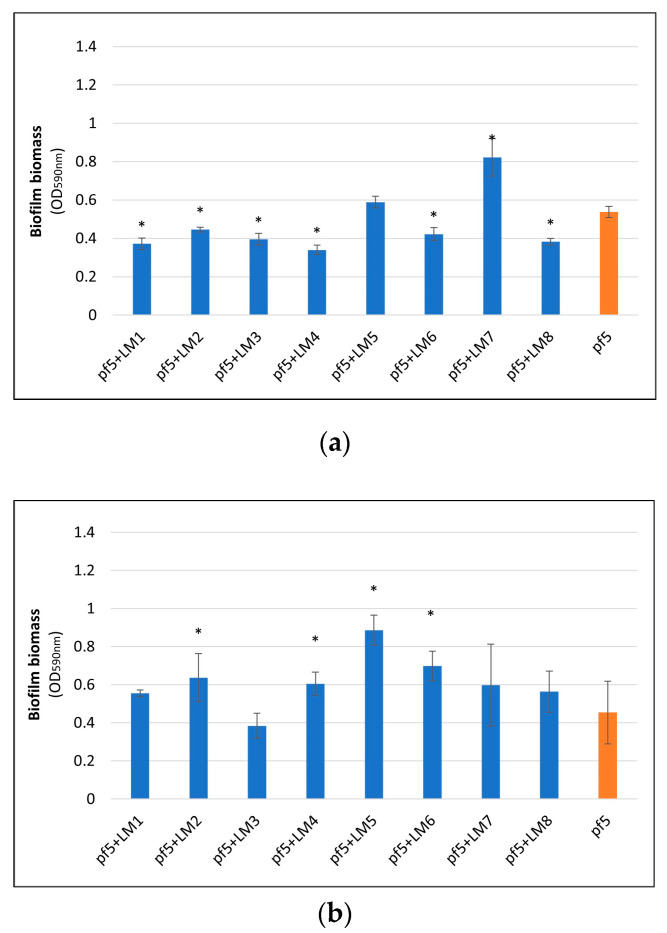
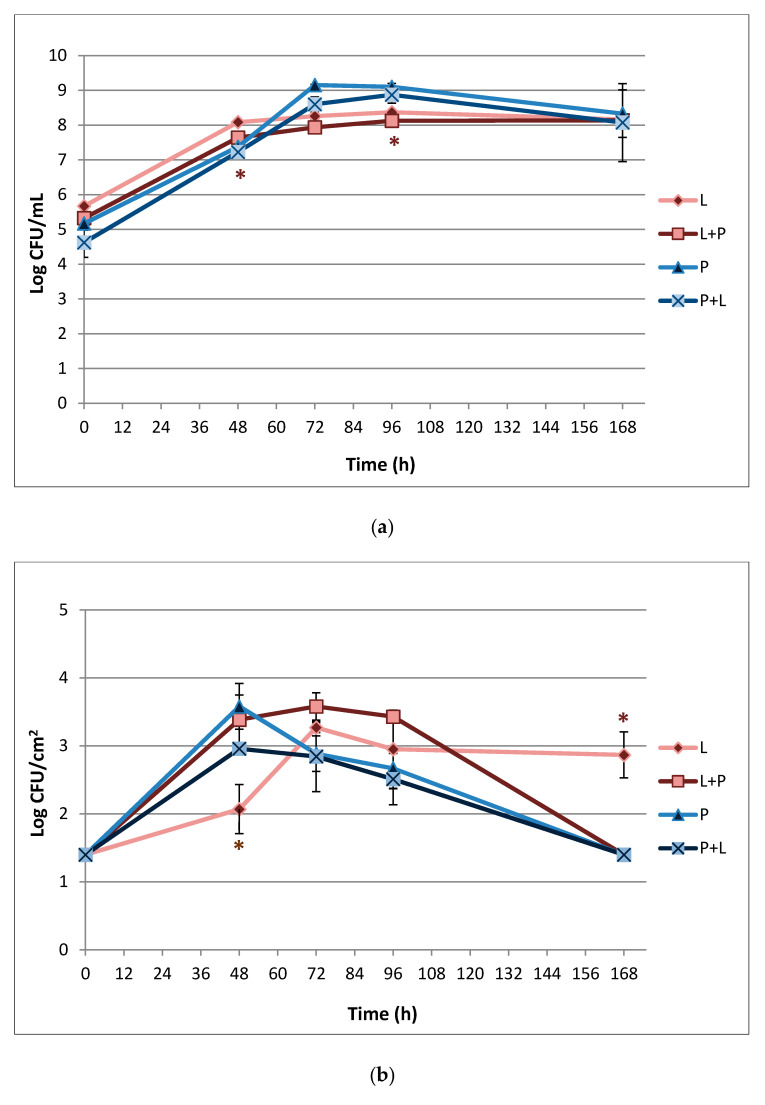
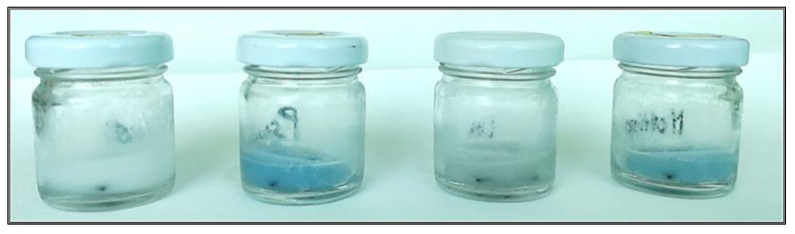
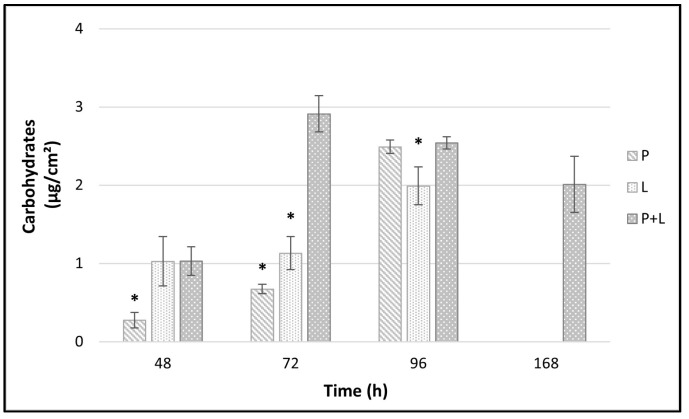
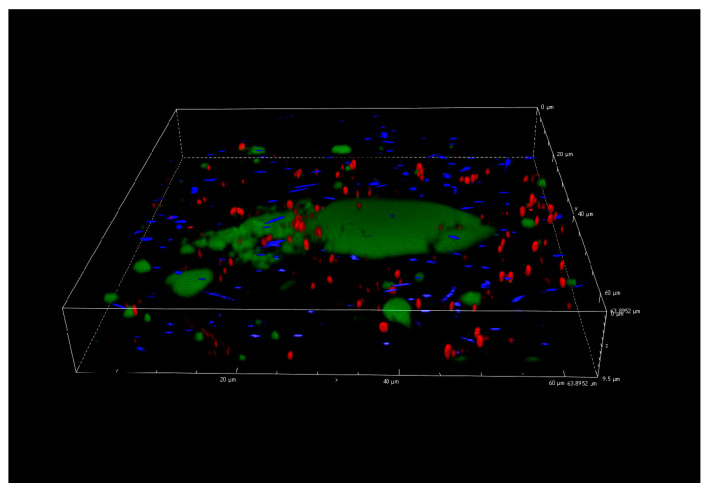
In dairy processing environments, many bacterial species adhere and form biofilms on surfaces and equipment, leading to foodborne illness and food spoilage. Among them, and spp. could be present in mixed-species biofilms. This study aimed to evaluate the interactions between and in biofilms simulating dairy processing conditions, as well as the capability of in co-culture to produce the blue pigment in a Ricotta-based model system. The biofilm-forming capability of single- and mixed-cultures was evaluated on polystyrene (PS) and stainless steel (SS) surfaces at 12 °C for 168 h. The biofilm biomass was measured, the planktonic and sessile cells and the carbohydrates in biofilms were quantified. The biofilms were also observed through Confocal Laser Scanning Microscopy analysis. Results showed that only was able to form biofilms on PS. Moreover, in dual-species biofilms at the end of the incubation time (168 h at 12 °C), a lower biomass compared to mono-species was observed on PS. On SS, the biofilm cell population of was higher in the dual-species than in mono-species, particularly after 48 h. Carbohydrates quantity in the dual-species system was higher than in mono-species and was revealed also at 168 h. The production of blue pigment by was revealed both in single- and co-culture after 72 h of incubation (12 °C). This work highlights the interactions between the two species, under the experimental conditions studied in the present research, which can influence biofilm formation (biomass and sessile cells) but not the capability of to produce blue pigment.
在乳制品加工环境中,许多细菌种类会附着在表面和设备上并形成生物膜,导致食源性疾病和食品腐败。其中,[具体细菌种类1]和[具体细菌种类2]可能存在于混合物种生物膜中。本研究旨在评估在模拟乳制品加工条件的生物膜中[具体细菌种类1]和[具体细菌种类2]之间的相互作用,以及在基于意大利乳清干酪的模型系统中共培养时[具体细菌种类1]产生蓝色色素的能力。在12℃下于聚苯乙烯(PS)和不锈钢(SS)表面对单培养和混合培养的生物膜形成能力进行了168小时的评估。测量了生物膜生物量,对生物膜中的浮游细胞和固着细胞以及碳水化合物进行了定量。还通过共聚焦激光扫描显微镜分析观察了生物膜。结果表明,只有[具体细菌种类1]能够在PS上形成生物膜。此外,在孵育时间结束时(12℃下168小时)的双物种生物膜中,在PS上观察到的生物量低于[具体细菌种类1]单物种生物膜。在SS上,双物种生物膜中的[具体细菌种类1]细胞数量高于单物种,特别是在48小时后。双物种系统中的碳水化合物含量高于单物种,并且在168小时时也有体现。孵育72小时(12℃)后,在单培养和共培养中均发现了[具体细菌种类1]产生蓝色色素的情况。这项工作突出了在本研究的实验条件下这两种细菌之间的相互作用,这种相互作用会影响生物膜的形成(生物量和固着细胞),但不影响[具体细菌种类1]产生蓝色色素的能力。