Carl R. Woese Institute for Genomic Biology (Microbiome Metabolic Engineering Theme), University of Illinois at Urbana-Champaign, Urbana, IL, 61801, USA.
Department of Animal Science, University of Illinois at Urbana-Champaign, Urbana, IL, 61801, USA.
Nat Commun. 2021 Jan 19;12(1):459. doi: 10.1038/s41467-020-20737-5.
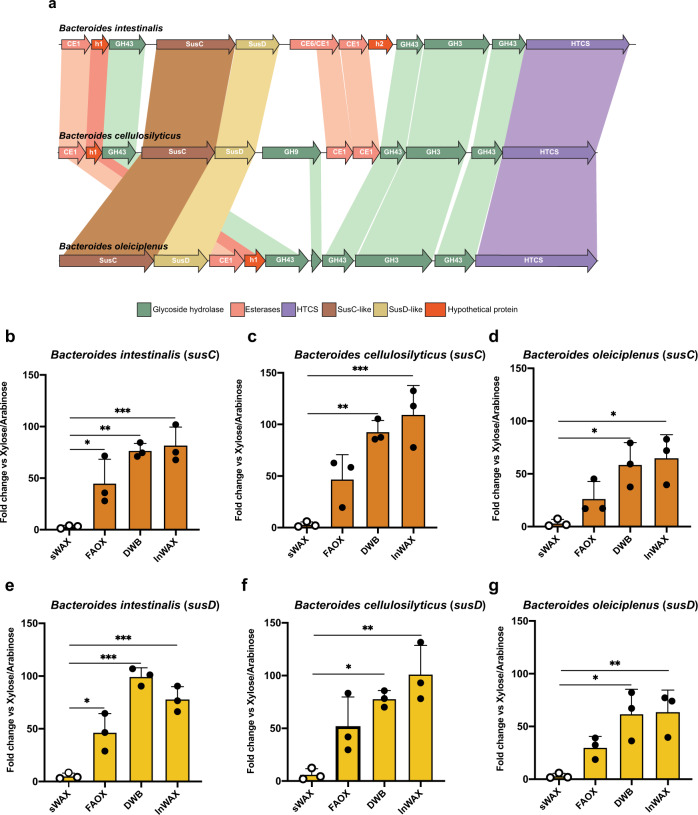
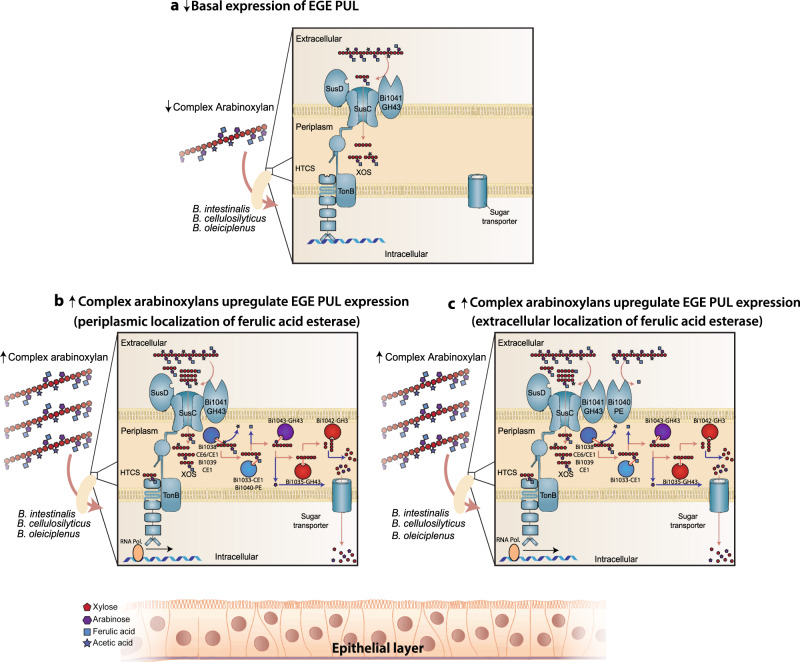
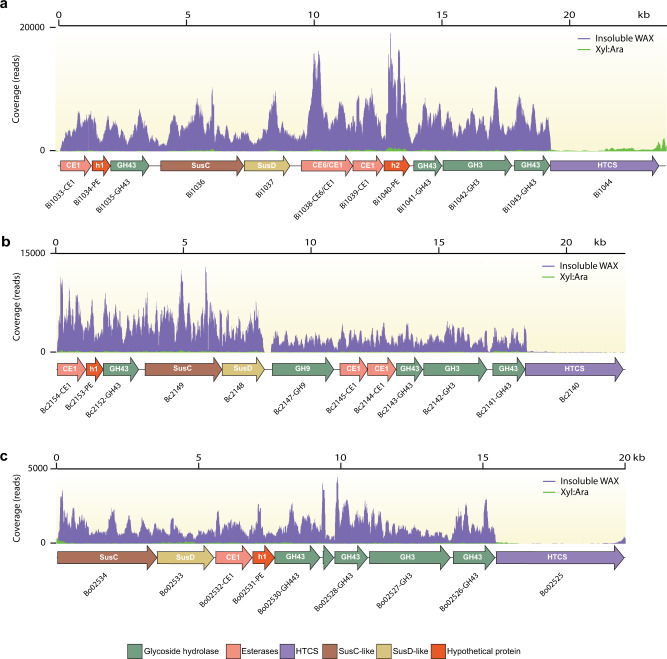
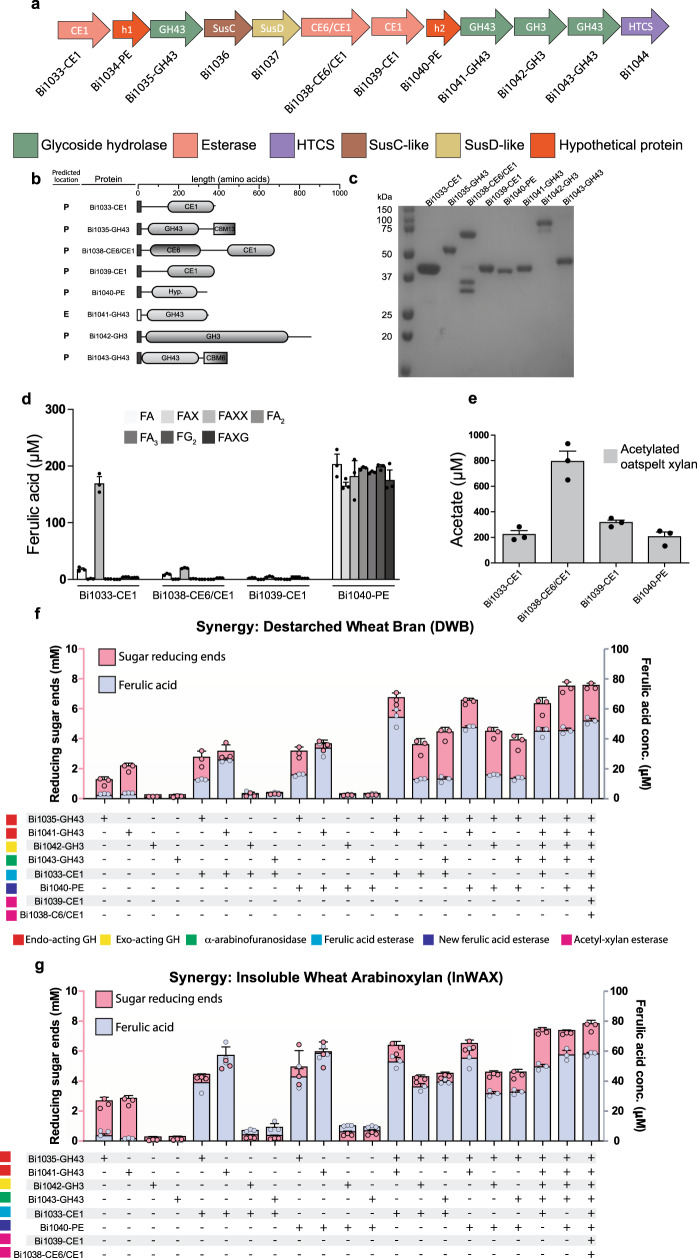
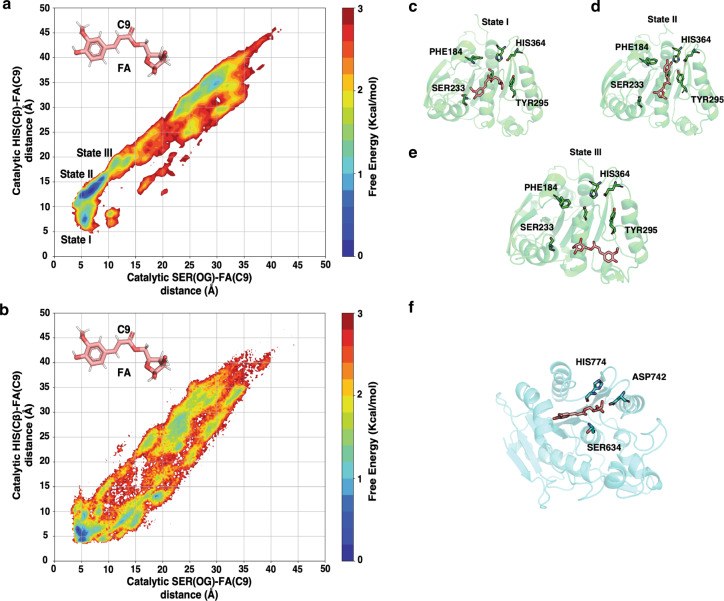
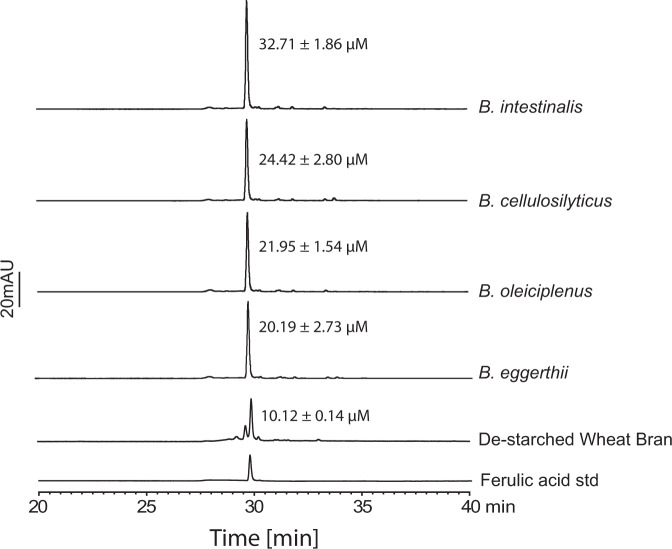
Some Bacteroidetes and other human colonic bacteria can degrade arabinoxylans, common polysaccharides found in dietary fiber. Previous work has identified gene clusters (polysaccharide-utilization loci, PULs) for degradation of simple arabinoxylans. However, the degradation of complex arabinoxylans (containing side chains such as ferulic acid, a phenolic compound) is poorly understood. Here, we identify a PUL that encodes multiple esterases for degradation of complex arabinoxylans in Bacteroides species. The PUL is specifically upregulated in the presence of complex arabinoxylans. We characterize some of the esterases biochemically and structurally, and show that they release ferulic acid from complex arabinoxylans. Growth of four different colonic Bacteroidetes members, including Bacteroides intestinalis, on complex arabinoxylans results in accumulation of ferulic acid, a compound known to have antioxidative and immunomodulatory properties.
一些拟杆菌门和其他人类结肠细菌可以降解阿拉伯木聚糖,这是膳食纤维中常见的多糖。先前的研究已经确定了用于降解简单阿拉伯木聚糖的基因簇(多糖利用基因座,PUL)。然而,对复杂阿拉伯木聚糖(含有阿魏酸等酚类化合物等侧链)的降解知之甚少。在这里,我们鉴定了一个 PUL,该 PUL 编码多种酯酶,用于降解拟杆菌门中的复杂阿拉伯木聚糖。该 PUL 特异性地在复杂阿拉伯木聚糖存在下上调。我们对一些酯酶进行了生化和结构表征,并表明它们从复杂阿拉伯木聚糖中释放阿魏酸。四种不同的结肠拟杆菌成员(包括肠道拟杆菌)在复杂阿拉伯木聚糖上的生长导致阿魏酸的积累,阿魏酸是一种具有抗氧化和免疫调节特性的化合物。