The Department of Twin Research, St Thomas' Hospital, King's College London, 3-4th Floor South Wing Block D, Westminster Bridge Road, London, SE1 7EH, UK.
Department of Nutritional Sciences, King's College London, Franklin-Wilkins Building, 150 Stamford Street, London, SE1 9NH, UK.
Genome Med. 2021 Jan 20;13(1):10. doi: 10.1186/s13073-020-00813-7.
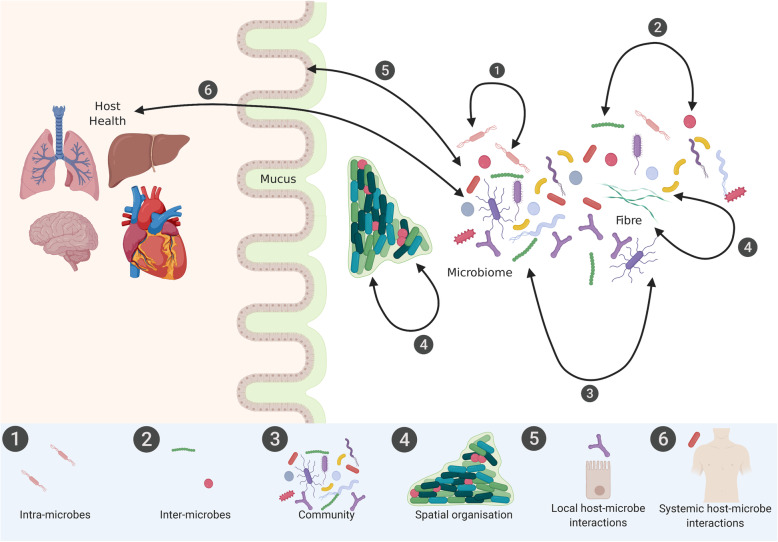
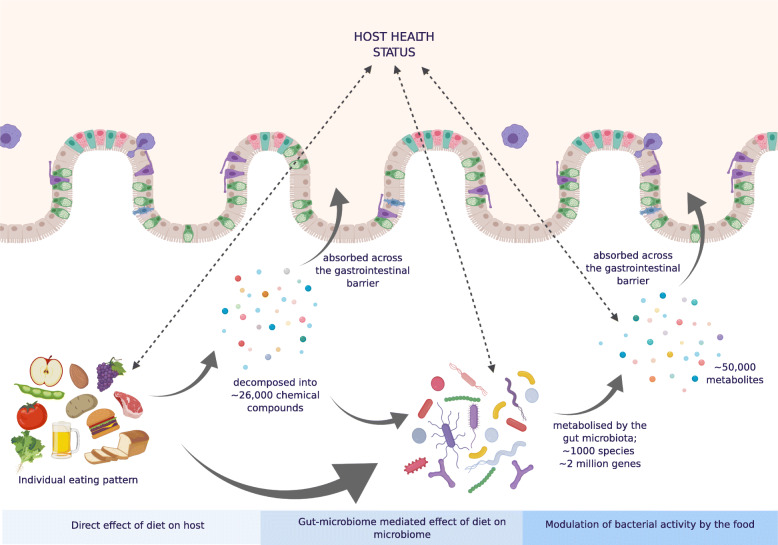
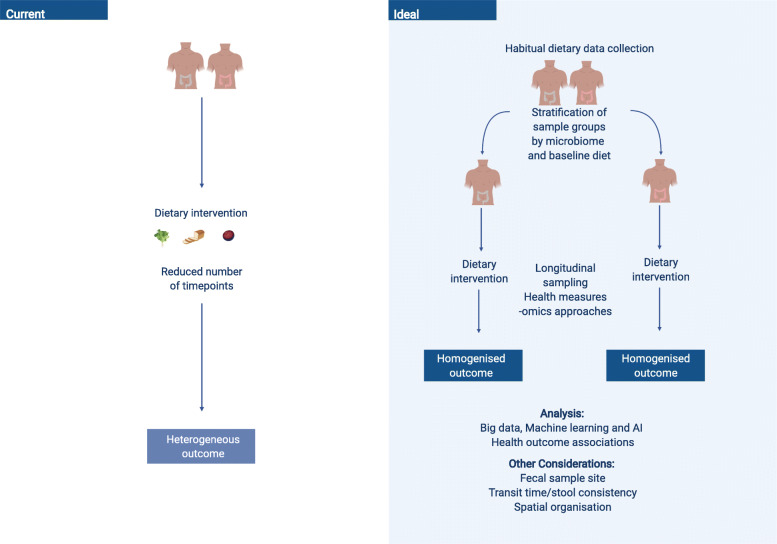
Personalised dietary modulation of the gut microbiota may be key to disease management. Current investigations provide a broad understanding of the impact of diet on the composition and activity of the gut microbiota, yet detailed knowledge in applying diet as an actionable tool remains limited. Further to the relative novelty of the field, approaches are yet to be standardised and extremely heterogeneous research outcomes have ensued. This may be related to confounders associated with complexities in capturing an accurate representation of both diet and the gut microbiota. This review discusses the intricacies and current methodologies of diet-microbial relations, the implications and limitations of these investigative approaches, and future considerations that may assist in accelerating applications. New investigations should consider improved collection of dietary data, further characterisation of mechanistic interactions, and an increased focus on -omic technologies such as metabolomics to describe the bacterial and metabolic activity of food degradation, together with its crosstalk with the host. Furthermore, clinical evidence with health outcomes is required before therapeutic dietary strategies for microbial amelioration can be made. The potential to reach detailed understanding of diet-microbiota relations may depend on re-evaluation, progression, and unification of research methodologies, which consider the complexities of these interactions.
个性化饮食调节肠道微生物群可能是疾病管理的关键。目前的研究提供了广泛的认识,了解饮食对肠道微生物群的组成和活性的影响,但详细了解饮食作为一种可行的工具仍然有限。除了该领域的相对新颖性之外,方法尚未标准化,因此产生了非常不同的研究结果。这可能与与准确捕捉饮食和肠道微生物群的代表性相关的混杂因素有关。这篇综述讨论了饮食与微生物关系的复杂性和当前方法学,这些研究方法的意义和局限性,以及未来的考虑因素,这些因素可能有助于加速应用。新的研究应该考虑改进饮食数据的收集,进一步描述食物降解的细菌和代谢活性,以及与宿主的相互作用,进一步研究机制相互作用,增加代谢组学等组学技术的应用。此外,在制定微生物改善的治疗性饮食策略之前,需要有针对健康结果的临床证据。对饮食-微生物群关系的深入了解可能取决于重新评估、发展和统一考虑这些相互作用的复杂性的研究方法。