School of Statistics, Renmin University of China, Beijing 100872, China.
College of Medical Engineering and Technology, Xinjiang Medical University, Ürümqi 830011, China.
Int J Environ Res Public Health. 2021 Jan 18;18(2):774. doi: 10.3390/ijerph18020774.
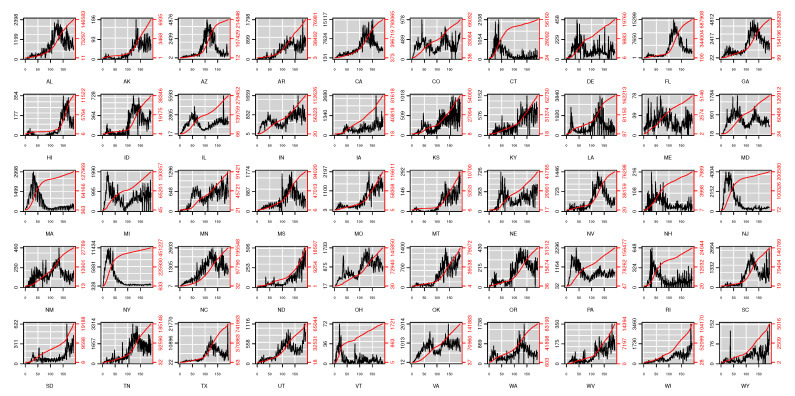
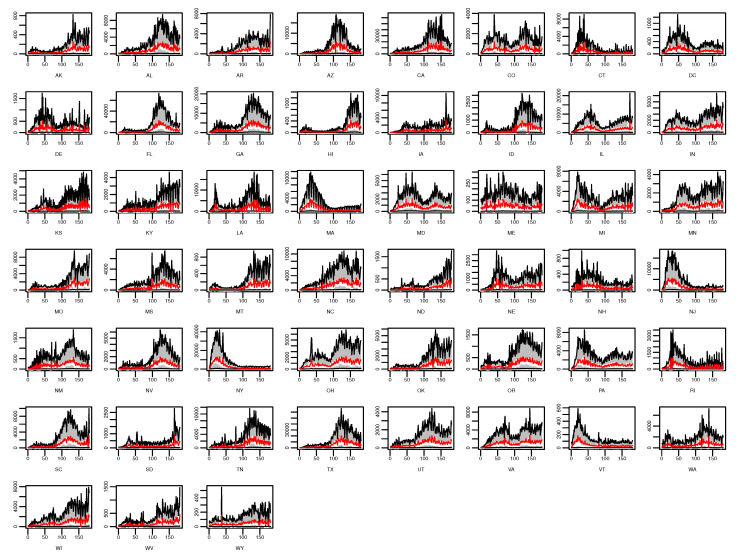
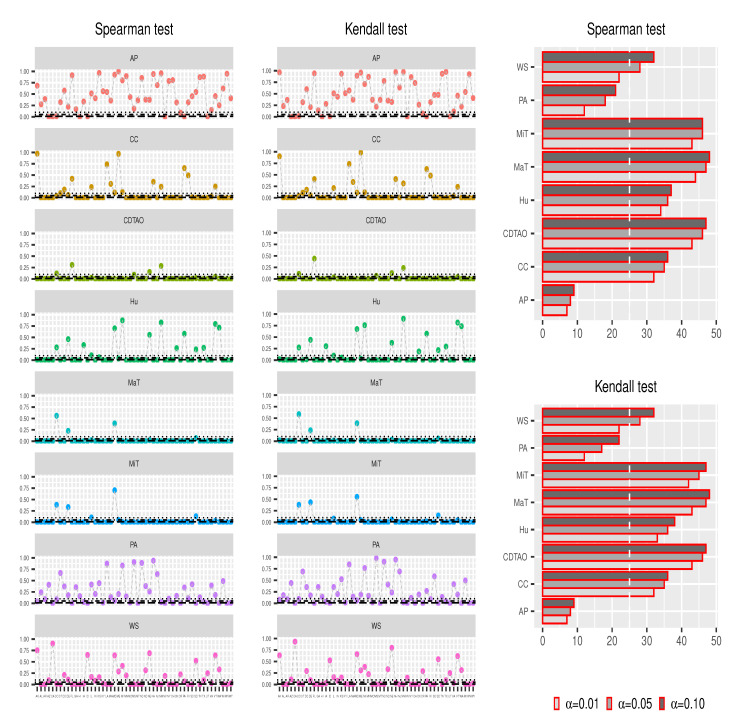
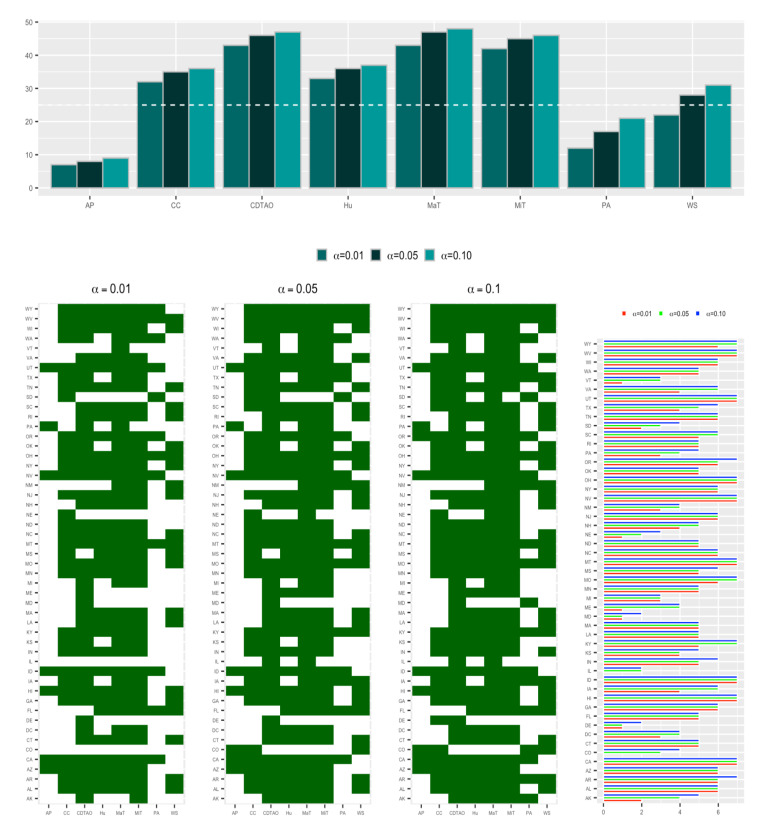
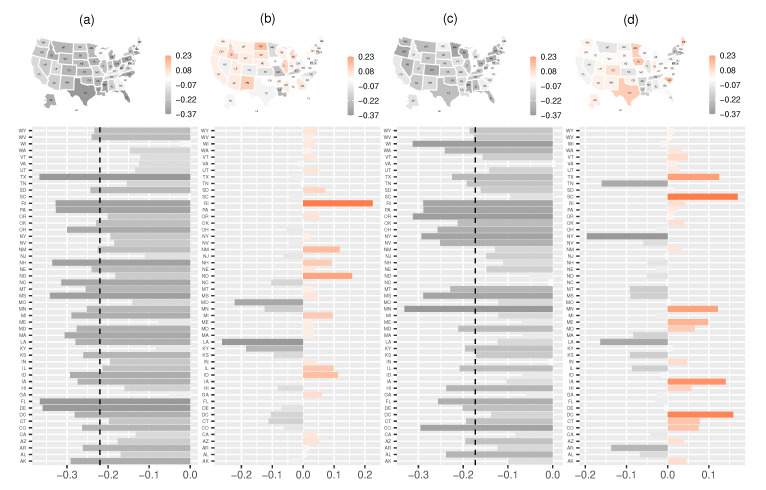
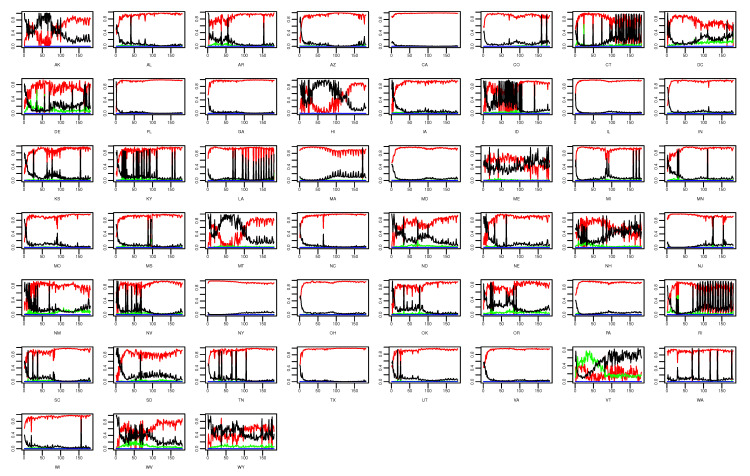
With the rapid spread of the pandemic due to the coronavirus disease 2019 (COVID-19), the virus has already led to considerable mortality and morbidity worldwide, as well as having a severe impact on economic development. In this article, we analyze the state-level correlation between COVID-19 risk and weather/climate factors in the USA. For this purpose, we consider a spatio-temporal multivariate time series model under a hierarchical framework, which is especially suitable for envisioning the virus transmission tendency across a geographic area over time. Briefly, our model decomposes the COVID-19 risk into: (i) an autoregressive component that describes the within-state COVID-19 risk effect; (ii) a spatiotemporal component that describes the across-state COVID-19 risk effect; (iii) an exogenous component that includes other factors (e.g., weather/climate) that could envision future epidemic development risk; and (iv) an endemic component that captures the function of time and other predictors mainly for individual states. Our results indicate that maximum temperature, minimum temperature, humidity, the percentage of cloud coverage, and the columnar density of total atmospheric ozone have a strong association with the COVID-19 pandemic in many states. In particular, the maximum temperature, minimum temperature, and the columnar density of total atmospheric ozone demonstrate statistically significant associations with the tendency of COVID-19 spreading in almost all states. Furthermore, our results from transmission tendency analysis suggest that the community-level transmission has been relatively mitigated in the USA, and the daily confirmed cases within a state are predominated by the earlier daily confirmed cases within that state compared to other factors, which implies that states such as Texas, California, and Florida with a large number of confirmed cases still need strategies like stay-at-home orders to prevent another outbreak.
随着 2019 年冠状病毒病(COVID-19)的迅速传播,该病毒已在全球范围内导致相当高的死亡率和发病率,并对经济发展造成严重影响。在本文中,我们分析了美国 COVID-19 风险与天气/气候因素之间的州级相关性。为此,我们考虑了一个分层框架下的时空多元时间序列模型,该模型特别适合于随时间预测地理区域内的病毒传播趋势。简而言之,我们的模型将 COVID-19 风险分解为:(i)自回归分量,描述了州内 COVID-19 风险的影响;(ii)时空分量,描述了州际 COVID-19 风险的影响;(iii)外生分量,包括其他因素(例如天气/气候),这些因素可以预测未来的疫情发展风险;(iv)地方病分量,主要用于各个州,捕捉时间和其他预测因子的功能。我们的结果表明,许多州的最高温度、最低温度、湿度、云覆盖率百分比和大气总臭氧柱密度与 COVID-19 大流行有很强的关联。特别是,最高温度、最低温度和大气总臭氧柱密度与 COVID-19 在几乎所有州的传播趋势具有统计学上的显著关联。此外,我们从传播趋势分析的结果表明,美国的社区传播已经得到了相对缓解,各州内的每日确诊病例主要由该州早期的每日确诊病例主导,而不是由其他因素主导,这意味着得克萨斯州、加利福尼亚州和佛罗里达州等确诊病例较多的州仍需要采取居家令等策略来防止再次爆发。